
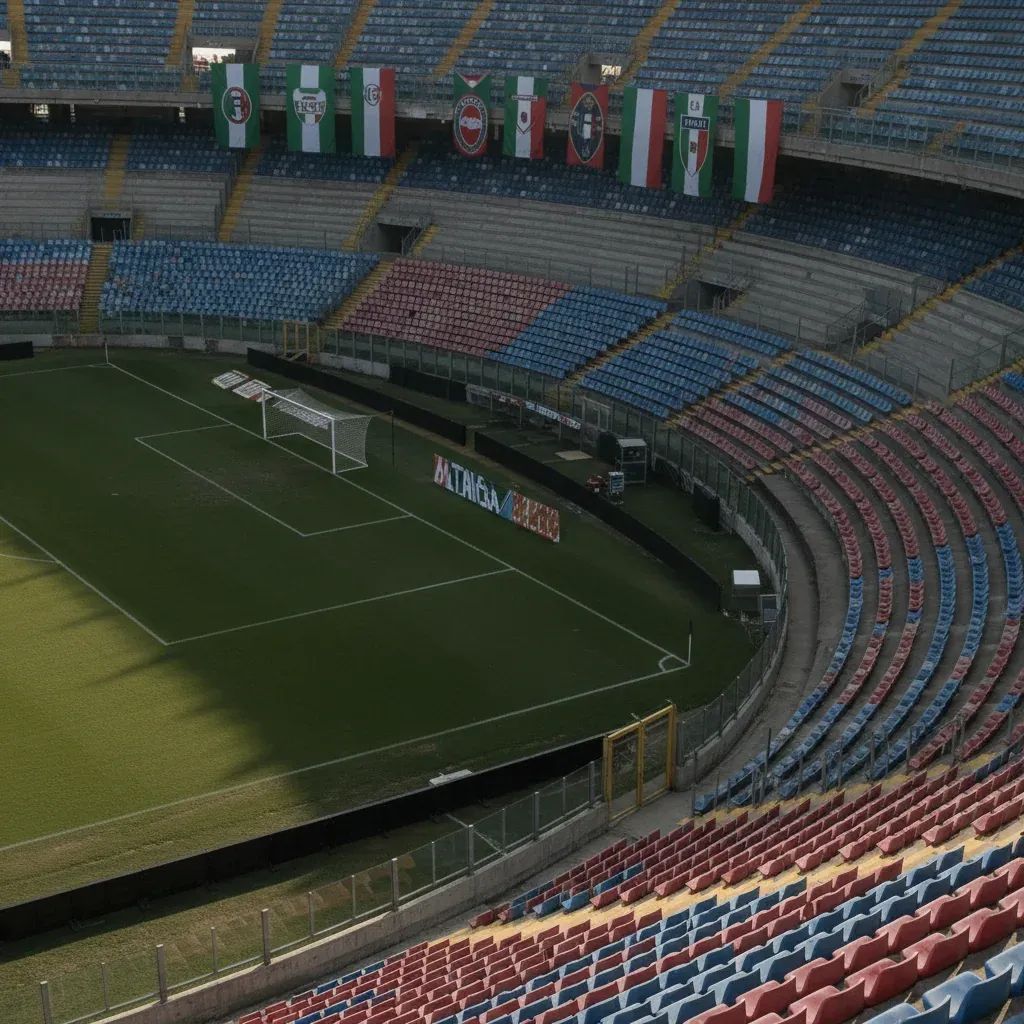
Italian football's Serie A hierarchy has been redrawn, as both Pisa Sporting Club and Hellas Verona have been mathematically relegated to Serie B, marking the first confirmed casualties of the 2025-2026 campaign. The double demotion, sealed by results in the 35th matchday, affects two historic clubs—one returning to the second tier after just a single season in the top flight, the other suffering a prolonged decline.
Why This Matters
• Financial impact: Relegated clubs face a significant revenue drop in TV rights, with additional parachute payments provided to cushion the immediate financial blow.
• Pisa's relegation confirmed: The Tuscan side became the first team officially relegated this season after a 2-1 home defeat to Lecce on 1 May 2026.
• Verona's fate sealed: Hellas Verona, having played 34 matches, could not mathematically avoid the drop after Lecce's victory, with their final fixture against Juventus in Turin now a formality.
• Market changes ahead: Both clubs will undergo squad adjustments, with player valuations shifting and potential departures expected.
The Match That Sealed Pisa's Fate
Lecce's survival instinct proved sharper than Pisa's desperation. At the Arena Garibaldi, the visitors from Puglia secured a crucial three points with clinical finishing: Banda opened the scoring in the 52nd minute, exploiting a swift counter-attack orchestrated by Cheddira, who threaded a pass through two defenders before Banda cut inside and fired a left-footed diagonal past goalkeeper Semper.
Pisa responded within four minutes through Leris, who capitalized on a chaotic sequence of headers in the box to smash a first-time shot into the bottom corner, beating Falcone at his right post. The equalizer briefly reignited hope among the home faithful, but Pisa lacked the quality and composure to sustain momentum.
The decisive blow came in the 65th minute. Pierotti launched a devastating counter-attack, slicing through Pisa's porous defense with a 50-meter solo run before delivering a pinpoint assist to Cheddira, who calmly slotted the ball across Semper and inside the far post. It was a goal that reflected Pisa's defensive vulnerabilities throughout the season—they have now suffered 21 defeats in 35 matches.
Lecce, aware they held a crucial advantage, retreated into a disciplined defensive shell. Pisa, sterile and predictable in attack, failed to generate meaningful pressure. A late disallowed goal for Lecce—Camarda's deflection ruled offside—was a minor moment in the match. The final whistle brought jubilation for the 1,000 traveling Lecce supporters and disappointment for a Pisa side that had hoped to establish itself in the top tier after a 35-year absence.
Verona's Descent
While Pisa's relegation was confirmed through direct results, Hellas Verona's demotion was effectively decided when Lecce secured their victory. The club from Veneto, in 19th place with 19 points from 34 matches, saw their mathematical elimination confirmed by Lecce's result. They will play their final match against Juventus on Sunday, but it is now a dead rubber—an anticlimactic conclusion to a difficult campaign.
Verona's decline has been gradual but consistent, characterized by inconsistent results and an inability to sustain competitive form. For a club that has competed across Italy's divisions in recent years, this relegation represents a significant setback.
The Financial Context
Relegation from Italy's Serie A carries substantial financial consequences. Clubs in the top flight receive significantly higher revenues from broadcasting contracts compared to Serie B clubs. The gap between the two divisions can represent a major reduction in annual revenue.
To help mitigate the financial impact on relegated clubs, provisions exist to provide financial support during the transition to the second division, though these measures may not fully offset the revenue reduction experienced by newly relegated sides.
What This Means for Residents and Stakeholders
For Pisa-based stakeholders—from season ticket holders to local businesses tied to matchday activity—the relegation signals a period of adjustment. Sponsorship arrangements will likely be affected by the change in division. Merchandising revenue and gate receipts may also be impacted, though loyal supporters often maintain their commitment across divisions.
For Verona, the economic implications are similarly significant. Both clubs will face pressure to reassess their squad compositions and operational budgets in alignment with Serie B competition standards.
Reconstruction in the Second Tier
Serie B, Italy's second division, presents a challenging environment for newly relegated clubs. Success in the second tier requires effective squad management, stability in leadership, and strategic financial planning. For Pisa and Verona, the focus will be on stabilizing operations and preparing for the competitive demands of Serie B competition.
For residents of both cities, the coming period will involve adjustment as both clubs adapt to their new circumstances and work toward potential future advancement.


