
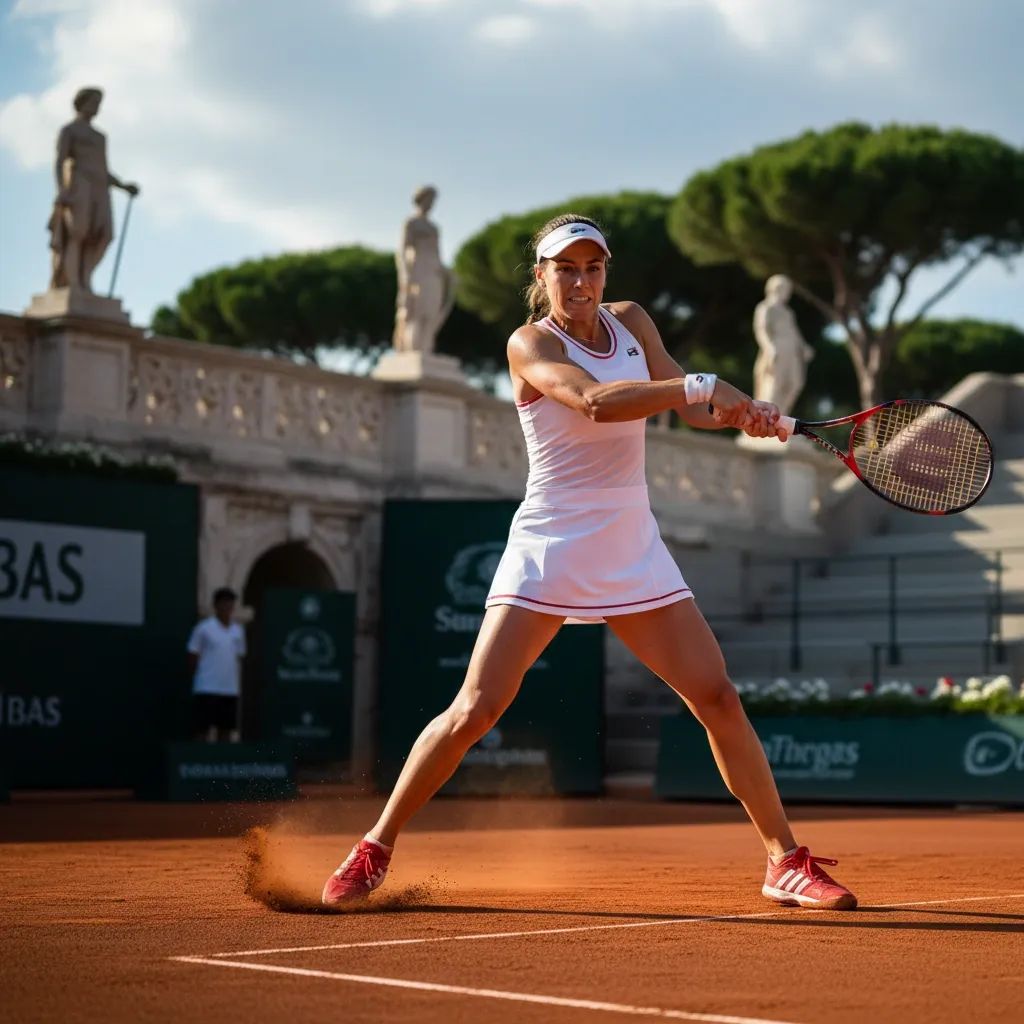
The Italy tennis sensation Jasmine Paolini saw her title defense at the Internazionali BNL d'Italia come to an abrupt end on Saturday, falling to Belgium's Elise Mertens in a heart-wrenching third-round match that exposed both her fighting spirit and her current struggles. The 9th-seeded Italian squandered three match points in the second set before losing 4-6, 7-6 (5), 6-3, a defeat that raises fresh concerns about her form heading into Roland Garros later this month.
Why This Matters:
• Title defense over: Paolini's title defense at Rome ended at the first serious hurdle, with the Italian unable to replicate last year's home soil magic.
• Mental fragility on display: Three missed match points in the second set highlighted a recurring theme this season—crumbling under pressure in decisive moments.
• Roland Garros question mark: With the French Open approaching, Italy's top female player is battling inconsistency and searching for confidence.
A Collapse in Slow Motion
What started as a competitive contest at the Foro Italico quickly turned into a cautionary tale about momentum and mental fortitude. Paolini, who won the tournament last year in both singles and doubles, seized the opening set and appeared poised to close out the match when she earned three separate opportunities to win in the second-set tiebreak. Instead, each chance slipped through her fingers in increasingly painful fashion.
"On the first one, I surprised myself, as if I didn't control my forehand," Paolini admitted after the match, her voice tinged with frustration. "The second I shanked, and that can happen. But the third is the worst—missing a backhand from behind the baseline is ugly. Unfortunately, that's tennis."
The Belgian, ranked 21st and carrying a modest 10-7 record into the tournament, capitalized ruthlessly. Mertens, who had previously defeated Panna Udvardy in straight sets to reach the third round, seized control in the decider, breaking Paolini's serve twice to close out the match 6-3 in the final set. For the Italian crowd that had filled the stands hoping to see their champion advance, it was a deflating conclusion to a match that had seemed within reach.
The Weight of Expectations
Paolini's struggle at the Internazionali BNL d'Italia reflects a broader pattern that has defined her 2026 season: flashes of competitiveness interrupted by critical lapses in execution. The 28-year-old from Tuscany, who reached Grand Slam finals at both the French Open and Wimbledon in 2024 and climbed to a career-high 4th in the world rankings, has found consistency elusive this year.
"I'm not happy with my results, but I think I need to try to look at the positives for the upcoming tournaments," she said. "Today was a fought match. I stayed in there." Her words carried the tone of someone trying to convince herself as much as the assembled media.
The Italian made sweeping changes to her coaching setup before the 2026 season, appointing Danilo Pizzorno as head coach and enlisting her doubles partner Sara Errani as a tactical adviser—a move described at the time as both a gamble and an investment. The early returns have been mixed. While Paolini acknowledged playing better in her last two tournaments before Rome, the results haven't followed. Her 1-2 clay court record prior to the home event hardly inspired confidence, and now the tournament she dominated 12 months ago has joined that list of disappointments.
What This Means for Residents
For Italian tennis fans, Paolini's early exit stings doubly: not only does it rob them of a chance to watch their homegrown star chase back-to-back titles on the familiar clay of Rome, but it also casts doubt on her prospects at Roland Garros, where Italy will be hoping for a deep run from its top-ranked female player. Paolini reached the final in Paris in 2024, capturing the nation's imagination, but her current form suggests that repeating such heroics will require a significant mental and technical reset in the coming weeks.
For those who follow Italian sport, the stakes go beyond individual results. Paolini's rise to prominence coincided with a broader resurgence in Italian tennis, with Jannik Sinner leading the men's charge. Her struggles this season highlight how fragile elite-level success can be, especially when mental fortitude becomes the deciding factor in tight matches.
The Mental Battle Ahead
Paolini herself identified the central issue plaguing her game. "Now I have to be careful not to fall into negativity," she said, a telling acknowledgment of the psychological minefield she's navigating. "If I do things well, I know I can be competitive."
Her self-assessment after the Mertens match was measured but revealing. She noted that there were stretches during the three-set affair where she felt competitive and comfortable on court, but lamented her inability to stay solid and composed during critical moments—precisely the quality that separates contenders from champions.
The contrast with her 2025 season is stark. Last year, Paolini lifted the singles and doubles trophies in Rome, claimed the Roland Garros doubles title with Errani, and finished the year ranked 8th globally with a WTA Finals qualification. She reached semifinals and finals across multiple tournaments, establishing herself as one of the most dangerous players on tour. That version of Paolini feels distant now.
Looking Toward Paris
With Roland Garros set to begin later this month, the Italian has limited time to recalibrate. Current pre-tournament predictions favor Iga Świątek, Aryna Sabalenka, and Coco Gauff as the leading contenders, relegating Paolini to "dark horse" status—a designation that reflects both her past achievements and her current uncertainty.
Paolini's training regimen heading into the 2026 season focused heavily on improving serve consistency, return depth, and varying shot rhythms under Pizzorno's guidance, specifically to counter powerful opponents. The technical foundation may be in place, but tennis at the highest level demands more than sound mechanics. It requires mental clarity under duress, the ability to convert opportunities, and the resilience to bounce back from setbacks—all qualities Paolini will need to rediscover if she hopes to make noise in Paris.
"The last two tournaments I played better than here in Rome," she reflected. "I had to be more solid in the important points. I had a lot of ups and downs. It's clear I'm not happy with my results, but I believe I have to try to look at the positive with the next tournaments in mind. It's important. Today was a combative match. I stayed in it."
Whether that measured optimism translates into results at Roland Garros remains the defining question for Italian tennis fans. For now, the champion who electrified Rome 12 months ago has left the city searching for answers—and racing against the calendar to find them before the next Grand Slam spotlight turns her way.


