
The Italy stock exchange slumped sharply at the opening bell today, with the FTSE Mib dropping 2.08% as a mass dividend payout from 23 blue-chip companies mechanically pushed the index down by more than 1.5 percentage points. The combined effect of dividend distribution and escalating U.S.-Iran tensions sent equities across Europe into the red, with oil prices surging past $110 per barrel and stoking fresh inflation anxiety.
Why This Matters
• Portfolio adjustment: If you hold Italy-listed equities, expect today's paper loss to be offset by dividend credits hitting accounts on 20 May (T+2 settlement).
• Energy costs: WTI crude gained 1.21% to $106 per barrel; natural gas in Europe climbed 1.5% to €51 per megawatt-hour, signaling higher utility bills ahead.
• Central bank response: The European Central Bank has signaled readiness to respond to persistent price pressures with rate adjustments.
• Spread stability: The BTP-Bund spread narrowed to 77 basis points, with Italy's 10-year yield at 3.93%—a relatively benign level amid the sell-off.
The Dividend Technical Hit
Today's decline in Milan was always baked in. Twenty-three FTSE Mib constituents detached their 2025 final payouts, a mechanical accounting event that automatically reduces share prices and index values by the aggregate cash leaving corporate balance sheets. Analysts had flagged the 1.5% technical drag weeks in advance, yet the headline drop of 2.08% still unnerved retail investors checking their morning statements.
The largest distributions came from major corporations including Assicurazioni Generali, Intesa Sanpaolo, Eni, and Moncler, along with Banca Monte dei Paschi di Siena, BPER Banca, and FinecoBank. Additional dividend payers included A2a, Azimut, Amplifon, Cucinelli, Inwit, Italgas, Lottomatica, Recordati, Unipol, and Tenaris. In all, 23 names on the main board participated, temporarily inflating volumes and artificially depressing quoted prices.
Stripped of the dividend effect, the "clean" loss was approximately 0.6%, still meaningful but far less dramatic. Payment date is Wednesday, so shareholders of record as of Friday will see cash arrive within 48 hours.
Energy Stocks Defy Gravity
Not every corner of Piazza Affari succumbed to the malaise. Saipem surged 2.97%, the session's standout performer, as traders priced in higher profit margins from upstream drilling contracts tied to elevated crude. Eni climbed 1.1% despite distributing its dividend, reflecting the same oil-price tailwind. Nexi, the digital-payments processor, added 1.41%, while chipmaker STMicroelectronics gained 0.85% on semiconductor supply optimism.
Conversely, automakers bore the brunt. Ferrari and Fincantieri both slid 2.5%, with the luxury-car maker hurt by concerns that high fuel costs could dampen discretionary spending. Stellantis dropped 1.95%, weighed down by analyst downgrades tied to slowing electric-vehicle demand in Germany. Spirits group Campari fell 1.81%, and UniCredit shed 0.5% as bank stocks lagged.
Among dividend payers, Avio tumbled 2.86%—the worst performance—on thin liquidity and disappointing aerospace-sector guidance. Diasorin and Buzzi rounded out the bottom, down 1.85% and 2.13% respectively.
Geopolitical Premium Returns
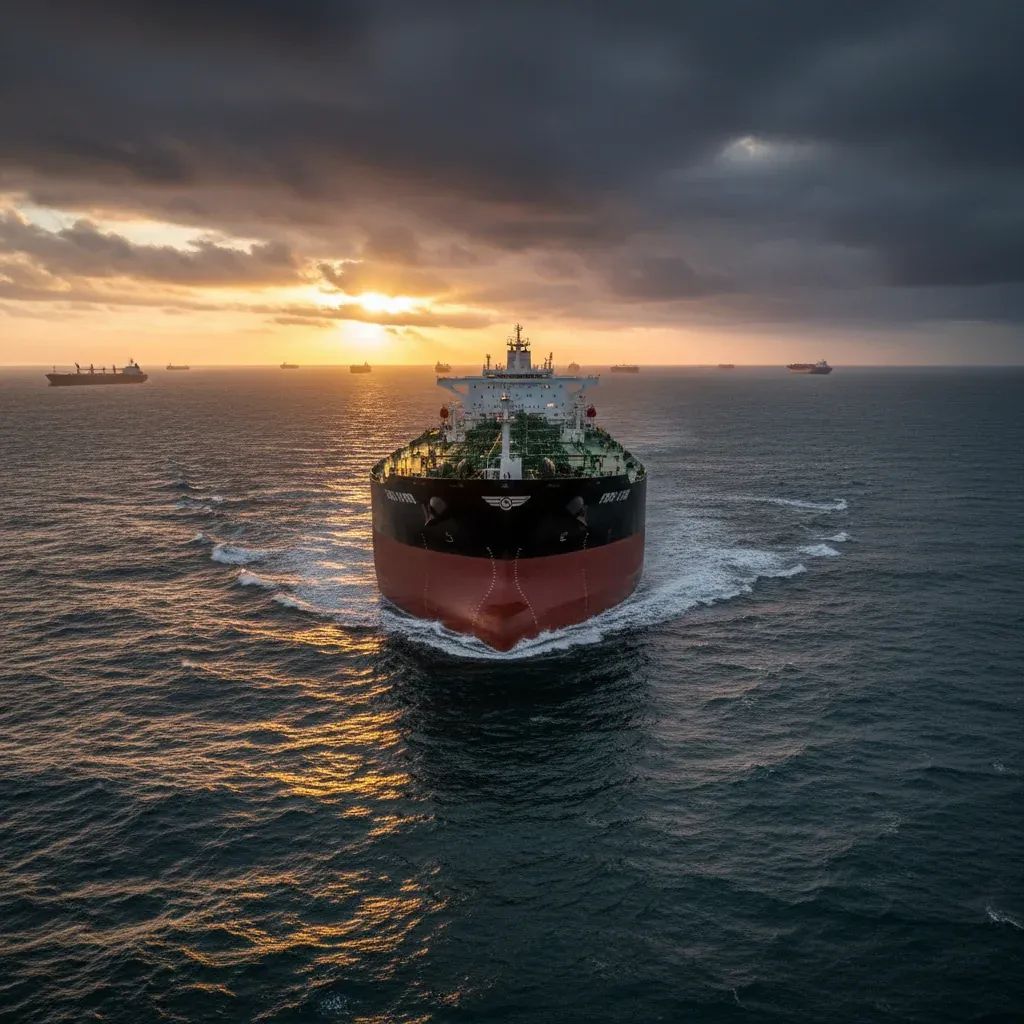
The catalyst amplifying today's sell-off was the collapse of peace negotiations between Washington and Tehran. U.S. President Trump rejected Iran's latest proposals over the weekend, prompting markets to reprice the risk of a blockade in the Strait of Hormuz, the narrow waterway that handles one-fifth of global oil shipments.
Brent crude jumped 0.7% to $110 per barrel, while West Texas Intermediate added 1.21% to $106. Both benchmarks have climbed roughly 22% and 16% respectively over the past month, with the Brent contract now 68.87% higher than a year ago. Central banks globally have identified Middle East geopolitical risk as a significant threat to financial stability, warning that a prolonged crisis could reignite inflation pressures.
Natural gas in Europe followed suit, ticking up 1.5% to €51 per megawatt-hour. Italian households and manufacturers face a return to the energy-cost squeeze that defined much of 2022 and 2023, eroding purchasing power just as summer cooling demand approaches.
Market Implications
Energy producers such as Eni and Saipem are the clear near-term beneficiaries, booking higher revenue per barrel and commanding better contract terms. Investors rotated into these names today, treating them as inflation hedges.
Banks present a more nuanced picture. Higher interest rates eventually widen net interest margins, benefiting lenders like UniCredit and Intesa. Yet the immediate reaction was negative, as traders worried that rate hikes could cool loan demand and elevate default risk in rate-sensitive sectors like real estate.
Consumer discretionary names—Ferrari, Stellantis, Campari, Moncler—suffered on fears that elevated fuel and food costs will erode disposable income. Luxury-goods makers in particular depend on aspirational spending, which tends to retreat when households feel pressure from higher utility and grocery costs.
European Context
Milan's woes mirrored the continent. The STOXX 600 shed 0.8%, with Paris down 0.96% and Frankfurt off 0.2%. London's FTSE 100 traded flat, insulated by a weaker pound and a heavier weighting in energy majors. In Dublin, budget carrier Ryanair plunged 3% after releasing fiscal results for the year ended 31 March, which showed seat load factors below analyst expectations.
The STOXX 50 fell 1.3%, marking the weakest start to a trading week since early April. Raw-materials and consumer-discretionary sectors led declines, while energy outperformed. Market participants characterized the mood as "risk-off," with safe-haven demand lifting the euro to $1.1641 against the dollar—a modest gain that reflects diverging monetary-policy expectations between the ECB and the Fed.
Currency and Sovereign-Debt Dynamics
The BTP-Bund spread tightened to 77 basis points, a constructive sign that investors still view Italian sovereign debt as relatively stable despite equity-market turbulence. Italy's 10-year yield at 3.93% remains comfortably below the psychological 4% threshold that spooked traders in prior crises.
Currency markets offered a silver lining: the euro's rally to $1.1641 lowers the effective cost of dollar-denominated commodity imports, including oil. A stronger single currency acts as a partial inflation hedge for the eurozone, though the benefit is modest when crude itself is rising in both dollar and euro terms.
Inflation Pressures
April inflation data showed Italy's consumer-price index climbing to 2.7% year-on-year, up from 1.7% in March, with energy the primary culprit. Energy price pressures have dominated recent inflation dynamics, signaling potential headwinds for households and manufacturers sensitive to commodity costs.
Central banks across major economies are monitoring inflation developments closely. The European Central Bank has signaled readiness to adjust policy rates if price pressures persist beyond current forecasts. Similar considerations are underway at other major central banks globally as they balance inflation concerns against broader economic stability.
Market Outlook
Volatility is likely to persist until clarity emerges on two fronts: the trajectory of Middle East diplomacy and the magnitude of central-bank policy adjustments. Investors are closely watching these developments to assess medium-term market direction.
Options-market data shows elevated demand for put protection, with implied volatility on FTSE Mib futures climbing to elevated levels. Institutional investors are hedging tail risk—the possibility of a full-blown supply shock if the Strait of Hormuz is actually disrupted.
Retail participation, as measured by trading volumes, jumped to €4.6 billion at Piazza Affari today, well above the three-month average. Some of that reflects dividend-related rebalancing, but brokers report heightened interest in energy stocks and defensive plays like utilities.


