
Italian Energy Giant Enel Completes $140M U.S. Solar Acquisition
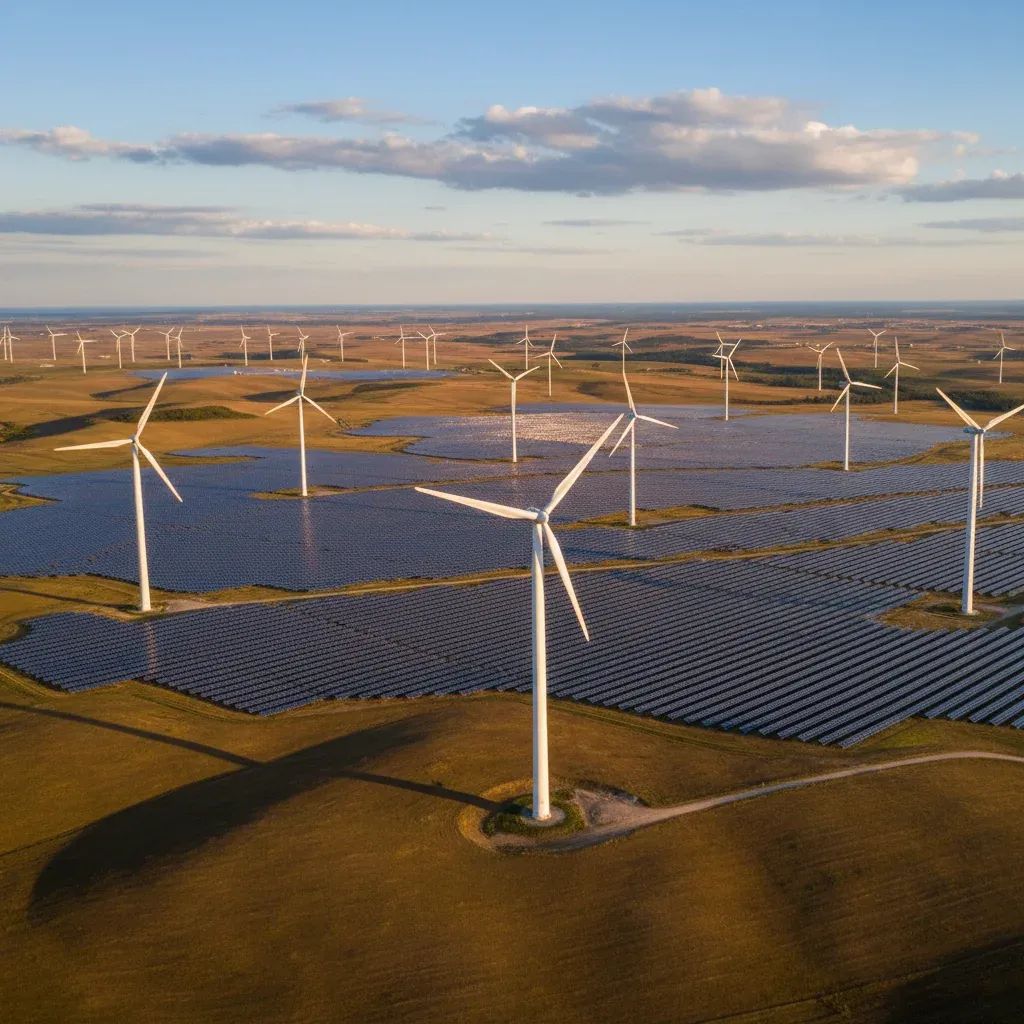
Italian energy company Enel has completed a €120 million ($140M) purchase of seven operational solar farms across Virginia, North Carolina, and South Carolina. This marks a significant expansion of the Milan-based company's North American renewable portfolio and reflects management's strategy to capture higher returns in U.S. markets while navigating Europe's slower energy transition.
For Italian shareholders—including Italy's government, which holds a 23.6% stake—the acquisition signals Enel's commitment to international diversification and long-term cash flow growth. The deal is expected to close by December 31, 2026, pending final U.S. regulatory approvals.
Why This Matters for Italian Investors and Stakeholders
For Enel shareholders: The acquisition adds 270 MW of operational solar capacity generating approximately 0.4 TWh annually. Once integrated, the portfolio is estimated to contribute around $20 million in annual EBITDA, with a purchase price implying a 7x EBITDA valuation—in line with recent U.S. solar market benchmarks. The deal is expected to be earnings-neutral in 2026 due to partial-year contribution and transaction costs, but accretive starting in 2027.
For the Italian government: As Enel's largest shareholder, Italy views the expansion as a strategic hedge against domestic regulatory uncertainty and flat demand growth in the European Union. North America's higher power purchase agreement (PPA) prices and the U.S. federal 30% Investment Tax Credit through 2032 enhance project returns. Additionally, dollar-denominated cash flows provide a currency hedge against euro volatility.
For Italy's energy security: The acquisition supports Italy's broader objective of reducing fossil fuel imports while positioning a champion Italian company to compete globally. As Europe's energy transition encounters permitting bottlenecks, grid capacity constraints, and subsidy challenges, North American investments offer faster project timelines and deeper capital markets.
Stock performance context: Enel investors should monitor the company's execution on U.S. regulatory approvals and integration timelines. While the acquisition carries execution risk—notably unpredictable U.S. regulatory processes and potential interconnection delays—it strengthens Enel's position as one of North America's top five renewable operators.
Geographic Scope and Strategic Positioning
The seven photovoltaic plants span three southeastern U.S. states chosen for favorable solar market dynamics and renewable energy policies:
• Virginia hosts two sites totaling over 120 MW, anchoring the portfolio under the state's Clean Economy Act, which requires utilities to incorporate renewable resources into long-term planning.
• North Carolina contributes a single facility exceeding 90 MW, with regulations mandating utilities source 12.5% of retail sales from qualifying resources.
• South Carolina rounds out the deal with four smaller plants delivering approximately 50 MW combined, capitalizing on lower land costs and transmission access in this historically coal-reliant state.
These states have emerged as competitive solar markets thanks to corporate clean energy demand from major tech and manufacturing hubs, paired with federal incentives under the Inflation Reduction Act.
Enel's Broader North American Expansion
This acquisition is part of a larger 2026 investment blitz. In February, Enel signed a separate deal with Excelsior Energy Capital to acquire an 830 MW portfolio of wind and solar assets across multiple U.S. states for approximately $1 billion (€850 million), also expected to close in 2026.
Combined, the two deals add over 1,100 MW of generating capacity. Between 2026 and 2028, Enel plans to deploy €20 billion in renewable investments globally, with roughly half for Europe and significant capital earmarked for North America. This reflects a strategic pivot toward programmable, dispatchable renewables that provide grid services beyond intermittent generation.
Enel currently operates 83 renewable plants across North America with 12.8 GW of installed capacity. These acquisitions support the company's target of reaching 13 GW of wind, solar, and battery storage across the continent as part of a broader goal to add 15 GW of global renewable capacity by 2028.
U.S. Regulatory Approval Timeline
The deal's expected December 31, 2026 closing is contingent on several regulatory approvals:
• FERC authorization: Federal Energy Regulatory Commission approval under the Federal Power Act
• Antitrust review: Department of Justice examination under the Hart-Scott-Rodino Act
• Foreign investment screening: Potential Committee on Foreign Investment in the United States (CFIUS) review, though renewable generation assets typically face lighter scrutiny than critical infrastructure
• State-level approval: Virginia, North Carolina, and South Carolina utility commissions must certify the transaction serves the public interest
Enel expects all conditions satisfied by December 31, 2026, though regulatory timelines in the U.S. can be unpredictable, with slippage into early 2027 possible.
Competitive Positioning and Market Context
Enel's 12.8 GW North American renewable capacity places it among leading European renewable developers expanding into the U.S., though behind larger incumbents like NextEra Energy (43+ GW of renewables and storage) and Brookfield Renewable (14.7 GW of utility-scale solar globally).
The broader U.S. solar market is expanding rapidly, expected to triple cumulative capacity from 279 GW at end-2025 to 769 GW by 2036. Solar accounted for 54% of all new U.S. generation capacity in 2025. Within this context, Enel's 270 MW acquisition represents a tactical expansion that strengthens the company's competitive position for future power purchase agreements and positions it to benefit from grid modernization investments.
Financial Outlook and Execution Risks
Financing: Enel is financing the acquisition through internal cash flow and project-level debt, maintaining a net debt-to-EBITDA ratio target below 2.5x.
Timeline: The transaction is expected to contribute partial-year EBITDA in 2026 (neutral to earnings due to transaction costs) and become accretive starting in 2027.
Risks: Regulatory delays, grid interconnection bottlenecks that constrain revenue, and currency fluctuations represent potential headwinds. However, Enel's diversified portfolio and long-term PPA contracts provide downside protection.
Bottom Line
This $140M acquisition underscores Enel's transformation into a globally diversified renewable powerhouse with exposure to the world's largest electricity market. For Italian shareholders—including pensioners and retail investors—the deal offers long-term upside through participation in North American clean energy growth, though with currency risk and regulatory execution challenges inherent in cross-border energy transactions.
Whether the investment pays off depends on Enel's ability to navigate U.S. approvals, optimize asset performance, and create operational synergies across its expanding North American portfolio.


