
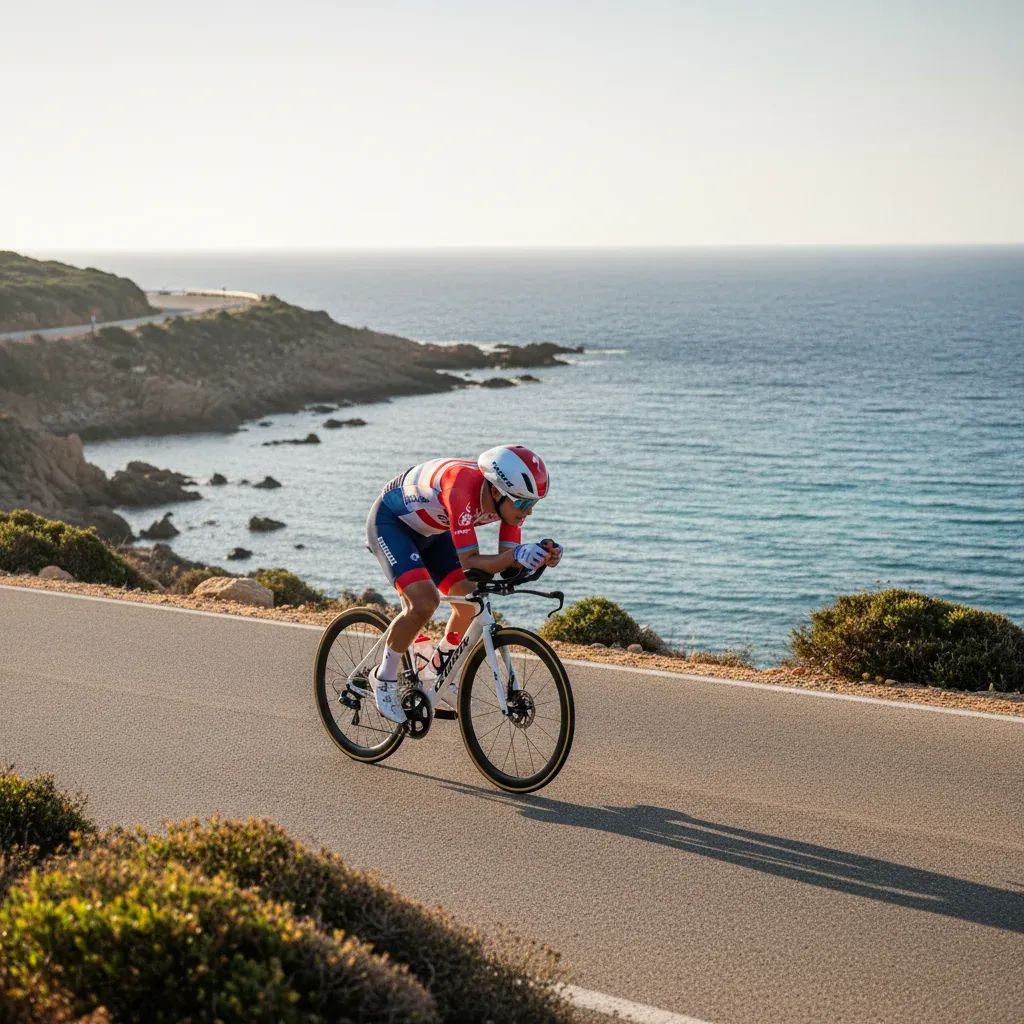
The Soudal Quick-Step rider Paul Magnier claimed both the first stage victory and the coveted maglia rosa as the 109th edition of the Giro d'Italia launched from Bulgaria's Black Sea coast—a historic first for the eastern European nation hosting cycling's second most prestigious Grand Tour.
The 22-year-old French sprinter capitalized on late-race chaos to take the 157-kilometer opening stage from Nessebar to Burgas, crossing ahead of Denmark's Tobias Lund Andresen and Britain's Ethan Vernon. A mass crash 600 meters from the finish line upended what had been a tightly contested sprint, eliminating much of the field and reshaping the final hierarchy.
Why This Matters
• Bulgaria joins international roster: This marks a significant milestone for the eastern European nation hosting cycling's second most prestigious Grand Tour, boosting the country's bid to attract cycling tourism and infrastructure investment.
• Italian favorite stumbles: Jonathan Milan, the Friuli-Venezia Giulia native who was tipped to win on home sponsor territory, finished fourth after losing his leadout train in the crash.
• Vingegaard hunt begins: Two-time Tour de France champion Jonas Vingegaard starts his quest for the rare "Triple Crown" of Grand Tour victories, with Stage 2's hillier terrain offering an early test.
• Young talent ascends: Magnier, at 22 years old, has shown impressive acceleration in his cycling career, positioning him as a rising threat in the sprint hierarchy.
Crash Reshapes Opening Sprint
The stage finale descended into havoc when Norwegian rider Erlend Blikra of Uno-X went down with 600 meters remaining on a narrow finishing straight, triggering a pileup that engulfed roughly a dozen riders. Among those caught were established sprinters Dylan Groenewegen, Kaden Groves, and Matteo Moschetti—all potential podium contenders had the road remained clear.
Milan, representing Lidl-Trek and carrying the hopes of the race's regional sponsor, found himself isolated after losing key leadout man Simone Consonni in the pre-crash chaos. The Italian was forced to launch his sprint from a suboptimal position, lacking the speed of the leading group. "When the others went, they had a gear more than I did," Milan admitted afterward. "It's not often you have the chance to take the rosa at the first stage, especially when it has your region's sponsor. But there are other stages waiting."
Magnier, by contrast, remained sheltered behind what little remained of the Soudal Quick-Step leadout train, timing his final acceleration perfectly to claim the stage by a bike length. "Winning any bike race is fantastic; doing it like this at the Giro d'Italia is even better," the French sprinter said while donning the pink jersey. "I feel good in this jersey. It will be special to wear it tomorrow in the race and celebrate tonight with the team. I trained hard thinking about this moment."
What This Means for Italian Cycling
The result represents both a missed opportunity and a symbolic setback for Italian cycling, which has not seen a home winner at the Giro since Vincenzo Nibali's triumph in 2016—a decade-long drought. With only 41 Italian riders among the 184 starters, the domestic presence at the race is already thin.
Milan's stumble also puts pressure on other Italian podium hopefuls. Giulio Pellizzari, a 22-year-old climber from the Marche region, will look to make an impression on the hillier Stage 2 (221 kilometers from Burgas to Veliko Tarnovo), which includes a finishing climb to the Monastery of Lyaskovets located just over 10 kilometers from the line. Christian Scaroni and time trial specialist Filippo Ganna—who holds the record for most Giro stage wins among active riders with seven—will also seek redemption as the race progresses.
Early Breakaway Sets Tone
The opening kilometers from the ancient UNESCO World Heritage town of Nessebar saw an immediate attack from Bardiani-CSF's Manuele Tarozzi and Polti-VisitMalta's Diego Pablo Sevilla. The pair contested the day's categorized climbs and intermediate sprints, with Sevilla taking maximum points on the Agalina GPM and Tarozzi claiming the Sozopol intermediate sprint—where Milan picked up bonus points for third place.
The duo's effort was always destined to be symbolic rather than threatening; the peloton reeled them in with 23 kilometers remaining as the sprint teams began organizing for the finale. None of the general classification contenders battled for the Red Bull Kilometer bonus seconds, content to remain sheltered deep in the peloton—a decision vindicated by the late carnage.
Vingegaard's Triple Crown Quest
While sprinters commanded attention on Stage 1, the underlying narrative of this Giro revolves around Jonas Vingegaard's ambition to complete the rare trifecta of Grand Tour victories. The Danish climber from Visma-Lease a Bike arrives as the overwhelming favorite after his recent victories at major races.
Vingegaard is the only rider in the world's top 10 rankings present at this year's Giro, with rival Tadej Pogačar skipping the race. The Dane's preparation has been methodical: after recovering from a minor training crash in Málaga that forced him to skip the UAE Tour, he secured victories at Paris-Nice and Volta a Catalunya earlier this season, demonstrating sharp form.
His stated goal is unambiguous: "I want to win the Giro and make history," he declared before the start. Only seven riders have ever completed the Triple Crown of winning all three Grand Tours. The mountainous route features demanding climbing terrain and multiple summit finishes, which suits Vingegaard's climbing prowess perfectly.
Bulgaria's Gamble on Cycling Tourism
The decision to host the Grande Partenza in Bulgaria represents a calculated investment by the country's government and tourism sector. The three-stage Bulgarian opening mirrors successful foreign launches in recent years, both of which generated substantial media exposure and long-term tourism dividends.
With global television coverage reaching over 200 countries, the race functions as a three-week promotional campaign showcasing Bulgaria's Black Sea coastline, medieval cities like Veliko Tarnovo, and mountain landscapes near Plovdiv and Sofia (featured in later stages).
Bulgaria has been building cycling infrastructure steadily, hosting the Tour of Bulgaria since 2000—the third-oldest professional stage race in Europe—and developing amateur events like the Gran Fondo Bulgaria and L'Etape Bulgaria by Tour de France. The Giro's arrival is designed to accelerate this trend, inspiring youth participation and attracting international cycling tourists year-round.
Italian organizers view the eastern expansion as part of a broader "soft power" strategy, exporting Italian cycling culture and the "Made in Italy" brand to emerging markets.
The Road Ahead
Stage 2's 221-kilometer route from Burgas to Veliko Tarnovo will test a different skillset, with undulating terrain and a late climb favoring puncheurs and finisseurs over pure sprinters. Pellizzari and other Italian climbers will seek early opportunities, while Vingegaard's team will aim to control the race without expending unnecessary energy.
For Magnier, holding the rosa even for one additional day would validate his rapid rise through professional cycling. The French sprinter continues to develop as a competitive force in the sprint hierarchy and remains focused on delivering results for his team.
Milan, meanwhile, remains focused on his primary objective: winning the maglia ciclamino (points classification) for a third consecutive year. With 18 stages remaining, including multiple flat finishes tailor-made for sprinters, the Italian will have ample chances to erase the disappointment of Burgas.
The race concludes May 31 in Rome, where—for the fourth consecutive year—the finish line awaits on the capital's historic streets. Whether an Italian will stand atop the podium, or Vingegaard will etch his name alongside cycling's legends, remains the compelling question driving this 109th edition toward Italy's return.


