
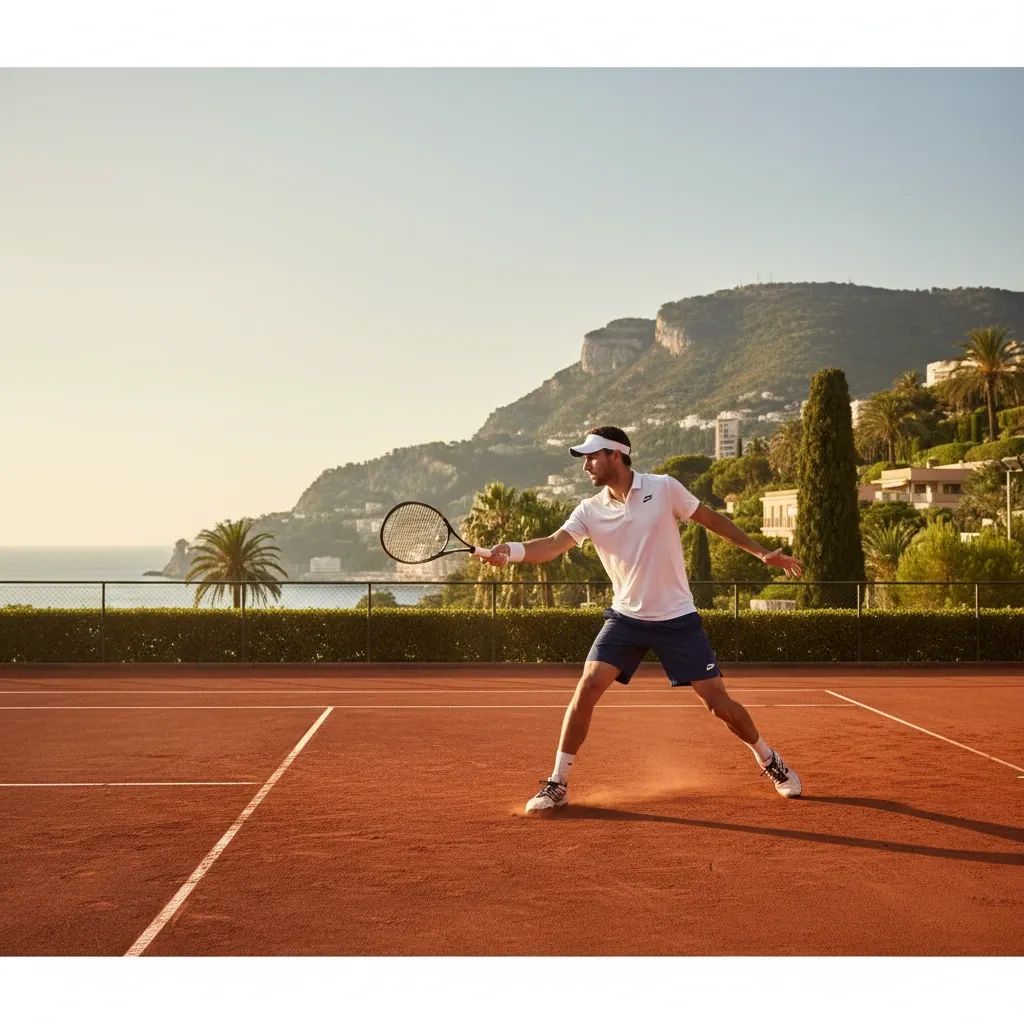
The Italy tennis sensation Jannik Sinner has shattered a record that eluded Federer, Nadal, and Djokovic throughout their storied careers, claiming his fifth consecutive Masters 1000 title in Madrid on May 3 and cementing his status as the world's most dominant player in 2026.
Why This Matters
• Sinner is the first man in tennis history to win five consecutive Masters 1000 tournaments, surpassing Rafael Nadal and Novak Djokovic's previous best of four straight titles
• The Italian now holds a 93.5% win rate this season (29-2), including a perfect 10-0 record on clay, positioning him as the overwhelming favorite for the upcoming Rome Masters (starting May 8) and Roland Garros
• Italian Prime Minister Giorgia Meloni and Deputy PM Antonio Tajani publicly celebrated the achievement, calling it "an unforgettable page" in Italian sports history
• Sinner's dominance has direct economic implications for Italy's sports economy, with experts predicting a surge in domestic tennis participation and commercial opportunities
From Paris to Madrid: An Unprecedented Run
Sinner's historic streak began at the Paris-Bercy Masters in October 2025 and rolled through four consecutive tournaments in 2026: Indian Wells, Miami, Monte Carlo, and Madrid. The 24-year-old dismantled Germany's Alexander Zverev 6-1, 6-2 in Sunday's Madrid final, a match so lopsided that Zverev himself acknowledged afterward that Sinner is "by far the best player in the world right now."
The achievement eclipses previous records held by the sport's "Big Three." Rafael Nadal won four straight Masters titles in 2013 (Madrid, Rome, Montreal, Cincinnati), while Novak Djokovic accomplished the same feat on three separate occasions between 2013 and 2016. Roger Federer, despite his 103 career titles, never won more than three Masters 1000 events in succession.
Beyond the title count, Sinner has obliterated Djokovic's record for consecutive sets won at Masters 1000 level, extending his streak to 37 between Paris 2025 and Monte Carlo 2026. He also completed the "Sunshine Double" (Indian Wells and Miami) without dropping a single set—a display of dominance unseen since Djokovic's prime years.
International Tennis Community Reacts
The global tennis establishment has watched Sinner's ascent with a mixture of awe and resignation. Djokovic, who defeated Sinner in a five-set Australian Open semifinal in January, described the Italian as someone who "pushes you to the absolute limit" and noted that Sinner has been "playing the best tennis of his life for the past two years."
Rafael Nadal, who retired in late 2025, commented on Sinner's ability to learn from setbacks, particularly praising his "self-criticism" and rapid improvement. Roger Federer, speaking in January before the Australian Open, called the Sinner-Carlos Alcaraz rivalry "incredible" and reflected on the tactical challenges Sinner would present, calling him "the most magical tennis player of all time" from a technical standpoint.
These endorsements from legends carry weight in Italy, where Sinner has become a national hero. At 24 years and 211 days old, he is already the youngest player in the Open Era to win all major hard-court titles: two Grand Slams (Australian Open 2024 and 2025), six Masters 1000 events, and the ATP Finals. He recently became the first player born in the 2000s to reach 350 career victories.
What This Means for Italian Tennis and Economy
For Italy, Sinner's success translates into more than athletic pride. The Italian Tennis Federation (FIT) has reported a 38% increase in junior registrations since Sinner's first Grand Slam win in 2024, with tennis facility construction accelerating across Milan, Rome, and Turin. Corporate sponsors tied to Sinner—including several major Italian brands—have seen measurable upticks in brand visibility and sales.
The Rome Masters, scheduled for May 8-18, represents Sinner's next opportunity: winning would make him the first player to claim six consecutive Masters 1000 titles and allow him to complete the Career Golden Masters (winning all nine Masters 1000 events at least once) on home soil. The Foro Italico, Rome's historic tennis venue, has already sold out for the finals weekend, with ticket resale prices tripling on secondary markets.
However, Sinner struck a cautious tone in his post-Madrid press conference. "Playing at home is always very special," he said. "At the same time, I want to enjoy this moment. Physically I'm fine. There's no reason not to play in Rome, obviously. But I also need to recover. Mentally, we've given a lot. There's always so much pressure."
That measured response has sparked debate among Italian sports analysts. Some interpret it as prudent rest management ahead of Roland Garros, where Sinner is the explicit number 1 seed and a top contender for his first French Open title. Others worry that the grueling clay season—stretching from Monte Carlo in April through Roland Garros in early June—could lead to fatigue or injury.
The Road to Paris: Roland Garros Ambitions
The Roland Garros 2026 tournament, beginning May 25, looms as Sinner's ultimate test. He reached the final in 2025, losing to Carlos Alcaraz in an epic five-set match despite holding three match points. Victory this year would give him the Career Grand Slam and solidify his claim as the sport's preeminent player.
Predictive tennis algorithms currently give Sinner a 78% probability of winning Rome and place him as the favorite for Roland Garros, though Alcaraz remains a formidable challenger. Sinner's 10-0 clay record in 2026 and his 23-match overall winning streak (28 consecutive victories at Masters 1000 level) suggest he has finally mastered the surface that once challenged him.
His coaching team—Simone Vagnozzi and Darren Cahill—has focused on refining his movement and shot selection on clay, addressing the weaknesses that opponents once exploited. The results speak for themselves: Sinner's average points won per match on clay have increased from 53% in 2024 to 61% in 2026, a jump that mirrors Djokovic's improvement trajectory between 2009 and 2011.
Political and Cultural Impact
Prime Minister Giorgia Meloni wasted no time celebrating Sinner's Madrid victory, posting on social media: "Jannik Sinner writes history again and gives Italian sport another unforgettable page." Deputy Prime Minister Antonio Tajani added, "Keep it up, Italian champion."
These endorsements reflect Sinner's unique position in contemporary Italy. Unlike football stars whose political affiliations often spark controversy, Sinner has maintained a carefully neutral public persona focused on "playing for myself and my team," as he puts it. This has made him a unifying figure across Italy's fractured political landscape—a rare commodity in a country where sports and politics frequently collide.
For residents and expats in Italy, Sinner's dominance offers a tangible boost to national morale during a period of economic uncertainty and political tension within the European Union. His success also drives tourism and hospitality revenue, particularly in the Alto Adige region (South Tyrol) where he was born, which has seen a 22% increase in sports tourism since 2024.
Can the Streak Continue?
Whether Sinner can extend his Masters 1000 streak to six in Rome—and then claim his first Roland Garros title three weeks later—remains the central question for Italian tennis fans. The physical and mental demands of such a schedule are immense, even for a 24-year-old at peak fitness.
Sinner's 93.5% win rate this season is the highest since Djokovic's 95.4% in 2015, a year when the Serbian won three of four Grand Slams. But Djokovic was 28 then, with years of experience managing the tour's grueling demands. Sinner, despite his maturity, is still learning to balance ambition with self-preservation.
His immediate priority, by his own admission, is rest and recovery. "It's been a very, very long tournament run, starting from Indian Wells," he said Sunday. "I'm very happy, but now it's also useful to recover. Mentally, we've given a lot."
Italian tennis officials and fans will be watching closely when Sinner takes the court at the Foro Italico in Rome. If he can maintain his current form, he won't just be making history—he'll be redefining what's possible in modern tennis.


