
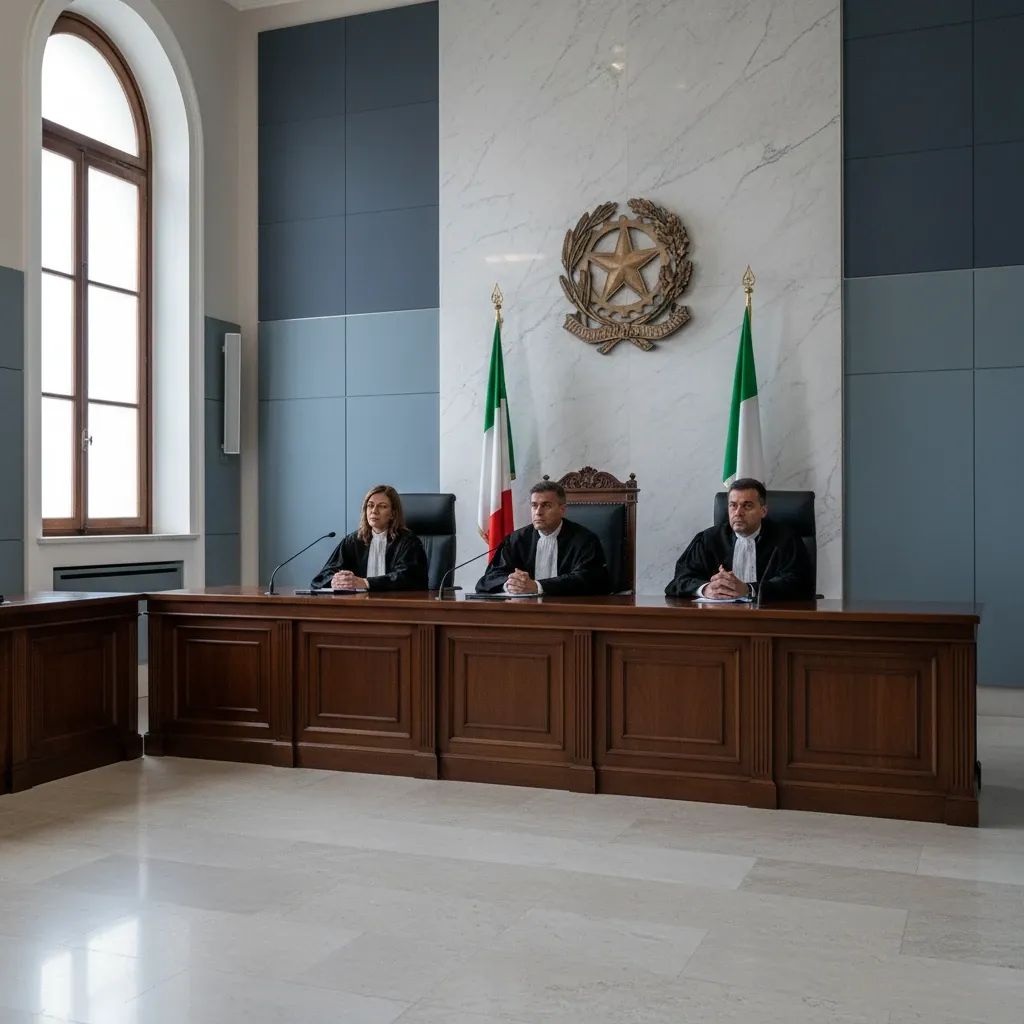
Over 51 million voters across Italy and abroad are casting ballots today through Monday afternoon in a constitutional referendum that will fundamentally reshape the nation's judicial system—or leave it unchanged. The outcome depends solely on which side wins more votes; no minimum turnout is required.
The Italian Ministry of the Interior reports that 51.4 M eligible voters, including 5.5 M citizens residing overseas, can participate in this no-quorum referendum on judicial reform. Polling stations opened at 7:00 this morning and will remain accessible until 23:00 tonight, then reopen Monday from 7:00 to 15:00, when counting begins immediately.
What Italians Are Actually Voting On
This is not a routine administrative adjustment. The constitutional law 253/2025, passed by Parliament last October, proposes four structural changes to how Italy's judiciary operates:
Splitting magistrates into two separate career tracks—judges (giudicanti) who preside over trials, and prosecutors (requirenti) who bring charges. Currently, all magistrates belong to a single professional order and can switch roles during their careers.
Replacing the unified Consiglio Superiore della Magistratura (CSM) with two independent governing councils, one for judges and one for prosecutors. Each council would handle promotions, professional evaluations, and disciplinary oversight for its respective branch. The President of the Italian Republic would chair both bodies.
Introducing lottery-based selection for council members. Two-thirds of each CSM would be drawn by lot from eligible magistrates; one-third would come from a parliamentary list of law professors and senior attorneys, also selected randomly. Supporters claim this will dismantle the correnti—factional blocs within the judiciary accused of controlling appointments through patronage networks.
Establishing an Alta Corte Disciplinare with exclusive jurisdiction over misconduct cases involving all magistrates. This 15-member court would include 3 judges appointed by the President, 3 drawn from a parliamentary roster, 6 trial judges, and 3 prosecutors, with the latter groups chosen by lottery from magistrates meeting seniority thresholds.
Why This Matters for Residents
If voters approve the reform, Italy's legal system will undergo its most significant structural overhaul in decades. For anyone navigating civil disputes, criminal proceedings, or administrative litigation, the changes carry tangible implications:
Trial impartiality could shift. Proponents argue that separating judges from prosecutors will reinforce the terzietà del giudice—the principle that judges must remain neutral arbiters, not former colleagues of the prosecution. Critics counter that magistrates already operate independently and that the reform manufactures a problem that does not exist.
Judicial appointments may become less predictable. The sorteggio system aims to remove political horse-trading from promotions, but detractors warn it could elevate inexperienced magistrates or sidelining skilled administrators. For litigants, this introduces uncertainty about who will oversee their cases and whether institutional knowledge will be preserved.
Disciplinary oversight moves to a new forum. If you file a complaint about judicial misconduct, your case would go to the Alta Corte Disciplinare rather than the existing CSM disciplinary sections. Whether this enhances accountability or creates bureaucratic redundancy remains contested.
No impact on case backlogs. Opponents emphasize that the reform does nothing to address Italy's notoriously slow court system, where civil cases average nearly 4 years to resolution. The structural changes target governance, not efficiency.
Political Battle Lines Drawn Sharply
The Italian center-right coalition—comprising Fratelli d'Italia, Lega, Forza Italia, and Noi Moderati—has united behind the "Sì" campaign, framing the referendum as a modernization aligned with judicial models in France and Germany.
Lega leader Matteo Salvini broke the traditional silenzio elettorale (electoral silence period) with public comments urging a "Yes" vote, sparking accusations that he violated Italy's pre-vote neutrality norms.
Arrayed on the opposing side, the center-left bloc—including the Partito Democratico, Alleanza Verdi e Sinistra, and Movimento 5 Stelle—has coalesced around the "No" position, warning that the reform undermines judicial autonomy and concentrates power by fragmenting oversight. The CGIL trade union echoed this stance, arguing the changes threaten constitutional checks and balances.
Azione broke ranks with the opposition by endorsing "Sì," while Italia Viva declared freedom of conscience, leaving its supporters to decide individually.
Constitutional Concerns and Legal Debate
Legal scholars remain divided over whether the reform respects Article 107 of the Italian Constitution, which states that magistrates "differ only in their functions." Critics contend that creating two separate career paths contradicts this unity principle and weakens the magistracy as an independent branch.
Others question whether establishing a disciplinary court outside the traditional CSM framework encroaches on the immutability doctrine—the idea that certain constitutional protections for judicial independence cannot be altered even through constitutional amendment.
Supporters counter that European precedents validate career separation and that lottery selection represents a democratic safeguard against entrenched corporatism. They cite chronic scandals involving CSM appointments influenced by factional politics as evidence that structural intervention is overdue.
What Happens After 15:00 Monday
Because this is a referendum confermativo, no participation threshold applies. The side with more valid votes wins, regardless of turnout. Preliminary affluenza data will be released at 12:00, 19:00, and 23:00 today, with final figures at 15:00 tomorrow. Ballot counting begins immediately after polls close Monday afternoon, with results expected by late evening.
If "Sì" prevails, Constitutional Law 253/2025 takes effect, triggering a multi-year implementation period as Parliament drafts enabling legislation to operationalize the two CSMs, design the lottery system, and establish the Alta Corte Disciplinare.
If "No" wins, the reform is nullified and Italy's current unified magistracy structure remains intact. The government would face pressure to propose alternative justice reforms, though consensus on next steps would likely prove elusive given the sharp partisan divide.
Strategic Calculations Beyond the Ballot
For Prime Minister Giorgia Meloni's administration, the referendum has become a test of governing strength. A decisive "Sì" victory would validate her coalition's agenda and demonstrate its ability to deliver transformative policy despite entrenched opposition. A narrow loss—or worse, a landslide defeat—would embolden the center-left and complicate legislative priorities heading into the next electoral cycle.
Opposition leaders view the referendum as a chance to unite fragmented progressive forces around a common cause after months of infighting. The broad "No" coalition spanning ecological greens, democratic socialists, and populist Five Star factions offers a rare moment of strategic cohesion.
Beneath the constitutional arguments lies a fundamental question about Italy's institutional balance: Should the executive and legislative branches reshape judicial governance through parliamentary majorities and referendums, or does such intervention risk politicizing a system designed to remain insulated from electoral pressures?
For the 51 M Italians eligible to vote, the answer will be known within 24 hours.


