
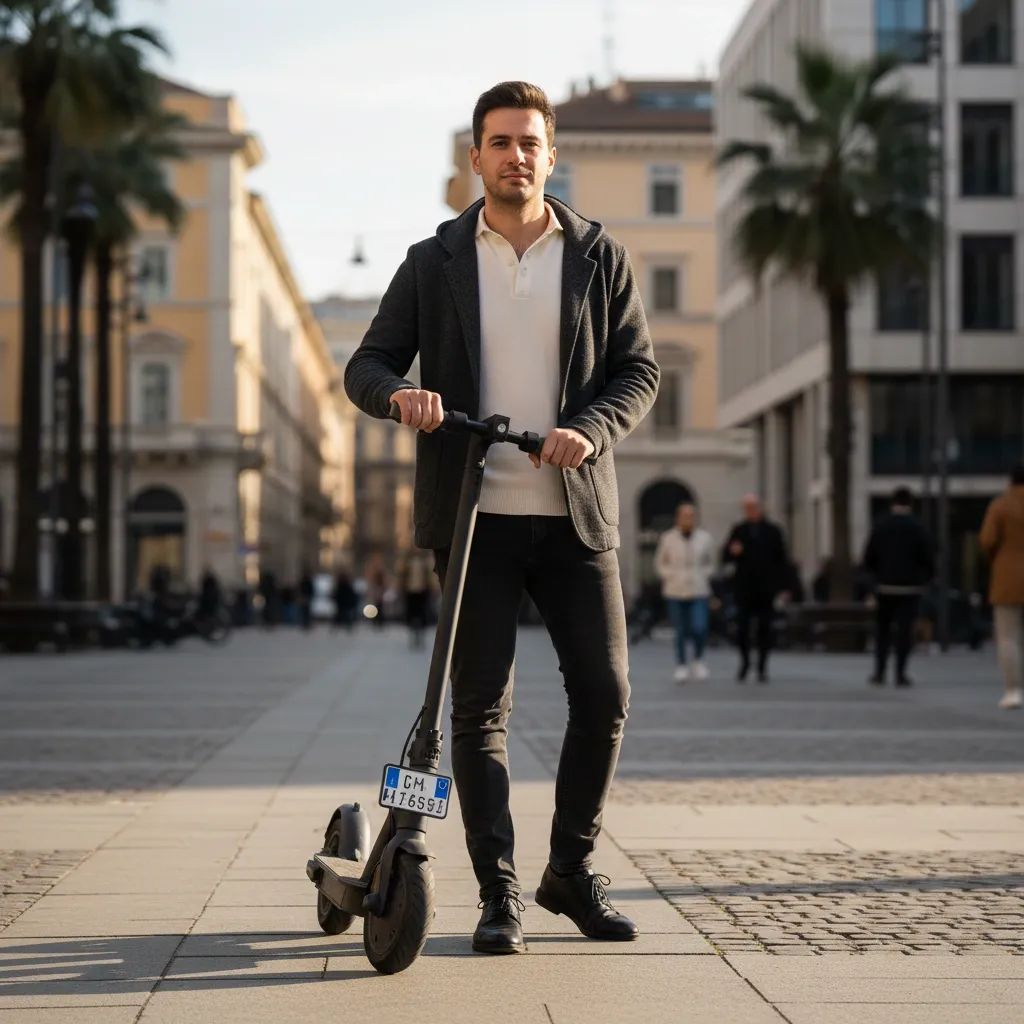
Italy's Transport Ministry has confirmed that the mandatory identification plate requirement for electric scooters takes effect on May 17, 2026. However, administrative chaos at motorization offices threatens to leave thousands of riders exposed to fines of up to €400 despite having submitted their applications on time. The implementation deadline arrives as consumer groups demand a postponement, warning that unprocessed requests and delayed deliveries could trigger a flood of legal appeals from both private owners and sharing operators.
Why This Matters
• Deadline enforcement: From May 17, 2026, riding without the identification sticker risks €100-400 fines, even if you applied correctly but haven't received your plate yet.
• System bottleneck: Only 50,000 scooters had received plates by 14 May, while thousands of requests remain unprocessed due to last-minute surges.
• Insurance delay granted: The mandatory RC policy requirement has been postponed from May 17, 2026 to 16 July 2026, offering breathing room as insurers integrate with the motorization database.
• Sharing fleets at risk: Around 15,000 shared-service requests remain pending, threatening to ground rental scooters across major cities from May 17, 2026.
Administrative Backlog Collides With Enforcement
Deputy Prime Minister and Transport Minister Matteo Salvini used social media to remind Italians that the identification sticker becomes compulsory on May 17, 2026, emphasizing that the measure represents "common sense regulation to protect users, pedestrians, and drivers for greater safety and rule compliance on our roads." Salvini underscored the broader regulatory framework: "Helmet, plate, and from July also insurance: the street and sidewalks belong to everyone, use your head."
Yet the Codacons consumer association has sounded the alarm over what it describes as a collision course between regulatory ambition and bureaucratic capacity. The organization points to a procedural mismatch that could penalize compliant citizens: thousands who submitted applications through the Portale dell'Automobilista portal within the prescribed timeframe still await physical delivery of their plates as the deadline arrives.
Motorization offices across Italy report significant backlogs, with nearly 60% of the 40,000-plus requests filed in just the final ten days before enforcement begins. To manage the surge, Rome, Milan, and Turin motorization centers scheduled extraordinary Saturday openings on 16 May and expanded appointment slots, but these measures appear insufficient to clear the queue.
What This Means For Scooter Owners
The identification sticker—officially a plastified, non-removable adhesive produced by the Istituto Poligrafico e Zecca dello Stato—ties the scooter to its owner's tax code through a digital registration system. Unlike traditional vehicle plates, the sticker is personal to the owner, not the vehicle: when you sell or scrap your scooter, you must cancel the sticker and the buyer must apply for their own.
Cost breakdown varies depending on whether you handle the process yourself or use an agency:
• DIY route: Approximately €8.66 covering production and VAT
• Full motorization process: Around €35 including stamp duty and administrative fees
• Through an agency: Up to €80 for assisted handling
The application process requires authentication via SPID level 2 or Carta d'Identità Elettronica (CIE) through the Portale dell'Automobilista, which opened on 18 March 2026. Once approved, owners must collect the physical sticker from their provincial motorization office and affix it permanently to the rear fender or steering column in a visible location.
From May 17, 2026, any law enforcement agency—including Polizia di Stato, Carabinieri, Guardia di Finanza, and municipal police forces—can issue sanctions for missing identification plates. Repeat offenders face not just escalating fines but confiscation of the scooter.
Shared Mobility Operators Face Paralysis
The regulatory squeeze hits shared-scooter companies particularly hard. Codacons reports that approximately 15,000 fleet requests remain unprocessed, meaning rental scooters without plates by May 17, 2026 will be illegal to deploy. This threatens to pull thousands of shared scooters off streets in cities where they've become integrated into public transit networks.
The association warns that both private owners and sharing operators who filed timely applications but received no sticker could mount coordinated legal challenges if sanctioned, arguing they fulfilled their obligations but were failed by administrative capacity. "This deadlock fuels litigation risk," Codacons emphasized, calling for an immediate extension to "fully protect the rights of users and sector operators."
Broader Safety Framework Takes Shape
The identification requirement represents just one element of a comprehensive regulatory overhaul for electric scooters in Italy:
Helmet mandate: Since 14 December 2024, all riders regardless of age must wear an approved helmet, with violations drawing €50-250 fines. Previously only minors faced this obligation.
Mandatory insurance: The requirement to carry RC third-party liability coverage was postponed to 16 July 2026, following technical delays in linking the motorization platform, insurance database, and carrier systems. Riding uninsured after that date triggers €100-400 fines plus immediate vehicle seizure.
Equipment standards: Scooters must now have front and rear lights, turn signals, brake indicators, and an acoustic horn. These technical requirements push older models off the road unless retrofitted.
Speed and zone restrictions: The 20 km/h maximum drops to 6 km/h in pedestrian zones. Scooters are banned from extra-urban roads, tunnels, sidewalks, and dedicated bike lanes, limiting legal operation to urban streets with 50 km/h limits or lower.
Minimum age: Riders must be at least 14 years old, formalizing what was previously inconsistent municipal enforcement.
How Italy Compares to European Neighbors
Italy's regulatory approach places it among the stricter European frameworks, though not the most restrictive:
• Germany: Mandated plates and insurance, with similar 20 km/h limits and 14-year minimum age.
• Spain: Implemented certification, registration, visible identification numbers, and mandatory insurance from January 2026, adding helmet requirements across the board.
• France: Caps speed at 25 km/h, requires helmets only for minors, and mandates reflective vests at night but stops short of plate requirements.
• UK: Maintains a near-total ban on private e-scooters in public spaces, permitting only government-approved rental schemes in trial zones—an outlier in European micromobility policy.
• Austria & Belgium: Take middle-ground positions with age and speed limits but lighter equipment mandates and delayed or optional helmet rules.
• Denmark: Mirrors Italy's comprehensive approach with mandatory helmets for all riders and required insurance.
• Netherlands: Distinguishes between pedal-assist models (freely permitted) and throttle-controlled scooters (classified as mopeds requiring plates since July 2025).
The global picture shows even greater variation: Japan requires plates and insurance but recommends rather than mandates helmets; Australia enforces helmet use in most states but restricts private scooters to private property in some jurisdictions; and the United States leaves regulation entirely to state and city governments, creating a patchwork ranging from permissive to prohibitive.
The Cost of Compliance
For residents who've integrated e-scooters into daily commutes, the regulatory shift imposes new costs beyond the plate itself. A basic RC insurance policy is expected to cost €50-120 annually depending on coverage limits and carrier, while an approved helmet adds €30-80 to the initial outlay. Equipment upgrades for older scooters lacking turn signals or brake lights could run €40-100 for aftermarket kits, assuming retrofitting is even possible.
These expenses disproportionately affect younger riders and lower-income users who adopted scooters precisely because of their low entry cost compared to motorcycles or cars. The cumulative effect—plates, insurance, helmet, and potential equipment upgrades—transforms what was an accessible mobility option into a more regulated, costlier alternative.
Consumer advocates argue the rules enhance safety and accountability, making scooters safer for riders, pedestrians, and drivers alike by ensuring identification, financial liability coverage, and visibility. Critics counter that Italy risks over-regulating an emerging sector, potentially driving users back to cars and undermining urban sustainability goals.
Enforcement Realities
Whether motorization offices can deliver the remaining plates quickly enough to avoid penalizing compliant applicants remains unclear. The Transport Ministry has not announced a grace period for those holding proof of timely application but lacking physical stickers, leaving enforcement discretion to local police forces who may or may not show leniency.
For now, riders without plates face a stark choice on May 17, 2026: risk the fine or leave the scooter at home. Those who applied early and received their stickers should ensure they're properly affixed and visible. Those still waiting may want to carry documentation proving they filed on time, though whether that shields them from sanction is legally uncertain.
The insurance deadline in July offers a preview: if administrative systems still lag by then, expect similar calls for extension. Italy's ambitious regulatory framework for micromobility ultimately depends not just on legislative will but on the unglamorous reality of database integration and bureaucratic throughput—a lesson that enforcement from May 17, 2026 will test in real time.


