
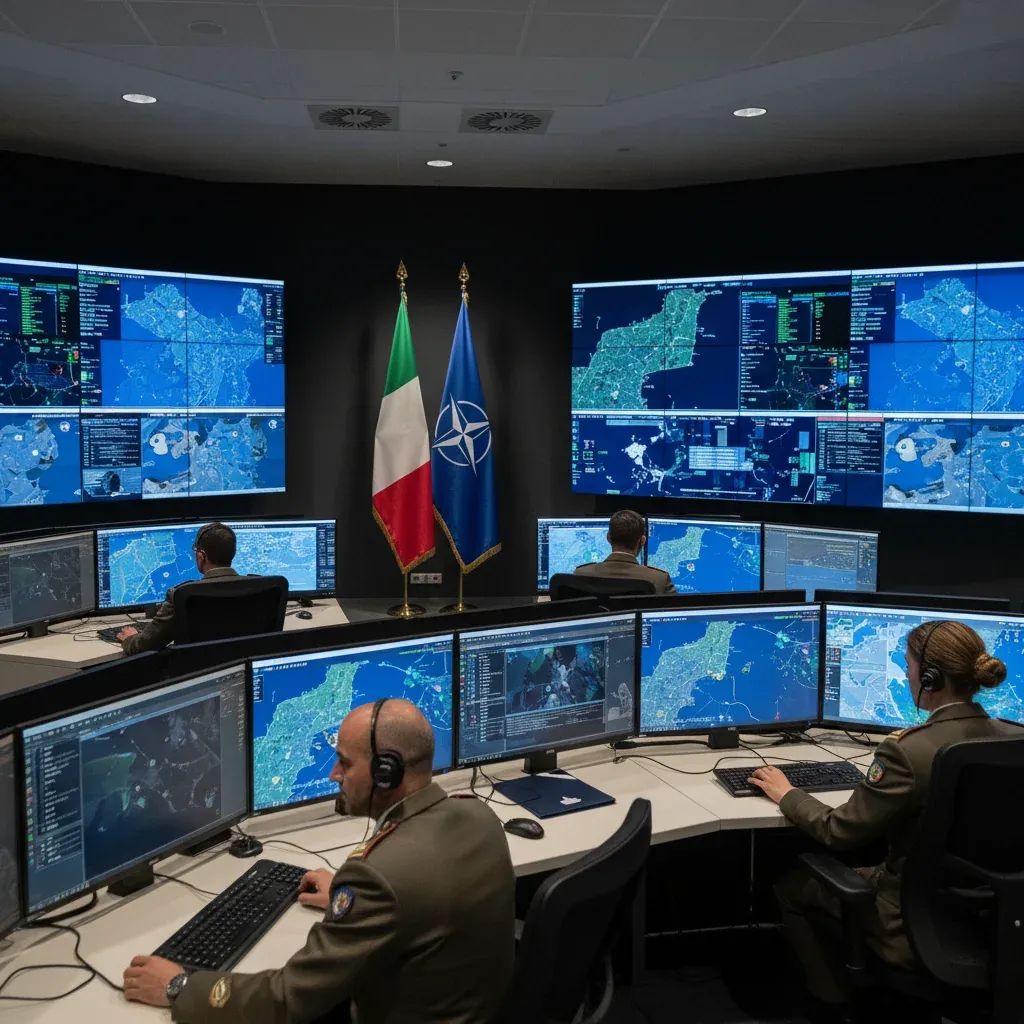
Italy's top defense council convenes on Middle East situation
Italy's Supreme Defence Council (Consiglio Supremo di Difesa) met today at the Quirinal Palace, convened by President Sergio Mattarella to analyze "the war in Iran and in Medio Oriente" and assess the situation's potential implications for Italian security, energy supplies, and military deployments. The closed-door session reflects the government's recognition that developments in the region warrant high-level coordination across Italy's defense, foreign policy, and economic leadership.
Who attended the meeting:
Joining President Mattarella and Prime Minister Giorgia Meloni were the ministers of Foreign Affairs (Antonio Tajani), Defence (Guido Crosetto), Interior (Matteo Piantedosi), Economy (Giancarlo Giorgetti), and Industry (Adolfo Urso), alongside Italy's Chief of Defence Staff Luciano Portolano and senior presidential and security advisers. The presence of both economic and industry ministers signals the government's concern that this crisis extends beyond traditional defense considerations.
About the Supreme Defence Council
The Supreme Defence Council is Italy's highest constitutional body for national security matters, bringing together political leadership, defense officials, and senior military advisers. It does not meet on a fixed schedule; President Mattarella convenes it during crises that pose direct threats to Italian security or demand strategic coordination across government hierarchies. The last comparable convocation occurred during the height of the Ukraine conflict in 2022, when Italy calibrated its NATO commitments and energy contingency plans.
Why This Meeting Matters for Italians
Italy has legitimate interests in the Middle East region that a conflict could affect:
Energy dependency: Italy imports significant energy supplies from Middle Eastern sources and is exposed to disruptions in critical shipping routes like the Strait of Hormuz, a global chokepoint for oil transportation.
Trade relationships: Italy maintains substantial commercial ties with Middle Eastern markets, exporting manufactured goods, machinery, and agricultural products to the region.
Military presence: Italy maintains a military footprint in the region, principally through UNIFIL peacekeeping forces in southern Lebanon and anti-ISIS operations in Iraq.
NATO commitments: As a NATO member hosting U.S. military installations on Italian soil, Italy may face questions about expanded operational support or force deployments.
Italy's Stated Position
Prime Minister Meloni has reiterated that Italy is not at war and does not intend to enter war in connection with the Middle East conflict. The government has emphasized that no formal request has yet been made for expanded use of Italian bases in connection with the Iran situation, and that any such decision would require parliamentary approval through votes in both the Senate and Chamber of Deputies.
The government's diplomatic posture emphasizes dialogue and de-escalation over military escalation. According to official statements, Italy is working with European and international partners to promote restraint and is exploring diplomatic channels to address the regional crisis.
The Council's Agenda
According to government sources, the Supreme Defence Council reviewed Italy's strategic position and contingency planning regarding the Middle East situation. The council assessed:
• Implications for Italian military personnel and installations in the region
• Potential economic and energy sector impacts
• Italy's NATO commitments and relationship with allied nations
• Diplomatic options and European coordination
The outcomes of today's session remain classified, and no official statement has been released regarding specific decisions or recommendations from the council.
What Happens Next
The details and decisions from today's meeting have not been publicly disclosed. Italy is expected to participate in broader European discussions on coordinated responses to the Middle East situation. The European Council will meet on March 19-20 to discuss a coordinated EU response to regional developments.
For Italian residents, the key takeaway is that the government is actively assessing the situation's potential implications and consulting across defense, diplomacy, and economic portfolios to determine Italy's appropriate response. The specific impacts on energy costs, trade, or military operations remain subject to how the broader situation develops.


