
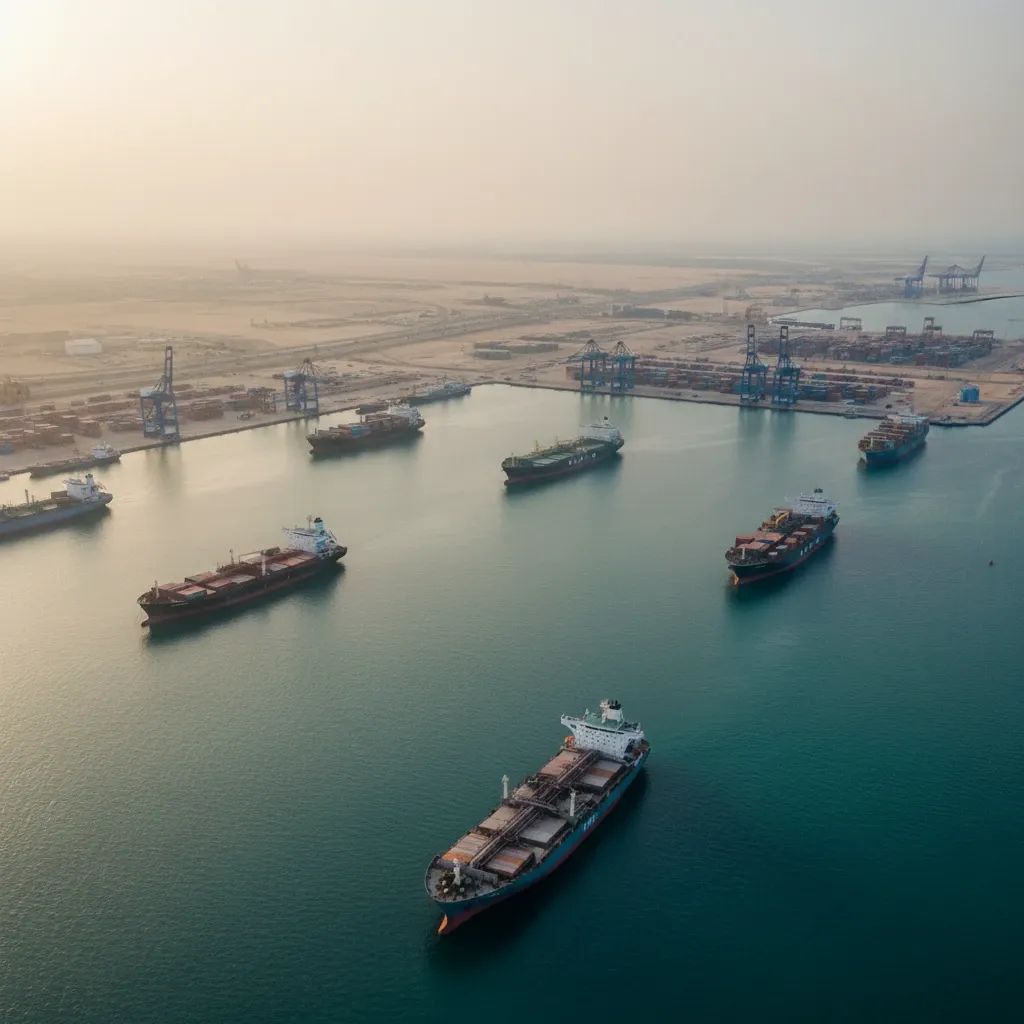
Italy's Ministry of Foreign Affairs is pursuing diplomatic talks with Iran to address the energy crisis gripping Europe. The diplomatic engagement comes as Iranian naval forces have effectively closed the Strait of Hormuz, the critical waterway through which roughly 500 tankers remain stranded and approximately one-fifth of global oil supplies normally transit. Prices have surged as a result, with direct consequences for Italian consumers and businesses.
The move places Rome in a delicate position: balancing energy security for Italian households and businesses against the risk of undermining broader Western pressure on Tehran. While the Italian government has officially denied engaging in "backdoor negotiations" that would privilege Italian-flagged ships over others, multiple European capitals—including Paris and Madrid—are pursuing similar talks to restore the flow of petroleum and liquefied natural gas to the continent.
Why This Matters
• Energy bills climb: Natural gas prices in Europe have spiked 75% since January, translating directly into higher heating and electricity costs for Italian consumers.
• Supply chain disruption: Italian manufacturers dependent on Gulf petrochemicals face shortages and delivery delays as maritime traffic remains paralyzed.
• Diplomatic risk: Any bilateral deal with Iran could fracture European unity and complicate relations with Washington, which is conducting military operations against Tehran alongside Israel.
What This Means for Residents
For Italians, the Hormuz crisis is no longer an abstract geopolitical event—it is a pocketbook issue. Gasoline prices at the pump have climbed steadily, and analysts predict further increases if the blockade persists. Utility companies are expected to pass on higher natural gas costs to households in the next billing cycle, with some estimates suggesting a 15-20% increase in monthly energy bills by late spring.
Small businesses, particularly in energy-intensive sectors like ceramics, glass, and steel, face even steeper challenges. Several manufacturers in the Emilia-Romagna and Lombardy industrial heartlands have already announced temporary production halts, citing unsustainable input costs. The Italian industrial confederation Confindustria has called on the government to deploy subsidies or tax relief to prevent mass layoffs.
The Strait Crisis: Why It Matters for Europe
The Strait of Hormuz, a narrow waterway between Iran and Oman, serves as the transit route for approximately one-fifth of global oil supplies. Since late February, Iranian naval forces and proxy militias have attacked commercial tankers and declared the strait effectively closed to vessels from nations deemed hostile—a move that has reverberated across European energy markets with unprecedented speed.
Italy, which imports a significant portion of its energy from the Gulf region, is acutely vulnerable. The country's strategic petroleum reserve can sustain demand for roughly 90 days under normal consumption, but the combination of Hormuz disruptions and reduced Russian gas flows has left Italian energy planners with limited flexibility. Wholesale electricity prices have climbed in tandem with fossil fuel costs.
France and other southern European nations face similar challenges. Although France is less reliant on Gulf oil due to its nuclear energy infrastructure, French refiners and chemical producers depend on Middle Eastern feedstocks. The broader European energy landscape reveals a critical vulnerability: despite years of rhetoric about energy independence and diversification, Italy and its neighbors remain heavily reliant on fossil fuel imports transiting through a handful of geopolitical chokepoints.
Italy's Position: De-escalation Without Favoritism
Palazzo Chigi and the Farnesina (Italy's Foreign Ministry headquarters) have taken pains to clarify that Rome is not seeking a sweetheart deal that would allow Italian vessels to bypass the blockade while other European ships remain stranded. Instead, Italian diplomats describe their engagement with Tehran as part of a broader effort to encourage a general de-escalation and restore multilateral order in the Gulf.
This framing reflects both principle and pragmatism. Italy chairs the G7 this year, and any perception that Rome is cutting side deals with a regime under international pressure could damage its credibility as a mediator. At the same time, Italian officials recognize that diplomatic contact—however informal—may be the only tool available to prevent a complete collapse of energy imports.
The Italian Navy maintains a frigate in the Red Sea as part of the European Union's Operation Aspides, a naval mission designed to protect commercial shipping from attacks. However, no European naval force is currently willing to escort tankers through Hormuz itself, fearing that such action would trigger direct military confrontation with Iran and escalate the conflict beyond containment.
Iran's Conditions and Europe's Divided Response
Tehran has signaled a willingness to permit passage through Hormuz—but only for nations that engage directly in discussions with Tehran. China, which imports roughly 40% of its oil through Hormuz, has secured agreements for Chinese-flagged tanker transit. Iran has made clear that nations participating in what it terms "aggression against Iran" forfeit their right to safe passage, a pointed reference to European states that support U.S. and Israeli military operations.
This creates a dilemma for Italian policymakers. Engaging directly with Iran risks alienating Washington and Jerusalem at a moment when transatlantic coordination is critical. Yet standing firm on sanctions and diplomatic isolation does little to address the immediate crisis facing Italian consumers and industries.
The European Union remains divided on response. The United Kingdom and France favor reimposing additional sanctions on Iran over nuclear proliferation concerns, while Spain and other southern European nations have condemned the U.S.-Israeli military campaign as a violation of international law. Germany, under Chancellor Friedrich Merz, has avoided public criticism of Washington, emphasizing shared concerns about Iran's missile and nuclear programs.
G7 Coordination and the Path Forward
At a recent G7 summit, member states agreed to coordinate efforts to restore free navigation in the Persian Gulf and the Strait of Hormuz. However, the joint communiqué stopped short of endorsing military action, reflecting deep divisions over how to respond to Iran's blockade.
The United States has indicated it will escort commercial vessels through Hormuz "as soon as militarily feasible," but the timeline remains unclear. Meanwhile, Russia and China have offered diplomatic mediation and accused Washington of fueling the crisis through military operations.
For Italy, the next few weeks will be critical. If diplomatic engagement with Iran yields tangible results—such as a partial reopening of the strait or guarantees for neutral shipping—Rome may be able to claim a diplomatic victory and ease pressure on its energy sector. If talks stall, however, Italian policymakers will face increasingly difficult choices: align more closely with U.S. military operations, accept prolonged energy disruption, or pursue bilateral arrangements that could fracture European solidarity.
Energy Strategy and Long-Term Implications
This crisis has revived debate over Italy's energy transition strategy. Some policymakers are arguing for accelerated investment in renewables and liquefied natural gas terminals, while others advocate for maintaining nuclear options or deepening ties with African suppliers.
The immediate concern for Italian households and businesses is cost and supply. But the Hormuz crisis underscores a deeper question: whether Europe—and Italy specifically—will finally develop the political will and make the investments needed to reshape energy infrastructure for a more volatile world. The answer will determine not just the price Italians pay for heating and transportation, but the country's economic resilience and geopolitical leverage for decades to come.


