
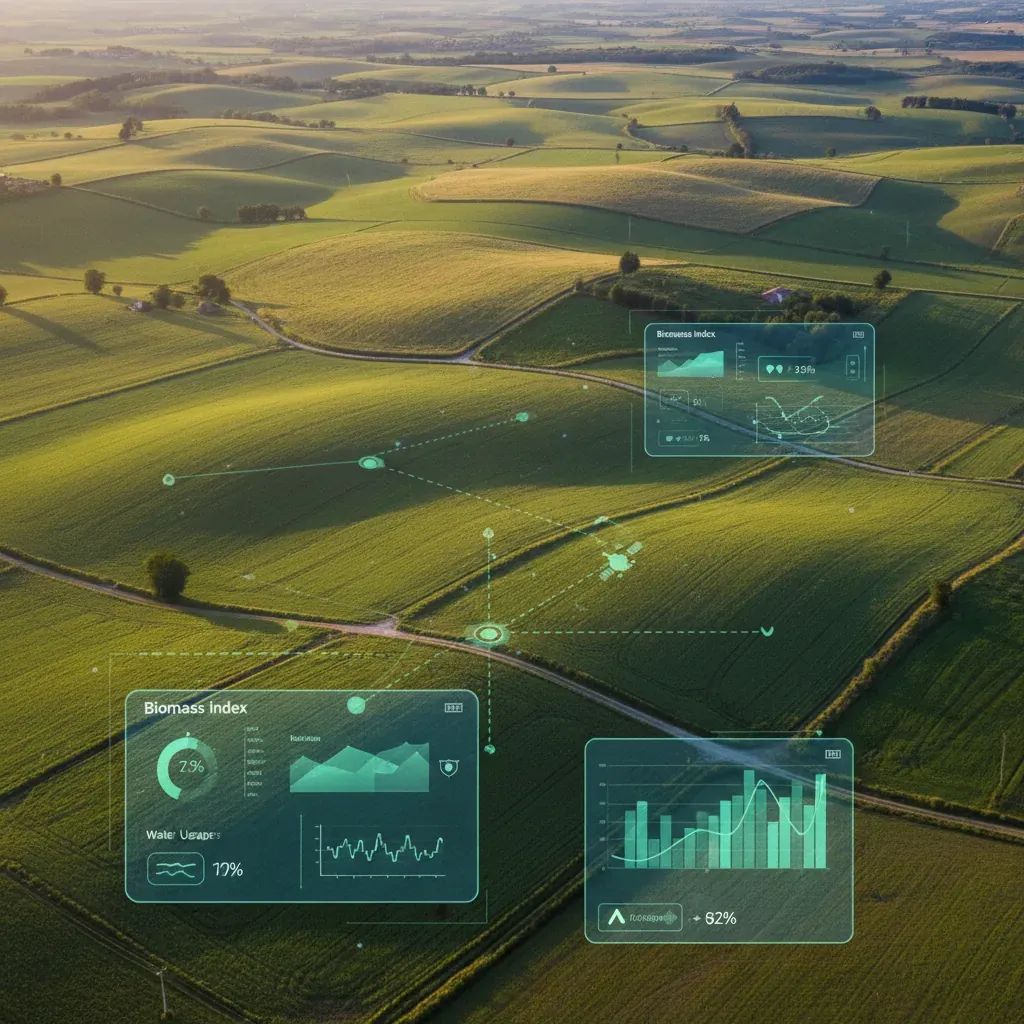
The Italian Ministry of Agriculture has committed €3B to subsidize on-farm renewable energy generation for 30,000 agricultural enterprises. Agriculture Minister Francesco Lollobrigida claims the program will cut energy costs by €11B over two decades without sacrificing a single square meter of productive farmland.
The announcement comes as fuel price volatility linked to the Strait of Hormuz crisis threatens to destabilize Italy's farm sector. The timing is urgent: spring planting season and fertilizer application are underway, with energy and input costs soaring.
What Farmers Need to Know Now
Key Dates and Actions:
• Tax Credit Applications: Farmers who purchased diesel between March 1-31, 2026 should retain invoices. Claims file via F24 compensation model by December 31. An interministerial decree due May 4 will finalize exact percentages and per-farm ceilings.
• Solar Subsidy Applications: Expected to launch in late May or early June through regional agricultural agencies (Agea). Installation timelines span six to nine months from contract signature to commissioning.
• Fuel Subsidy Expires: The €1B annual diesel subsidy remains in force, but cannot fully insulate farms from global crude swings.
Who Benefits Most: Priority will likely go to livestock and greenhouse operations with large, unshaded roof areas and existing grid connections rated for bi-directional metering.
Why This Matters
• Farm energy bills: Eligible operations can now produce up to one-third of their energy needs using subsidized solar installations on barns, greenhouses, and processing facilities. A 50 kW rooftop installation—typical for a medium-sized dairy or vegetable operation—can shave €8,000 to €12,000 off annual electricity bills over 20 years.
• Fuel cushion maintained: Italy continues to allocate €1B annually to reduce diesel costs for agriculture, a subsidy Lollobrigida says no other EU member state has preserved.
• Tax credit on March purchases: A 20% tax credit applies to fuel bought in March 2026, capped at €30M nationally.
• Crude impact: Brent crude spiked to $118 per barrel in late March; Italian diesel prices climbed from €0.70/liter to over €1.20/liter in weeks.
Government Prioritizes Farm Energy Self-Sufficiency
The €3B renewable-energy package targets installations that blend into existing farm infrastructure—rooftop panels on livestock sheds, photovoltaic canopies over packing houses, and semi-transparent glass on high-value greenhouses. By restricting panels to structures already in use, the program sidesteps the land-competition debate that has roiled agrivoltaic policy across Europe.
Italy's 2024 Agricultural Decree banned new ground-mounted solar on arable land unless arrays sit at least 2.1 meters above crops—a design known as elevated agrivoltaics. This contrasts with Spain and Germany, which explicitly allow ground-mounted solar arrays on farmland under certain conditions, while France caps panel coverage at 40% of any plot.
Lollobrigida framed the subsidy as both an economic and environmental win. "We prove that environmental sustainability and economic sustainability can travel side by side," he told reporters, emphasizing that every euro of the €3B flows to productive capacity rather than land conversion.
Hormuz Bottleneck Amplifies Fuel Anxiety
Italy imports roughly 20% of its liquefied natural gas through the Strait of Hormuz, the 39-kilometer chokepoint between Iran and Oman that also handles a fifth of global crude oil shipments. Escalating military tensions in late February 2026 forced tanker operators to reroute via the Cape of Good Hope, adding three weeks to delivery schedules and lifting insurance premiums by double-digit percentages. European gas hub prices doubled from €30/MWh to €60/MWh within a month; the ripple hit diesel pumps nationwide.
For Italy's farmers the timing could not be worse. Spring planting for maize and sunflower—both diesel-intensive crops—coincides with peak fertilizer application. Urea prices surged 80% year-on-year, climbing from €266 to €450 per 50 kg bag in some wholesale markets, because urea synthesis consumes natural gas at a ratio of roughly 0.6 tons of gas per ton of product. The UN Food and Agriculture Organization warned that global fertilizer prices may stay 15% to 20% above the 2023–2025 average through the second half of 2026 if Hormuz remains contested.
Lollobrigida acknowledged the geopolitical limits of Rome's influence. "We will commit, as everyone will, to resolving the Hormuz issue, but it is not a question on which we can have an impact like the Iranians or the United States can. It arises from their choices," he said. The minister instead pointed to the €1B annual diesel-subsidy program, which zeroes out most excise duty and applies a reduced 10% VAT rate instead of the standard 22%.
Tax Credit Mechanics and Coverage Gaps
The April 3 emergency decree (DL 42/2026) created a one-month tax credit for fuel purchased in March, set at up to 20% of net-of-VAT invoiced amounts. Treasury officials earmarked €30M for the scheme, which covers diesel, petrol, and heating oil used in greenhouse horticulture.
Farm lobby groups welcomed the gesture but called it a "blunt weapon" against cost surges that can represent 15% to 20% of total operating expenses in grain and fodder production. Confagricoltura and CIA-Agricoltori Italiani have separately urged the government to eliminate all remaining excise on agricultural diesel and institute a price cap pegging pump costs at €0.80/liter regardless of Brent fluctuations.
Regional administrations are layering on their own aid. Sicily allocated €10M within a broader €30M transport-and-primary-sector package to reimburse fuel cost increases from March 1 through December 31, 2026, operating as direct transfers rather than tax offsets—a benefit for smaller operators who lack sufficient tax liability.
European Context: Italy's Restrictive Solar Approach
While Berlin and Madrid actively court dual-use solar farms, Rome remains cautious about letting panels encroach on tillable hectares. Germany's renewable-energy law offers enhanced feed-in tariffs for agrivoltaic installations that maintain at least 66% of reference crop yields. The European Commission in late 2025 approved a €1.7B Italian agrivoltaic incentive scheme designed to add 1.04 GW of solar capacity under the elevated-array exemption.
Spain's Royal Decree takes a more liberal approach, writing agrivoltaic land into CAP subsidy calculations without height mandates. France requires departmental environment commissions to certify that arrays contribute sustainably to farm output and cause no more than a 10% drop in usable area. Denmark favors biogas and biomass, with over two-thirds of renewable energy coming from agricultural residues. The Netherlands likewise funds greenhouse trials and small wind cooperatives rather than blanket land-use waivers.
Practical Implementation for Farm Operators
Energy payback calculations should account for Italy's latitude-driven solar yield of roughly 1,300 to 1,500 kWh per installed kW-peak annually in the Po Valley and northern plains, rising to 1,600 kWh in the south. A 100 kW barn array might generate 140,000 kWh per year, worth €16,000 to €20,000 at current retail electricity rates but subject to net-metering rules that compensate surplus feed-in at wholesale rather than retail prices. Battery storage adds upfront cost but captures more value by time-shifting self-consumption to evening milking or cold-storage loads.
The diesel subsidy remains in force—€1B annually translates to roughly 700M liters at a 15-cent-per-liter benefit—but cannot fully insulate farms from global crude swings. Operators managing tight margins may need to hedge via forward fuel contracts or cooperative bulk-buy schemes, which some provincial Coldiretti branches are exploring.
Fertilizer Bottleneck Poses Structural Risk
Beyond fuel, the Hormuz squeeze on ammonia and urea shipments presents a harder problem. Roughly 25% to 33% of global fertilizer trade passes the strait, much of it from Gulf producers whose plants run on associated natural gas. When feedstock costs double, so do fertilizer prices unless governments subsidize production.
Italy's arable sector—wheat, maize, tomatoes for processing—relies on nitrogen application rates that average 150 to 200 kg per hectare. At pre-crisis urea prices of €350/ton, a 100-hectare cereal farm budgeted €10,000 to €12,000 for spring top-dressing; at €450/ton that jumps to €15,000. Fruit and vegetable growers face steeper per-hectare increases because intensive cropping schedules demand split applications.
Farm groups say the ministry's €100M annual emergency agriculture fund barely covers frost damage and pest outbreaks, let alone a fertilizer shock. Lollobrigida has asked Brussels to suspend or defer planned nitrogen-reduction targets under the Farm to Fork strategy, arguing that forcing Italian growers to cut application rates while global prices soar amounts to a "double sacrifice" that undermines food security.
Organic and regenerative systems, which substitute legume cover crops and composted manure for synthetic nitrogen, prove more resilient in this environment. The Italian organic sector may see accelerated conversions if fertilizer prices remain elevated past harvest 2026.
Outlook: Structural Reform vs. Stop-Gap Measures
Italy's multi-pronged response—renewable subsidies, diesel tax relief, and a one-month fuel credit—buys breathing room but stops short of the structural overhaul farm lobbies demand. Confagricoltura continues to press for a legislated diesel price ceiling, indexed quarterly and backstopped by a strategic reserve or refiner levy. Coldiretti wants the renewable budget doubled and extended through 2030, with streamlined permitting that cuts approval timelines from nine months to three.
Political appetite for deeper intervention will depend on how long Hormuz disruptions persist. If tanker traffic normalizes by late summer, Brent may retreat toward €85/barrel and European gas toward €40/MWh, easing pressure on both diesel pumps and fertilizer plants. A protracted stand-off could push Italy's 2026 inflation above 4% to 5%, triggering broader fiscal constraints that limit agriculture's claim on emergency funds.
In the meantime, the €3B renewable package and the preserved diesel subsidy offer tangible, if partial, relief. Farmers weighing capital investments should model scenarios across a $70 to $120 Brent range and consider hybrid strategies—modest rooftop solar to trim peak demand, cooperative diesel bulk-buy contracts, and precision-application technology that stretches every kilogram of urea. The ministry's bet is that distributed renewable capacity, layered atop fiscal fuel support, can deliver €11B in aggregate savings without surrendering productive land. Whether that wager pays off depends as much on Tehran and Washington as it does on Rome.


