
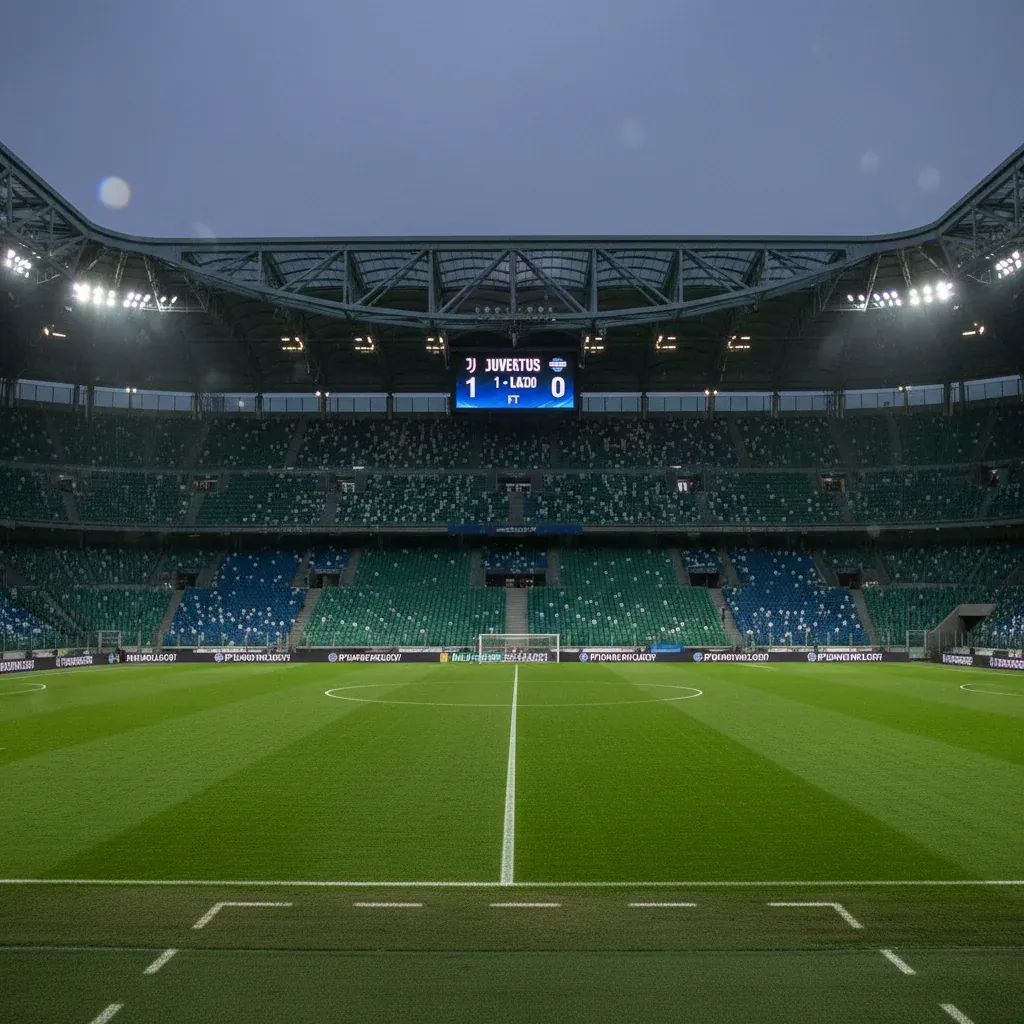
Como 1907 has vaulted into serious contention for a Champions League berth, defeating Parma 1-0 in a match that keeps alive what would be one of the most improbable qualification stories in modern Italian football. The promoted club now sits in 5th place with 68 points, just two points behind Milan and Roma in the race for European football's most prestigious tournament.
Why This Matters:
• First European qualification in 45 years: Como has already secured at least a Europa League spot, their first continental competition since the Mitropa Cup in 1980-81.
• Champions League within reach: With two matches remaining, Como trails the 4th-place clubs by just two points, making a top-four finish mathematically possible.
• Financial windfall ahead: Champions League participation would bring approximately €15M-20M in guaranteed revenue, transforming the club's financial outlook.
• Historic achievement: A Champions League qualification would represent the greatest sporting success in Como's 113-year history.
The Match That Kept Hope Alive
Alberto Moreno's strike in the 46th minute proved the decisive moment at Stadio Giuseppe Sinigaglia. The veteran Spanish left-back, signed from Villarreal last summer, converted what manager Cesc Fàbregas later described as "the most important goal in our modern history."
Como dominated possession with their trademark 60.9% ball control, the highest average in Serie A this season. The hosts struck the woodwork twice—Douvikas and Baturina both rattling the frame—while Parma had a Pellegrino goal disallowed for offside in the 75th minute.
The victory was Como's 31st under Fàbregas across all competitions, giving the former Barcelona and Arsenal midfielder a 41.9% win rate in his first full season managing in Italy's top flight.
The Tactical Revolution Behind Como's Rise
Fàbregas has imported a playing philosophy directly influenced by his mentors Pep Guardiola and Arsène Wenger, transforming a newly promoted side into one of Europe's most statistically impressive teams. The numbers tell a remarkable story of tactical sophistication rarely seen from clubs outside the traditional elite.
Como leads Serie A in passes per defensive action (PPDA) with a rating of 7.96, meaning opponents complete fewer than eight passes before Como applies pressure. That mark surpasses even Inter Milan, Roma, and Bologna—clubs with far deeper resources and European pedigrees.
The tactical setup features inverted wing-backs who drift inside to create midfield overloads, with Alex Valle (on loan from Barcelona) and Van der Brempt frequently vacating wide areas to congest central zones. This fluidity confuses opposing defenses and creates numerical advantages in build-up play.
Defensively, Como concedes just 9.2 shots per 90 minutes, the second-best mark in the league, while their Expected Goals Against (xGA) of 30.75 demonstrates elite shot prevention. The system switches from possession-based 4-2-3-1 in attack to a compact 4-4-2 pressing block without possession.
What This Means for Italian Football
Como's improbable run challenges the established hierarchy of Serie A, where financial muscle typically dictates European qualification. The club's wage bill and transfer spending rank among the league's smallest, yet they've outperformed Juventus, Milan, and Roma for stretches of the season.
The recruitment strategy blended experienced internationals—Álvaro Morata, Sergi Roberto, Alberto Moreno—with emerging talent like Nico Paz, widely considered a candidate for Serie A MVP. Loan deals with Barcelona, Manchester City, and Real Madrid brought players like Perrone, Valle, and Jacobo Ramón at minimal cost.
This model offers a blueprint for mid-market clubs navigating UEFA's financial regulations while competing with oligarch-backed or historically wealthy institutions. If Como secures Champions League football, it validates the approach and likely triggers imitation across Europe's secondary leagues.
The Path to Champions League Qualification
Serie A allocates its Champions League spots based on final league position, with the top four clubs earning automatic entry to the 2026-27 edition. The reformed tournament features 36 teams in a single league phase, replacing the traditional group stage, with each club playing eight matches against different opponents.
Italy's current UEFA coefficient ranking guarantees four automatic spots, but a fifth could be awarded if Italian clubs collectively perform well in this season's European competitions. That "performance spot" system rewards the two federations whose clubs achieve the best aggregate results, measured by UEFA coefficient points earned.
As of May 17, following Como's victory over Parma, the standings show:
• Inter Milan – 1st, 85 points (already crowned champions)
• Napoli – 2nd, 73 points
• Milan – 3rd, 70 points
• Roma – 4th, 70 points
• Como – 5th, 68 points
• Juventus – 6th, 68 points
With two matches remaining, Como must win both games and hope for dropped points from at least one club directly above them. The final matchday could see multiple teams level on points, triggering head-to-head records as the first tiebreaker under Serie A regulations.
Even if Como finishes 5th, they're guaranteed Europa League football—a remarkable achievement for a club promoted just last season. A 6th-place finish would still secure Conference League participation, the third tier of European competition.
Impact on Residents and the Local Economy
The economic implications for the Como region extend far beyond the football pitch. Champions League matches bring an estimated 10,000-15,000 traveling supporters for each home fixture, flooding local hotels, restaurants, and businesses with spending that could exceed €2M per match.
Stadio Giuseppe Sinigaglia, with its 13,000 capacity, would require expansion or temporary seating to meet UEFA's minimum standards for Champions League venues. The city council has already begun preliminary discussions about infrastructure upgrades, including improved transport links and security facilities.
Tourism officials anticipate a "halo effect" where the city's international television exposure—Champions League broadcasts reach over 400 million viewers globally—could drive a measurable increase in leisure travel to the Lake Como region. The area has long attracted wealthy international visitors, but football-related tourism represents a new demographic with different spending patterns.
Local businesses have reported 20-30% increases in matchday revenue compared to pre-promotion seasons, with hospitality establishments near the stadium seeing the strongest gains. Champions League qualification would likely double those figures during European competition weeks.
Fàbregas on the Brink of History
Speaking before the Parma match, Fàbregas acknowledged the magnitude of the opportunity: "Obviously there's hunger. We're facing an incredible opportunity. If we don't win tomorrow, there won't be more chances. It's the match of the season. I hope all of us, and the fans too, are charged up. I'd love to have a beautiful atmosphere tomorrow."
His emphasis on playing "freely" reflects the attacking identity Como has maintained despite the pressure. "We have nothing to lose," Fàbregas continued. "We're facing a beautiful occasion and opportunity. I hope the boys play as they've expressed themselves all season. They're living this experience for the first time."
That inexperience could prove decisive in the final stretch. While Milan, Roma, and Juventus carry the burden of expectation and institutional pressure, Como operates with the psychological freedom of overachievers playing with house money.
The Final Push
Como's remaining fixtures will determine whether this season becomes a footnote about plucky overachievement or a landmark moment in Italian football history. The club has already exceeded every reasonable expectation—Europa League qualification represents a triumph in itself.
But football rewards boldness, and Como's tactical sophistication, statistical dominance, and tactical flexibility suggest they belong among Europe's elite. The next two weeks will reveal whether Cinderella's slipper truly fits, or whether the clock strikes midnight on one of Serie A's most captivating recent stories.
For residents of the Como region, and for neutral observers who appreciate tactical innovation over financial advantage, the answer carries stakes that transcend sport. This is about whether football's meritocracy still functions, whether brilliant coaching can overcome structural disadvantages, and whether a promoted club can genuinely compete for the sport's highest honors.


