
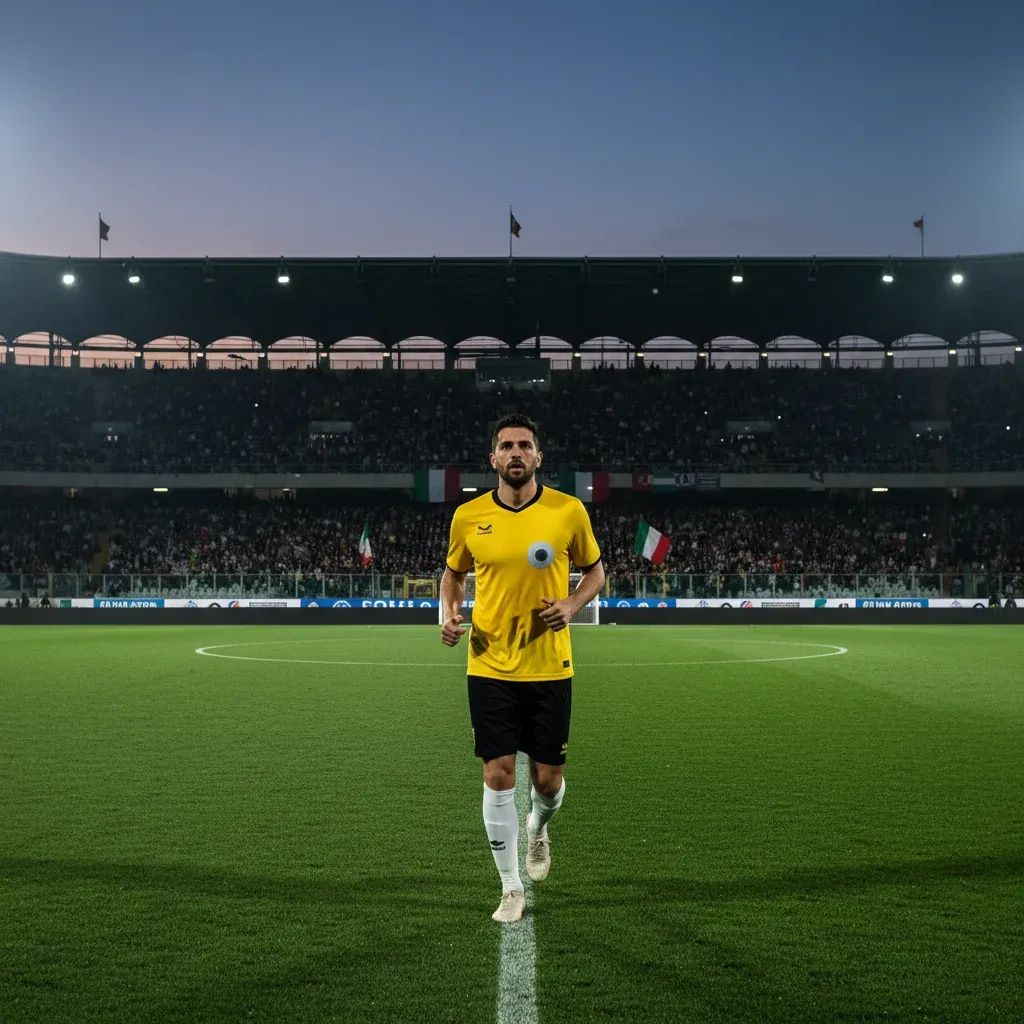
The Italy International midfielder Edoardo Bove netted his first goal since suffering a cardiac arrest just over three months ago, delivering the final blow in Watford's 3-1 victory over Wrexham in the English Championship. For Bove, the goal symbolizes far more than three points—it marks the culmination of a forced career reinvention triggered by Italy's strict sporting eligibility rules that forbid professional athletes with implanted cardiac defibrillators from competing domestically.
Why This Matters
• Italian medical regulations prevent footballers with implanted cardioverter-defibrillators (ICDs) from obtaining the clearance required for professional competition, forcing affected players to relocate abroad.
• Bove's case spotlights the regulatory divide between Italy and countries like the UK, where athletes with cardiac devices can compete under international medical consensus.
• The story resonates deeply with Italian football fans, particularly Roma supporters who continue to follow Bove's journey despite his departure from Serie A.
• His return sets a precedent for young Italian athletes facing similar cardiac diagnoses, offering a tangible pathway to continue professional careers outside the country.
From Collapse to Comeback
On December 1, 2024, Bove collapsed on the pitch during Fiorentina's match against Inter Milan at the Franchi Stadium in Florence. The 22-year-old midfielder, on loan from Roma, suffered an arrhythmia known medically as torsades de pointes—a dangerous and potentially life-threatening heart rhythm disturbance. Swift medical intervention on the field likely saved his life.
Following extensive evaluation, cardiologists recommended the implantation of a subcutaneous defibrillator to prevent future life-threatening episodes. While the procedure resolved the immediate medical risk, it created an insurmountable professional obstacle within Italy's borders. The country's COCIS protocols (Protocolli Cardiologici per il Giudizio di Idoneità allo Sport Agonistico), revised as recently as 2023, maintain among the strictest standards in Europe for athletic eligibility, prioritizing maximum risk mitigation over international medical consensus that increasingly permits competition for athletes with ICDs.
The regulations left Bove with a stark choice: abandon professional football entirely or relocate to a jurisdiction with more permissive medical clearance standards. He chose the latter.
The English Lifeline
On January 21, 2025, Bove signed a five-and-a-half-year contract with Watford FC after mutually terminating his arrangement with Roma. The move was facilitated by Valon Behrami, the former Lazio midfielder now serving in Watford's management structure, who advocated strongly for the club to offer the young Italian a professional lifeline.
British sporting regulations, aligned with evolving European Society of Cardiology (ESC) guidelines, allow athletes with properly managed ICDs to compete professionally after thorough risk assessment and device programming designed to minimize inappropriate shocks during high-intensity activity. The approach emphasizes shared decision-making between athlete and medical team, acknowledging that while risks exist, they can be managed to acceptable levels.
Watford, currently competing in the Championship (England's second tier) with ambitions to return to the Premier League, saw in Bove not only a talented midfielder but also a compelling human story. The club's willingness to navigate the medical complexities and assume the associated responsibilities speaks to the widening gap between Italian conservatism and international practice in sports cardiology.
The Goal That Mattered
Bove made his Watford debut in the 32nd matchday fixture against Preston, entering in the closing minutes. But it was his appearance on March 17, 2025, that delivered the emotional catharsis he and his supporters had anticipated.
Introduced as a substitute in the 83rd minute against Wrexham, Bove found the net in stoppage time (94') to seal the 3-1 home victory. The strike—his first since scoring for Fiorentina against his boyhood club Roma on October 27, 2024—triggered scenes of jubilation at Vicarage Road. Teammates embraced him, supporters chanted his name, and the significance of the moment was lost on no one.
"How I've missed this feeling," Bove wrote on social media afterward, sharing images of his celebration. Italian tennis player Flavio Cobolli, a close friend, posted a supportive Instagram story declaring "We are back."
The emotional weight extended beyond the stadium. Members of the Roma Club UK—a supporters' association representing the thousands of Italians and Roma fans living in Britain—greeted Bove after the match, requesting autographs and selfies. The club had unfurled a banner reading "Anche se hai lasciato Roma non sarai mai solo" ("Even though you left Rome, you'll never be alone"), a gesture that visibly moved the player.
Watford's official response matched the sentiment. The club featured Bove prominently in its post-match Matchday Edition, a limited-run publication featuring statistics, official match reports, and curated photography. The club's communications team described the moment as a "Hollywood ending," acknowledging the narrative arc of Bove's journey.
What This Means for Italian Athletes
Bove's case illuminates a fundamental tension in Italian sports medicine: the divergence between domestic protocol and international standards creates a de facto exile for athletes diagnosed with certain cardiac conditions.
While the 2020 ESC guidelines and recommendations from the American Heart Association increasingly support the participation of ICD patients in competitive sports—provided proper device programming, regular monitoring, and informed consent—Italy's regulatory framework remains anchored to a philosophy of maximum precaution. This reflects both cultural attitudes toward medical liability and legal structures that place significant responsibility on certifying physicians in the event of adverse outcomes.
For young Italian footballers diagnosed with arrhythmias or structural heart conditions requiring ICDs, the pathway forward now involves difficult calculations: relocate abroad, accept relegation to non-professional competition, or abandon the sport entirely. Bove's successful transition to English football offers a blueprint, but also underscores what many view as an unnecessary barrier imposed by domestic regulation rather than medical necessity.
The contrast is particularly stark given the precedents set by Christian Eriksen, the Danish midfielder who returned to elite competition with Brentford, Manchester United, and Wolfsburg after his 2021 cardiac arrest, and Daley Blind, the Dutch defender who resumed his career with Ajax just two months after ICD implantation. Both cases demonstrate that with proper management, athletes with cardiac devices can compete safely at the highest levels—just not in Italy.
The Road Ahead
Bove has accumulated 6 appearances in the Championship this season, all as a substitute, totaling 89 minutes of action. His single goal represents not just a statistical entry but a medical and personal milestone. Watford faces Leicester City in their next fixture, with Bove positioned to continue his gradual reintegration into regular competition.
For Italian football, the case raises uncomfortable questions about whether the country's regulatory conservatism serves the best interests of athletes or simply transfers risk by forcing them to pursue careers elsewhere. As international medical consensus continues to evolve toward permitting managed competition for athletes with cardiac devices, Italy's stance grows increasingly isolated.
For Bove himself, the journey from collapse to comeback has been compressed into just over 100 days—a timeline that reflects both modern medical capabilities and the stark regulatory differences between jurisdictions. His story offers hope to other young athletes facing similar diagnoses, while simultaneously highlighting the structural obstacles they'll encounter if they hope to continue their careers in their home country.
In his post-match remarks to the English press, Bove admitted: "I had a lot of time to think about the first goal after returning to the field. Truth be told, it wasn't like that—this one was easy. In my dreams, it was into the top corner." The humor reveals both his relief and his determination to treat his return to football not as a miracle but as a resumption of normalcy—a young professional doing what he's trained his entire life to do, just in a different country and under different circumstances than he once imagined.


