
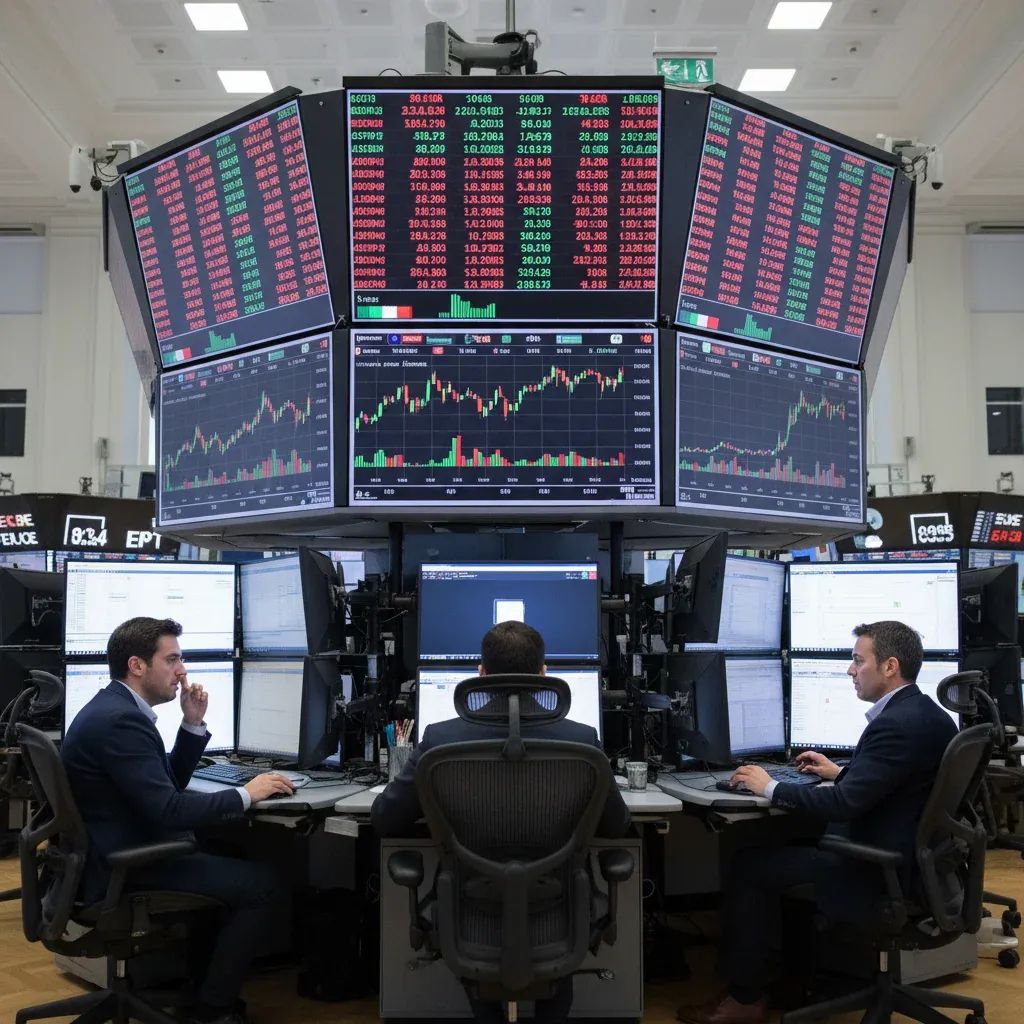
Italy equity markets closed sharply lower on Thursday, dragged down by escalating military tensions in Iran that sent crude oil prices surging above $95 per barrel and rattled investor confidence across European trading floors. The FTSE MIB index in Milan shed 0.7%, settling at 43,701 points as banking stocks bore the brunt of the sell-off.
Broader European bourses amplified the retreat by session's end, with London down 1.33%, Frankfurt off 1.5%, Paris losing 0.98%, and Madrid dropping 1.2%. The downturn accelerated late in the day after U.S. President Donald Trump publicly stated he has no intention of pursuing a diplomatic resolution to the Iran conflict, extinguishing hopes for a near-term de-escalation.
Why This Matters
• Energy costs rising: Brent crude jumped past $95/barrel, threatening to push up fuel and heating bills across Italy in coming weeks.
• Banking stocks hit hard: Italy's two largest lenders, UniCredit and Intesa Sanpaolo, fell 2% and 1.8% respectively, eroding pension and mutual fund values.
• Portfolio impact: Investors holding European equity funds saw portfolio values decline as geopolitical uncertainty drove capital into safer assets.
Oil Surge Reshapes Trading Calculus
The climb in crude oil prices became the day's dominant narrative, with Brent futures breaching the psychologically significant $95 threshold on supply disruption fears. Iran's position as a major crude exporter means any sustained military action risks tightening global supply at a moment when inventories remain lean and demand growth, particularly from Asian economies, continues apace.
For Italy-based households and businesses, higher oil prices translate directly into elevated costs for gasoline, diesel, and heating fuel—expenses that ripple through supply chains and erode purchasing power. The country imports nearly all its petroleum, making it especially vulnerable to Middle Eastern supply shocks.
Energy equities provided the lone bright spot in Milan trading. Eni, Italy's state-controlled oil and gas giant, surged 1.98% to close at €23.64 as investors bet the company's upstream production assets will benefit from higher realized prices. Saipem, the oilfield services contractor, jumped 5.8% to €3.80, reflecting expectations for increased drilling and infrastructure activity if prices remain elevated.
Financial Sector Under Pressure
Italy's banking heavyweights faced sustained selling pressure throughout the session. UniCredit dropped 2%, while Intesa Sanpaolo slid 1.8%, with analysts attributing the weakness to multiple headwinds: rising sovereign bond yields as geopolitical risk premiums expand, concerns that higher energy costs will squeeze household loan demand, and profit-taking after a strong recent rally.
Italian banks carry significant exposures to government debt on their balance sheets, and any widening of spreads between Italian and German benchmark bonds—a typical response to global uncertainty—compresses net interest margins and raises funding costs. The sector had previously outperformed European peers, making it a natural target for portfolio managers seeking to reduce risk.
Retail investors holding bank shares through tax-advantaged accounts or pension funds saw unrealized losses accumulate, though seasoned market watchers noted that single-day moves rarely signal sustained trends. The broader question centers on whether geopolitical turbulence persists long enough to materially alter earnings forecasts.
Divergent Signals on Conflict Duration
European equity indices swung wildly through the morning and midday sessions as conflicting reports emerged about the trajectory of the Iran situation. Early optimism that diplomatic channels remained open gave way to pessimism after President Trump's remarks, which were interpreted by traders as ruling out imminent negotiations.
The back-and-forth created choppy conditions across asset classes. Currency markets saw the euro weaken modestly against the dollar and Swiss franc, while gold prices ticked higher as investors sought traditional safe havens. Italy's 10-year government bond yield edged up approximately 4 basis points, reflecting diminished appetite for peripheral eurozone debt during periods of elevated uncertainty.
Market participants noted that the lack of clarity makes positioning difficult. Institutional portfolios face the challenge of balancing inflation hedges—such as energy and commodity producers—against growth-sensitive sectors like financials and industrials that suffer when economic activity slows. For now, the consensus leans toward maintaining defensive allocations until a clearer picture emerges.
Bright Spots in Healthcare and Services
Not all corners of the Milan bourse registered losses. Recordati, the pharmaceutical company specializing in rare diseases and specialty care, climbed 4.7% to €48.40 as investors rotated into defensive healthcare names with predictable revenue streams. The stock benefits from a business model largely insulated from energy price swings and geopolitical headlines.
Recordati's recent pipeline updates and expansion in orphan drug markets have attracted institutional interest, particularly from funds seeking non-cyclical exposure. The company's international footprint and pricing power in niche therapeutic areas provide earnings visibility that banks and cyclical industrials cannot match in the current environment.
What This Means for Residents
For those living in Italy, the market turbulence carries tangible implications beyond portfolio statements. Sustained crude prices above $90/barrel historically lead to pump price increases within two to three weeks, directly affecting household budgets. Businesses reliant on freight and logistics face margin compression, which often translates into higher consumer prices for imported goods.
Pension funds and wealth management accounts with equity allocations will reflect the day's losses, though diversified portfolios with fixed-income and alternative assets should cushion the blow. Investors nearing retirement or holding concentrated positions in Italian banks may want to review their risk profiles with advisors, particularly if geopolitical tensions persist.
On the positive side, energy sector employees and contractors—especially those tied to Eni or Saipem—may see improved job security and potential wage growth if higher oil prices sustain upstream investment. The Italian government also benefits indirectly through increased corporate tax receipts from energy companies, though this effect unfolds over weeks and months rather than days.
Broader European Context
Italy's 0.7% decline positioned it among the better performers in a uniformly negative session across European capitals. Frankfurt's DAX suffered the steepest loss at 1.5%, reflecting the German economy's heavy reliance on manufacturing and energy-intensive industries. London's retreat of 1.33% came as oil majors BP and Shell posted gains but were overwhelmed by losses across banking and consumer sectors.
The coordinated downturn underscores how geopolitical shocks quickly override national economic narratives, reminding investors that eurozone markets remain tightly correlated during periods of stress. Currency volatility stayed relatively muted, with the European Central Bank's policy stance and upcoming data releases taking a back seat to Middle Eastern developments.
Market technicians noted that the FTSE MIB remains near recent volatility levels, leaving room for either a technical rebound if tensions ease or further downside if the situation deteriorates. For now, volatility indices across Europe have spiked, signaling traders are pricing in elevated uncertainty for the weeks ahead.


