
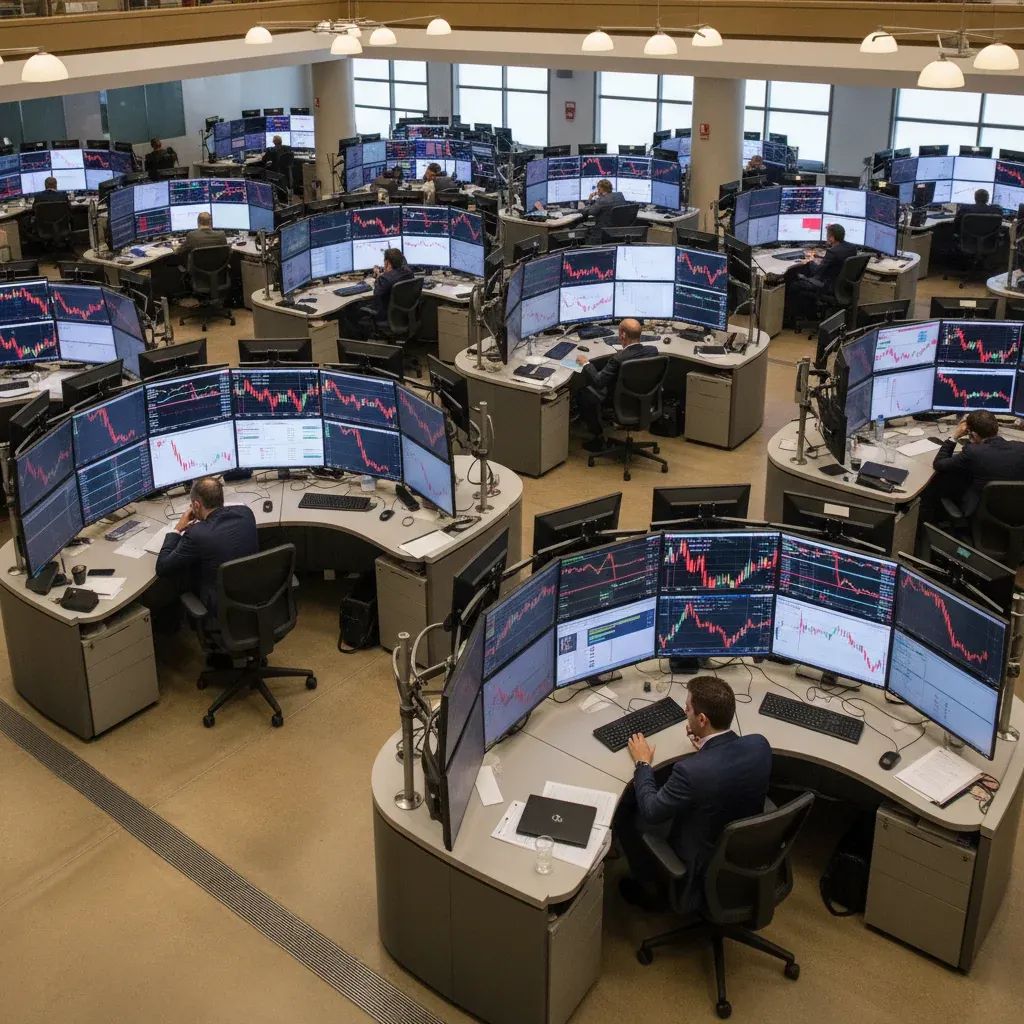
Global energy markets have lurched sharply upward as renewed threats from U.S. President Donald Trump toward Iran have stoked fears of prolonged disruption to one of the world's most critical oil transit routes, the Strait of Hormuz. For residents and businesses across Italy, the ripple effects are already materializing: fuel costs are climbing, heating bills are set to rise, and the specter of inflation looms over household budgets just as spring approaches.
Why This Matters
• Brent crude has surged above $107 per barrel, the highest level in recent months, translating directly into higher pump prices across Italy.
• Natural gas futures in Amsterdam jumped nearly 4%, reaching €54.88 per megawatt-hour—a cost that will filter through to utility bills within weeks.
• Transport and logistics sectors face immediate margin pressure, with potential knock-on effects for grocery prices and delivery services.
Energy Markets React to Geopolitical Flashpoint
The rally began after President Trump issued fresh warnings to Tehran, amplifying concerns that the Strait of Hormuz—through which roughly a fifth of global oil supply passes—could remain partially or fully blocked for an extended period. West Texas Intermediate (WTI) crude, the U.S. benchmark, climbed 4.67% to reach $94.54 per barrel, while Brent crude from the North Sea posted an even steeper gain of 5.6%, settling at $107.94.
This is not merely a headline-driven spike. Traders and analysts are pricing in the real possibility of a sustained supply bottleneck. Any prolonged closure of Hormuz would force tankers to reroute around the Arabian Peninsula, adding days to transit times and millions in additional shipping costs—expenses that inevitably trickle down to consumers at the pump and in monthly energy statements.
What This Means for Italian Households
Italy imports the vast majority of its energy needs, making the country acutely vulnerable to swings in global commodity markets. The immediate consequence of this price surge will be felt in two main areas: transportation fuel and home heating.
Gasoline and diesel prices at Italian service stations typically lag crude movements by one to two weeks. Based on typical market pass-through rates, analysts estimate motorists could face an increase of approximately €0.05 to €0.08 per liter by mid-April. For a household driving 15,000 kilometers annually, that could translate to an additional €60 to €100 in yearly fuel costs—a modest but noticeable impact on discretionary spending.
More significant is the potential impact on natural gas, which remains the dominant heating fuel for millions of Italian homes. The Amsterdam TTF hub, Europe's primary pricing benchmark, saw April futures jump nearly 4% to €54.88 per MWh. While Italy has worked to diversify supply routes since the disruptions of 2022—tapping new pipelines from Algeria and increasing liquefied natural gas (LNG) imports—the country remains exposed to global price volatility. If current prices hold through the spring billing cycle, utilities could potentially add €20 to €30 per month to average household bills, though actual impacts will depend on individual supplier contracts and consumption patterns.
Industrial and Economic Consequences
Beyond households, Italy's energy-intensive industries—ranging from ceramics manufacturers in Emilia-Romagna to steel producers in Lombardy—face a fresh squeeze on margins. Many firms had budgeted for stable or declining energy costs in 2026, banking on increased renewables capacity and calm geopolitical conditions. This abrupt reversal complicates investment decisions and could dampen job creation in sectors already navigating a sluggish European economic recovery.
The Italian government has not yet announced any compensatory measures, though past precedent suggests targeted relief for the most vulnerable households and strategic industries may be under consideration if prices remain elevated into May. During the 2022 energy crisis, Rome deployed roughly €60 billion in subsidies and tax breaks to cushion the blow—a fiscal effort policymakers are eager not to repeat given tighter budget constraints and ongoing negotiations with the European Commission over deficit targets.
The Geopolitical Chess Game
The current standoff reflects a broader recalibration of U.S. foreign policy under Trump's renewed presidency. His administration has adopted a more confrontational posture toward Iran, abandoning the diplomatic restraint that characterized much of the previous decade. The Strait of Hormuz, a 21-mile-wide chokepoint between Iran and Oman, has long been a flashpoint. Tehran has previously threatened to close the waterway in response to sanctions or military pressure, and recent rhetoric suggests those threats are being taken more seriously by market participants.
European policymakers, including those in Italy, have urged restraint. The Italian government has historically favored diplomatic engagement with Tehran, viewing stability in the Gulf as essential to energy security. However, Rome's influence over Washington's Iran policy is limited, and the priority now shifts to mitigating domestic fallout rather than shaping transatlantic strategy.
Outlook: How Long Will This Last?
Energy analysts are divided on whether current price levels represent a temporary spike or the beginning of a more sustained rally. Much depends on the trajectory of U.S.-Iran tensions and whether other oil-producing nations—particularly Saudi Arabia and the United Arab Emirates—choose to increase output to offset any supply disruptions.
The International Energy Agency has noted that global spare production capacity remains relatively tight, limiting the ability of OPEC members to quickly compensate for a major shortfall. If Hormuz remains contested or partially closed for more than a few weeks, prices could climb further, potentially pushing Brent above $110 and WTI above $100.
For Italy, the timing is particularly unwelcome. Inflation had been moderating, offering a reprieve to consumers after two years of elevated living costs. A renewed spike in energy prices threatens to reverse that progress, complicating the European Central Bank's monetary policy deliberations and potentially delaying further interest rate cuts that Italian businesses and mortgage holders have been anticipating.
What Residents Can Do
In the near term, Italian households have limited options to insulate themselves from this external shock. However, a few practical steps may help:
• Lock in energy contracts: Some utility providers offer fixed-rate plans that shield customers from short-term price swings. Residents currently on variable tariffs may want to explore switching before the next billing cycle.
• Optimize fuel purchases: If feasible, fill vehicle tanks sooner rather than later, before the latest crude rally fully filters through to pump prices.
• Energy efficiency: Even modest improvements—adjusting thermostat settings by 1-2 degrees, sealing drafts, upgrading to LED lighting—can reduce overall consumption and blunt the impact of higher per-unit costs.
For now, the International Energy Agency and market observers confirm that supply security is not at immediate risk. But the message from global markets is clear: geopolitical instability in the Middle East remains a potent force capable of disrupting the fragile balance of Europe's energy landscape, and Italian consumers will once again bear a share of the cost.


