
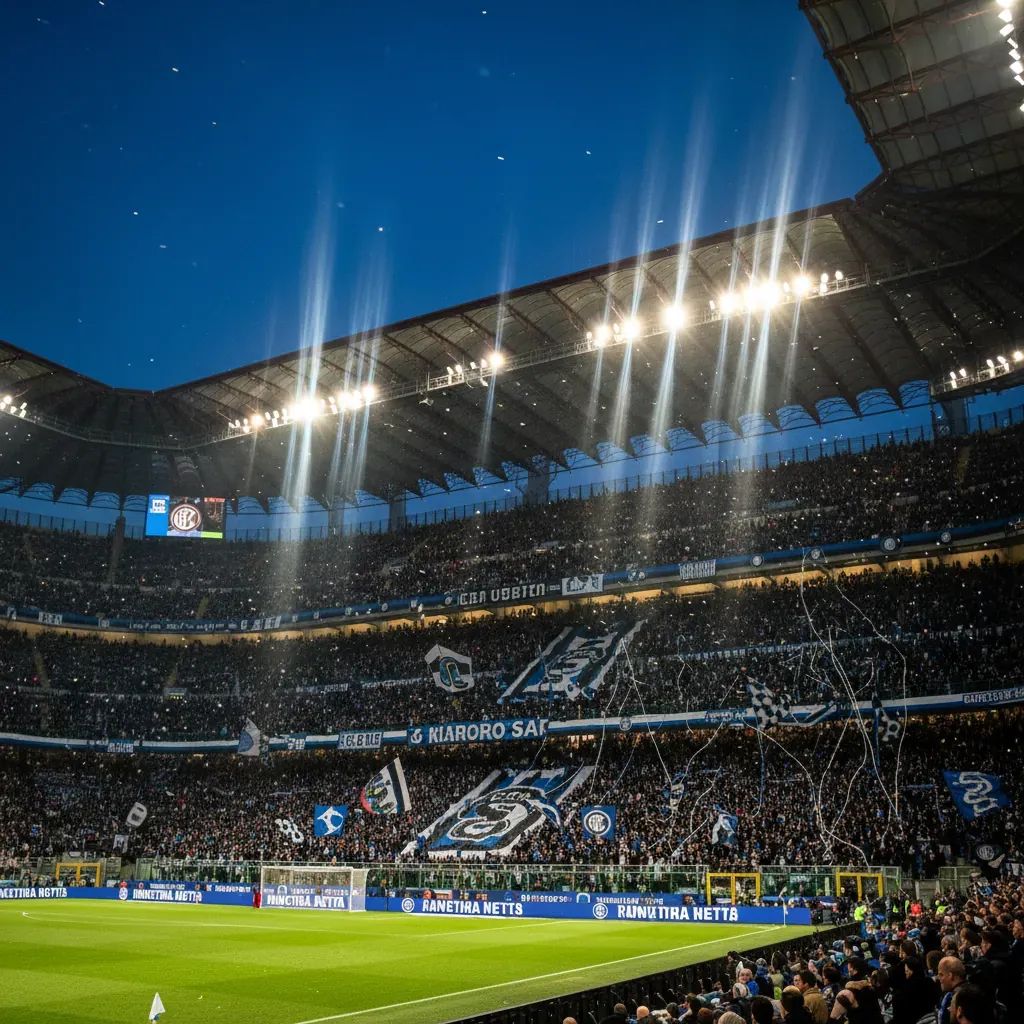
FC Internazionale Milano has secured its 21st Serie A title, clinching the championship with three matches remaining after a commanding 2-0 victory over Parma at San Siro on May 3, 2026. The triumph marks a remarkable redemption arc for the Nerazzurri, who ended the previous season empty-handed despite reaching the UEFA Champions League final—a crushing 5-0 defeat to Paris Saint-Germain that still haunts the club's memory.
Why This Matters
• Psychological resilience on display: Inter rebounded from one of the most painful seasons in recent club history to dominate Serie A.
• New leadership validated: First-year coach Cristian Chivu, the former Inter defender, delivered a championship in his debut full season with the first team.
• Milan rivalry intensifies: Inter now sits at 21 Scudetti, widening the gap over city rivals AC Milan (19 titles), though still trailing Juventus's record 36. For Inter supporters in Milan's neighborhoods and across Italy, this represents crucial bragging rights—in offices, bars, and piazzas where the Derby della Madonnina rivalry runs deep.
• Coppa Italia final ahead: Another trophy opportunity awaits on May 10, 2026, offering a potential double that would cement this season as genuinely historic.
The Weight of Redemption
The 2024-2025 campaign left deep scars across the Inter locker room. The club finished second in Serie A behind Napoli with 81 points, lost the Champions League final by a record margin, exited the Coppa Italia in the semifinals to AC Milan (1-4 aggregate), and squandered a 2-0 lead in the Supercoppa Italiana final against the same opponents. Zero trophies after coming agonizingly close to everything.
Lautaro Martínez, the Argentine striker now celebrating his third Scudetto with Inter, didn't mince words about the mental toll. "We suffered immensely. It wasn't simple to restart after such a brutal season," he told media after Saturday's title-clinching win. "At the beginning, nobody considered us favorites given how last year went. But we worked incredibly hard inside the dressing room and on the pitch."
That work involved more than just tactical adjustments. Nicolò Barella, speaking to DAZN, framed the comeback in philosophical terms: "In football as in life, you go through difficult moments. Last year we came close to winning everything, but what matters is knowing how to get back up. You can make mistakes on the field, but what this squad never lost was the desire to stay together."
The Chivu Effect
The catalyst for Inter's transformation arrived in early June 2025, when Simone Inzaghi resigned just days after the Champions League final debacle to accept a lucrative offer from Saudi Arabia's Al-Hilal. The Italy Football Federation-sanctioned replacement stunned some observers: Cristian Chivu, the 45-year-old Romanian who captained Inter during their historic 2010 Treble but had limited top-flight coaching experience—just three months salvaging Parma from relegation and success with Inter's youth academy.
The gamble paid off spectacularly as the 2025-2026 season unfolded from August onwards. Chivu inherited the club's established defensive shape but refined it with increased aggression in pressing. His Inter pressed higher up the pitch, forcing more turnovers in dangerous areas. When facing pressure themselves, midfielders like Hakan Çalhanoğlu would drop deep to create numerical superiority in buildup, avoiding panicked long balls.
The defensive structure proved suffocating—Inter has conceded significantly fewer chances than opponents across the season. In low-block situations, Chivu's formation eliminated central passing lanes, forcing opponents into sterile wide circulation.
"The coach brought us new energy, enthusiasm, participation to everyone," Martínez explained. "Even though we had four impressive years with Inzaghi, we needed a change of air after that final. Chivu brought back the smile."
Individual Brilliance Meets Collective Purpose
Federico Dimarco emerged as one of Serie A's most creative forces from the left wing-back position, setting a personal record for assists that the Italian international calls "a historic milestone I'll carry inside me forever." His production exemplifies how individual excellence flourishes within a rigid tactical framework that maximizes creative opportunities.
"So many factors determine an assist-heavy season," Dimarco noted. "You also need teammates who put it in. It's also about confidence and continuity—when you're mentally calm, things come naturally."
Dimarco's crosses and cutbacks consistently found Martínez, who maintained his status as the squad's top scorer while forming a lethal partnership with Marcus Thuram. The front two benefited from strategic squad reinforcements made last summer: midfielder Petar Sučić, winger Luis Henrique, and striker Ange-Yoan Bonny (€23M from Parma) added depth that was sorely lacking when substitutes faltered during the previous season's heartbreak. Squad departures of Joaquín Correa, Marko Arnautović, and Mehdi Taremi removed deadweight and freed financial resources.
What This Means for Milan-Based Fans
For Interisti across Lombardy and throughout Italy, this Scudetto represents validation after twelve months of mockery from rivals. For supporters in Milan's working-class neighborhoods—Sesto San Giovanni, Pioltello, the Vimercatese—and across Italy's cities and towns where Inter fans gather, the championship provides the ultimate workplace and neighborhood bragging rights. The Derby della Madonnina dynamics shift decisively as Inter extends its lead over AC Milan in the all-time title count.
From a sporting economy perspective, Champions League qualification is now mathematically secured for 2026-2027, guaranteeing lucrative revenue streams and attracting top talent. Inter's president Beppe Marotta has already praised Chivu's "great qualities" and suggested the Romanian could remain at the helm long-term, providing rare coaching stability in Italy's notoriously volatile managerial landscape.
The Bigger Picture
With three matches remaining, Inter has sealed the championship with mathematical certainty. The dominance reflects not just technical superiority but psychological fortitude—this squad stared down humiliation and responded with dominance.
Barella alluded to unfinished business: "This was our objective, and it's a great achievement. We had other goals too, but in any season you can leave something behind on the road. There's another objective on May 10—now let's enjoy this, then we'll think about that."
That objective is the Coppa Italia final on May 10, 2026, which could transform a successful season into a genuinely historic double. Given how Inter collapsed under pressure last year—blowing leads, crumbling in decisive moments—claiming two trophies would cement this group's legacy as true champions rather than talented underachievers.
Looking Ahead
The tactical blueprint Chivu established—aggressive pressing combined with defensive solidity, flexible buildup patterns, strategic rotation—suggests Inter can compete at Europe's highest level next season. The additions to squad depth address last year's fatal flaw: when key players tired or faced injury, replacements couldn't maintain standards.
Whether this group can finally conquer Europe remains uncertain. But after surviving what Martínez called a season of "immense suffering" to dominate Italy's top flight, Inter has proven that resilience matters as much as talent. The Nerazzurri faithful who endured last May's humiliation in Munich can finally exhale. Their team didn't just bounce back—they dominated from the opening whistle of August 2025 through this May coronation.
For those who follow Italian football closely, this championship offers a compelling case study in crisis management. Sometimes the answer isn't a superstar signing or revolutionary system, but rather a familiar face who understands the club's DNA and can restore belief when it matters most. Chivu, the quiet defender who lifted the Champions League trophy sixteen years ago, has now delivered a Scudetto from the touchline—and the Coppa Italia final awaits.


