
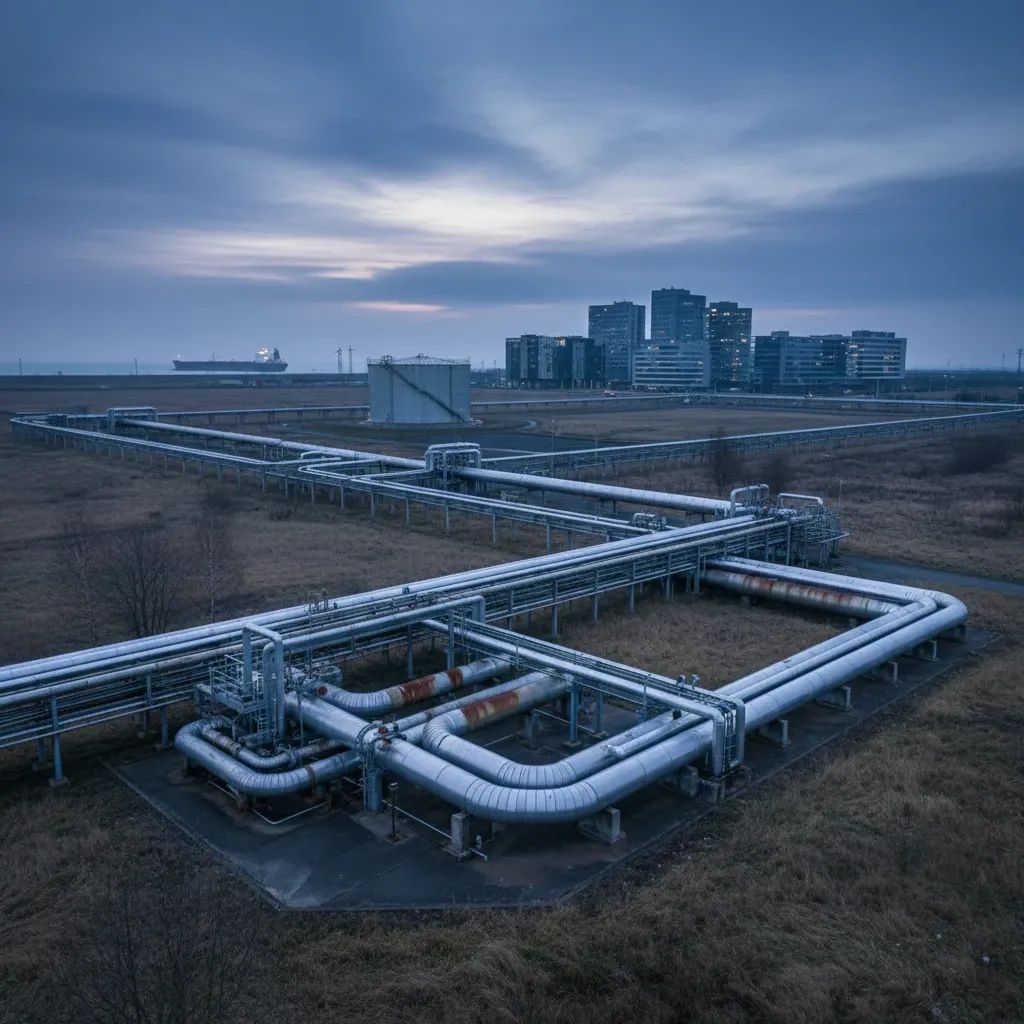
Hungary's Prime Minister Viktor Orbán is escalating his confrontation with both Brussels and Kyiv, declaring that Europe cannot resolve its energy crisis without low-cost Russian oil—even as the Druzhba pipeline remains damaged and inoperable following a Russian attack on 27 January 2026. The standoff has morphed into a three-way diplomatic battle with potentially serious consequences for energy security, EU financial support for Ukraine, and the integrity of the sanctions regime against Moscow.
Why This Matters:
• Energy leverage: Hungary imports 87% of its crude oil via Druzhba; Slovakia relies on the pipeline for 86%. The disruption forces both nations to seek costlier alternatives.
• Financial blackmail: Orbán is blocking a €90 billion EU reconstruction loan package for Ukraine and threatening to veto the 20th sanctions package against Russia unless oil flows resume. As an EU member, Hungary possesses veto power over certain collective financial decisions, giving it leverage in this dispute.
• Election timing: Hungary's Prime Minister is framing the dispute as a campaign issue ahead of April elections, positioning Ukraine as an "existential threat" to Hungarian prosperity.
• Transatlantic split: Orbán claims the United States under Donald Trump has softened its stance on Russian energy, creating a divide with Europe's more rigid approach.
The Druzhba Dispute: Who Damaged What, and Why It Matters
The Druzhba ("Friendship") pipeline, a Soviet-era artery that has carried Russian crude to Central Europe for decades, suffered critical damage on 27 January 2026 from Russian drone strikes, according to Ukraine's Energy Ministry. The initial attack was followed by a fire on 3 March 2026 resulting from subsequent Russian military operations in the region. Kyiv insists that ongoing Russian military activity makes repairs dangerous and that the pipeline remains vulnerable to future attacks.
Orbán tells a different story. In a video message posted on social media, the Hungarian leader accused Ukraine of deliberately obstructing repairs and denying Hungarian technical experts access to the damaged section. "Our experts are still being denied access to the Friendship pipeline, while Brussels continues to refuse to face reality," Orbán said, adding that he plans to lead a "march for peace" and reject what he calls "Ukrainian blackmail."
The European Commission, for its part, has maintained that EU member states hold 90-day energy reserves and that no emergency situation exists. Brussels proposed a joint inspection of the pipeline and is considering financial assistance to restore transit, but has stopped short of endorsing Orbán's demand to suspend energy sanctions on Russia.
What This Means for European Energy Policy
The Druzhba standoff presents a broader challenge to EU unity and energy security. While Italy has significantly diversified its energy imports since 2022, increasing liquefied natural gas (LNG) capacity with new regasification terminals and expanding pipeline flows from Norway and Azerbaijan via the TAP corridor, the political crisis threatens the integrity of EU sanctions policy. If Orbán succeeds in linking financial aid to energy concessions, it could set a precedent for future veto-based bargaining within the bloc—a dynamic that risks undermining collective decision-making on foreign policy and energy strategy across all member states.
The dispute also underscores the urgency of REPowerEU, the bloc's strategy to eliminate dependence on Russian fossil fuels by 2027. Renewable energy now accounts for 48% of total EU energy production, with Italy ranking among the top three EU nations for solar deployment. However, the geopolitical volatility demonstrated by the Druzhba standoff reinforces why accelerating the transition to renewables is critical for European strategic autonomy.
Orbán's Broader Energy Argument
Beyond the immediate pipeline dispute, Orbán is advancing a sweeping critique of EU energy strategy. He argues that sanctions on Russian oil and gas have backfired, driving up prices and accelerating deindustrialization across Europe. In his view, the continent's refusal to acknowledge economic reality is rooted in ideology rather than pragmatism.
The Hungarian Prime Minister has pointed to a perceived shift in U.S. policy under Trump, who reportedly authorized purchases of Russian crude already at sea and initiated dialogue with Moscow. This stands in stark contrast to Europe's continued embargo on Russian seaborne oil, which has forced many EU nations to pay premium prices for Middle Eastern and North American alternatives.
Orbán convened an emergency government meeting to assess measures for preventing further increases in gasoline and diesel prices in Hungary. He has also threatened to block the 20th EU sanctions package against Russia unless Brussels reconsiders its energy policy.
Kyiv's Hardline Response
President Volodymyr Zelensky has shown no inclination to accommodate Orbán's demands. The Ukrainian leader views pipeline repairs as tantamount to weakening sanctions on Russia, effectively subsidizing the Kremlin's war effort. "We would prefer not to restore the damaged pipeline," Zelensky stated, describing demands from European allies as a form of "blackmail."
Tensions between the two leaders have escalated dramatically. Hungary has seized Ukrainian cash and gold, alleging money laundering—a move Zelensky condemned as "banditry."
When Hungary dispatched a technical mission to inspect the pipeline on 10 March 2026, Kyiv initially denied it official status, further complicating diplomatic efforts. Zelensky has framed the dispute as a choice between supporting Ukraine's defense or enabling Russian aggression.
The Diplomatic and Financial Stakes
Orbán's veto threats carry significant weight. The €90 billion EU reconstruction loan package for Ukraine is essential for rebuilding infrastructure and maintaining governance in Kyiv following Russian destruction. A prolonged blockage could strain Ukraine's fiscal position and embolden other member states to use financial leverage for unrelated policy concessions.
The dispute also highlights the tension between national interest and collective EU policy. Hungary and Slovakia secured temporary exemptions from EU oil sanctions when they were introduced in 2022, reflecting their unique dependence on the Druzhba pipeline. Now, that dependency is being weaponized in a broader political struggle.
Brussels faces a delicate balancing act: maintaining solidarity with Ukraine, preserving the sanctions regime, and addressing the legitimate energy concerns of member states. The outcome will test the EU's capacity for crisis management and its commitment to a unified foreign policy.
Looking Ahead
Orbán has promised to "march for peace" and declared that "Zelensky will not give orders here." The rhetoric suggests a political calculation that domestic audiences—especially Hungarian voters ahead of April elections—will reward defiance of Brussels and Kyiv.
For EU nations, the crisis is a reminder that energy security remains a geopolitical vulnerability, even as the transition to renewables accelerates. The Druzhba standoff may originate as a Central European problem, but in an interconnected energy market and political union, the precedent it sets carries implications for all member states.
As the pipeline disruption enters its fourth week, the question is whether diplomacy, financial incentives, or technical solutions can break the deadlock—or whether this becomes a protracted test of wills with consequences that extend far beyond a single pipeline.


