
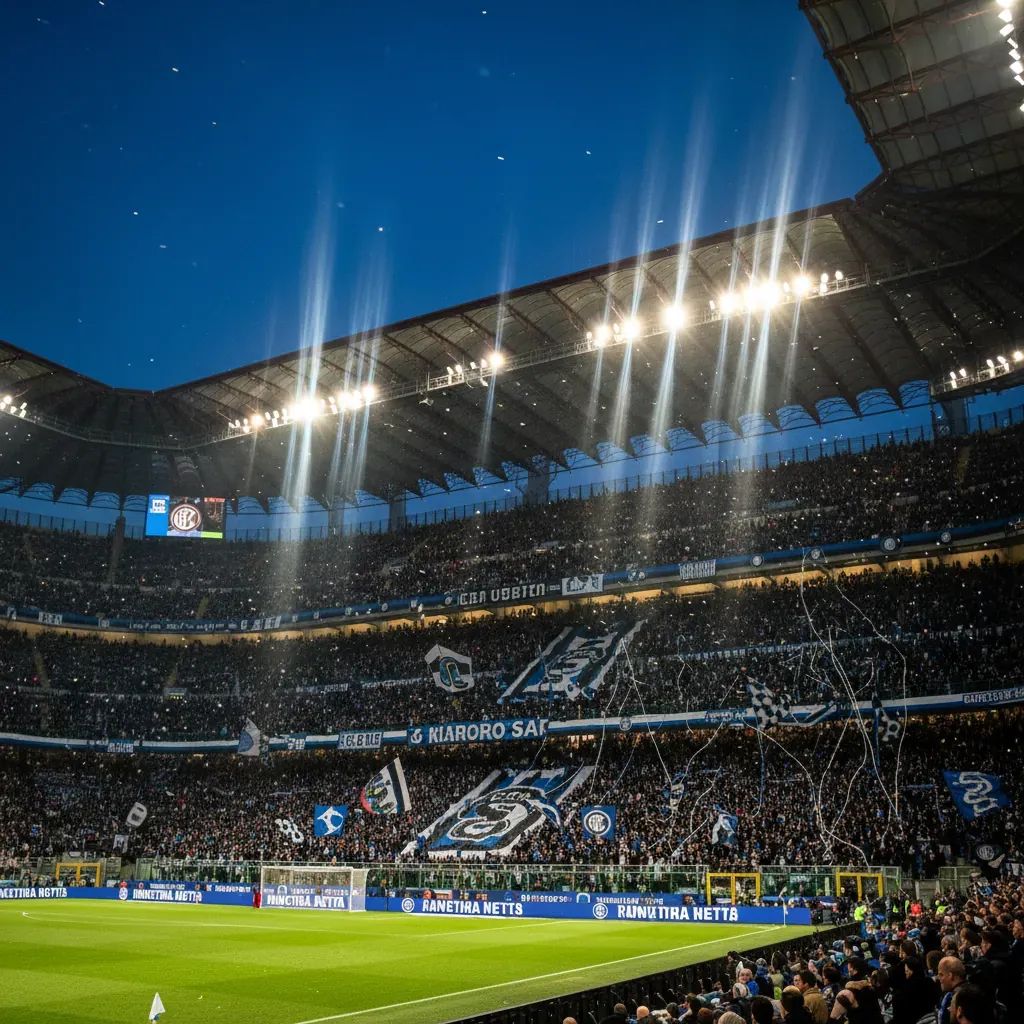
Inter Milan has secured its 21st Serie A championship, wrapping up the 2025-2026 title with three matches still to play following a decisive 2-0 victory over Parma. This triumph represents more than just another trophy. It marks the completion of a psychological resurrection that began in the ashes of last season's Champions League final humiliation.
Why This Matters:
• First-year success: Cristian Chivu becomes only the fifth Inter coach to win the Scudetto in his debut season, joining an elite club that includes José Mourinho.
• Historic double: Chivu is the first Inter figure since 1938 to win the championship both as a player and as a manager.
• Dominant statistics: Inter finished with 82 points from 35 matches, boasting 25 wins, 80 goals scored, and a goal differential of +49.
• Market implications: Club president Giuseppe Marotta confirmed a summer overhaul targeting Italy's best young talent and experienced international signings.
From Champions League Collapse to Domestic Dominance
The road to this championship began on May 31, 2025—a date that should have marked the end of an era. Inter Milan suffered a crushing defeat to PSG in the Champions League final, triggering the departure of manager Simone Inzaghi to Saudi Arabia and leaving the squad emotionally fractured. The subsequent Mondiale per Club campaign in the United States only deepened the wounds, culminating in an embarrassing elimination by Fluminense that sparked a public confrontation between captain Lautaro Martínez and midfielder Hakan Çalhanoğlu.
"Whoever doesn't want to stay needs to leave," Martínez declared to reporters immediately after the Brazilian defeat, his frustration barely contained. "You have to want to be here. I've seen too many things I didn't like." The remarks were widely interpreted as aimed directly at Çalhanoğlu, who seemed destined for a transfer. Instead, the Turkish playmaker stayed—and became one of the campaign's most influential figures, contributing crucial goals and assists while reestablishing himself as an emotional leader despite recurring injury problems.
Enter Cristian Chivu, the Romanian defender who won three consecutive Scudetti with Inter as a player between 2008 and 2010, including the historic Treble under Mourinho. After cutting his coaching teeth with Inter's youth teams—most notably winning the Primavera championship in 2021-2022—and a brief stint at Parma where he secured top-flight survival, Chivu inherited a first-team squad low on morale and high on internal tension.
The Tactical Refinement Strategy
Rather than overhaul Inzaghi's tactical blueprint, Chivu chose surgical adjustments. Inter became more direct, more vertical, less obsessed with horizontal possession. Set pieces transformed into a weapon of mass destruction. The football was pragmatic rather than aesthetic, built on collective solidity rather than individual brilliance—though individual brilliance still found its moments.
The early results were alarming. Two defeats in the first three league matches raised immediate questions about whether the Romanian was out of his depth. A controversial loss to Napoli in the eighth round, marred by disputed refereeing decisions, threatened to derail the entire project before it gained momentum.
But resilience became the defining characteristic. Inter responded with consecutive victories over Fiorentina and Verona, then seized first place by the 11th matchday when Napoli stumbled. A 14-win streak from 15 matches between November and February essentially decided the championship, even as setbacks arrived in other competitions. The Supercoppa Italiana final defeat to Bologna on penalties in December stung. The shocking Champions League elimination to Norway's Bodo/Glimt in the playoff round in mid-February could have shattered confidence entirely.
Instead, Inter channeled European frustration into domestic ruthlessness. The turning point came at Como in the 32nd round: down 0-2, the Nerazzurri clawed back to win 4-3, with Denzel Dumfries scoring twice in his comeback from ankle surgery. That match became the symbolic image of the season—a team that refused to fracture under pressure.
What This Means for Football in Italy
Inter's triumph continues a remarkable four-year pattern of alternating champions—Napoli, Inter, Napoli, Inter—suggesting the competitive balance in Serie A remains fluid despite Juventus's historical dominance. The Turin giants still lead the all-time standings with 36 championships, but Inter now sits alone in second place with 21, edging past Milan's 19.
This championship carries particular resonance because it was achieved without the overwhelming financial advantages that defined previous eras. Under the ownership of American fund Oaktree Capital, which assumed control from Suning, Inter has operated within tighter fiscal constraints. Marotta's declaration that the club will pursue "the best young Italian talent" alongside "experienced foreigners who bring winning culture" signals a sustainable model focused on scouting and development rather than checkbook supremacy.
The emphasis on Italian talent addresses a broader concern within the national football ecosystem: the declining pipeline of homegrown players making it to elite levels. Inter already boasts a core of Italian internationals—Nicolò Barella, Alessandro Bastoni, and Federico Dimarco—who have formed the spine of both club and national team. The strategy to deepen that foundation could have ripple effects for the Azzurri ahead of major tournaments.
Individual Brilliance in a Collective System
While Chivu preached unity and collective strength, individual performances ultimately delivered the points. Lautaro Martínez led Serie A with 16 goals despite shouldering enormous responsibility as captain during the turbulent summer. His leadership extended beyond statistics—public accountability, private reconciliation, relentless work rate.
Federico Dimarco emerged as arguably the world's most complete wing-back, contributing to more than 20 goals through strikes and assists, an extraordinary output for a defender. His left foot became the delivery system for Inter's set-piece dominance, earning him the Betsson Player of the Month award for January 2026. The fact that he maintained such productivity even as his physical condition dipped in the season's final weeks testifies to his technical quality.
Marcus Thuram added 12 goals, overcoming a two-month scoring drought to deliver crucial strikes when the pressure peaked. Hakan Çalhanoğlu proved his doubters wrong with 9 goals (four from penalties) and game-changing playmaking, his relationship with the dressing room fully repaired. Nicolò Barella, after a sluggish start, elevated his performance dramatically in the final stretch, reasserting himself as the engine room's dynamo following Italy's disappointing international campaign.
New signing Manuel Akanji, arriving from Manchester City, immediately solidified the defense with his athleticism and technical confidence, scoring important goals from set pieces. Youngster Pio Esposito announced himself with crucial strikes, including his first Serie A goal and a vital effort against Juventus when the stakes were highest.
The Chivu Philosophy: Empathy and Edge
What separates Chivu from the typical managerial archetype is his willingness to discuss dimensions beyond tactics. In post-match interviews, he has openly addressed anxiety, family pressures, and personal struggles—topics rarely broached in football's often macho culture.
"A few years ago, I had to have a conversation with myself about life and death," Chivu revealed during the championship celebrations. "That's when I lost my ego. I don't need to talk about myself. I try to be my best version, to help these players who sometimes need the carrot and sometimes need the stick."
Yet as the season progressed and criticism intensified, Chivu also displayed a Mourinho-esque defiance. "I may be many things, but I'm certainly not a fool," he snapped at reporters who questioned his credentials. "We started with everyone saying the inexperienced coach should be sacked, and here we are, still competitive."
After clinching the title, he permitted himself a humanizing confession: "I went into the dressing room and allowed myself a vice—I smoked a cigarette. Sorry if I'm saying this." The admission drew laughter and endeared him further to a fanbase that appreciates authenticity over corporate polish.
The Refereeing Shadow and Marotta's Firm Response
No Italian football season concludes without officiating controversy, and 2025-2026 proved no exception. The Associazione Italiana Arbitri (AIA) certified four significant errors involving Inter—three against them, one in their favor. Analysis suggested the Nerazzurri received fewer favorable calls than rivals Napoli, Juventus, or Milan during the first 24 rounds, contradicting narratives from opposing fanbases.
March 2026 proved particularly contentious, with media outlets documenting four clear penalties not awarded to Inter across just three matches against Milan, Udinese, and Fiorentina. The most explosive moment came after the controversial simulation accusation against Alessandro Bastoni in the match against Juventus, which led to the red card for Juve's Pierre Kalulu and sparked a media firestorm.
Separately, an ongoing judicial investigation into alleged fraud involving referee designator Gianluca Rocchi has mentioned Inter in connection with supposedly "favorable" officiating assignments from the previous season. Club president Giuseppe Marotta addressed the matter directly on championship night: "There is great bitterness. I'll repeat what I said last Sunday: there is no list of unwanted referees. I'm calm. We have nothing to fear. We've always conducted ourselves with correctness and loyalty. I have nothing more to add."
Looking Ahead: The Summer Reconstruction
Even as champagne flowed, Marotta was already outlining the next phase. Inter plans what insiders describe as a "mini-revolution," targeting at least five new first-team players to refresh an aging squad. Goalkeeper Guglielmo Vicario tops the shopping list to replace the underperforming Yann Sommer, who endured a below-par campaign and was directly at fault in key defeats, including the derby and the match against Juventus in Turin.
Defensive reinforcements will likely include Muharemovic from Sassuolo and possibly a right-sided defender capable of functioning in both three and four-man backlines. The club is also exploring a tactical evolution away from the 3-5-2 system toward a more "European" and "entertaining" formation featuring a four-man defense—a significant philosophical shift that would require personnel adjustments.
In midfield, Inter seeks greater physicality and ball-winning capability, with names like Koné, Perrone, and Filip Stankovic circulating. Up front, the club wants an unpredictable attacking option with characteristics similar to Ademola Lookman or Moussa Diaby—pace, dribbling skill, and the ability to operate across the forward line.
Funding these acquisitions will require sales. Veterans Matteo Darmian, Stefan de Vrij, Francesco Acerbi, Henrikh Mkhitaryan, and potentially Hakan Çalhanoğlu could all depart, along with squad players like Davide Frattesi, Andy Diouf, Luis Henrique, and Carlos Augusto. The turnover signals the beginning of a new cycle rather than mere squad maintenance.
The Broader Significance
This championship carries lessons beyond the sport itself. It demonstrates that institutional memory and cultural continuity—embodied by figures like Chivu and Marotta—can navigate crises that would sink organizations lacking such foundations. It shows that psychological fractures, when addressed honestly rather than papered over, can become sources of strength.
It also underscores the evolving economics of football. Oaktree Capital's ownership model emphasizes sustainability and smart investment over oligarch spending sprees. If Inter can continue winning while operating within rational financial parameters, it provides a template for other major clubs struggling to compete with the bottomless resources of English and French rivals.
Chivu now joins an extraordinarily exclusive club: coaches who have won Serie A both as players and managers. The last to achieve this feat was Armando Castellazzi, who won as a player in 1929-30 and as a coach in 1937-38—88 years ago. In the modern era spanning the last half-century, only Antonio Conte, Carlo Ancelotti, Fabio Capello, and Nils Liedholm have accomplished similar doubles across Italian football.
The Romanian's achievement at Inter now places him statistically as the manager with the highest points-per-game average in the club's history for a debut season—surpassing even Mourinho's legendary first campaign. That he did so while competing against proven champions like Conte at Napoli, Massimiliano Allegri at Juventus, and Luciano Spalletti elsewhere makes the accomplishment all the more impressive.
The final three matches are mere formalities now. Inter will face them with the pressure released, the champagne already consumed, and the satisfaction of having proven every skeptic wrong. What began as a gamble on a rookie manager has concluded as a masterclass in reconstruction. Sometimes, the best response to collapse is not revolution but refinement. Sometimes, the right person to heal a fracture is someone who understands the institution from the inside out. Cristian Chivu has proven himself to be exactly that person.


