
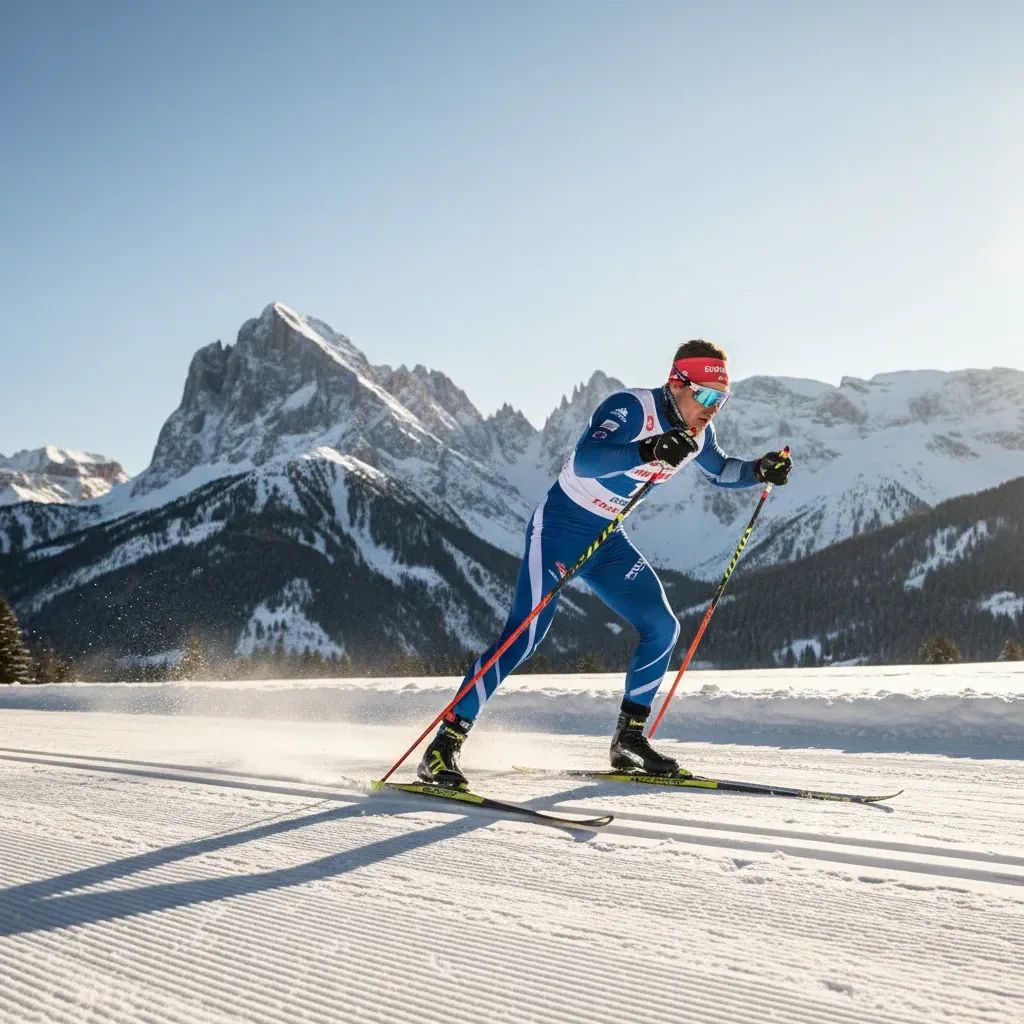
Italian athletes exited the individual para biathlon events at the Milano Cortina 2026 Paralympics without medals, as China claimed four of six gold titles on the slopes of Tesero in Val di Fiemme. The outcome reflects a widening performance gap in winter Paralympic sport, where systemic state investment and infrastructure increasingly determine medal success.
Why This Matters
• China's Paralympic dominance continues its trajectory from Beijing 2022, now extending to biathlon after sweeping cross-country events earlier in the week.
• Italy's Marco Pisani (13th, sitting) and Cristian Toninelli (16th, standing) delivered respectable finishes but remain far from podium contention in a discipline historically dominated by Russia, Germany, and Ukraine.
• The Games continue Tuesday with sprint events in Nordic skiing, offering Italy additional opportunities after early alpine medals from Chiara Mazzel (silver) and Giacomo Bertagnolli (bronze).
China's Strategic Medal Haul
The Chinese national team secured gold medals in the men's sitting, men's standing, men's visually impaired, and women's visually impaired categories—an unprecedented sweep that underscores the country's multi-decade investment model. Zixu Liu led a Chinese 1-2 finish in the men's sitting race, edging teammate Zhongwu Mao with Ukrainian Taras Rad third. In the standing category, Jiayun Cai took gold ahead of Canadian Mark Arendz and Germany's Marco Maier. Among visually impaired competitors, Hesong Dang (men) and Yue Wang (women) completed China's quartet of victories.
The results mirror China's broader Paralympic strategy, which intensified after Beijing 2022, where the host nation topped the winter medal table for the first time. For Milano Cortina, Beijing dispatched its largest-ever overseas winter delegation: 70 athletes competing across six sports, with 18 devoted exclusively to biathlon. The scale of the operation reflects state-backed programs that integrate disability sport into national policy frameworks, coupling elite training centers with advanced adaptive technology and systematic talent identification.
Para biathlon divides competitors into three classifications: sitting, standing, and visually impaired. Competitors in each category race the same course while officials apply time adjustments designed to equalize disability impact, ensuring fairness across varying severity levels. Visually impaired athletes use specialized rifle technology that provides audio feedback to guide their aim, with coaches offering verbal cues during the skiing portion.
Italy's Measured Performance
Marco Pisani, racing in the sitting category, delivered a clean shooting performance—zero misses across all prone and standing rounds—but finished 13th overall, more than three minutes behind the podium. His time, adjusted by classification percentages designed to equalize disability impact, placed him midfield in a 19-competitor draw. Cristian Toninelli, competing standing, crossed 16th in a tighter field where fractions of a second separate mid-pack finishers.
Neither result surprises analysts familiar with Italy's Paralympic winter history. While the Italian Paralympic Committee has invested heavily in alpine skiing—yielding early medals this week from Mazzel and Bertagnolli on the Tofane slopes—biathlon remains a specialty of northern European and Asian programs. Russia (66 medals historically), Germany (56), and Ukraine (77) have historically monopolized biathlon podiums since the discipline debuted at Innsbruck 1988. Italy's delegation prioritized resources toward downhill events, where terrain familiarity and domestic coaching pipelines offer competitive advantages.
Val di Fiemme, nestled in the Dolomites and home to world-class Nordic skiing facilities, provides spectators easy access to Tuesday's sprint events. The shorter sprint format—typically 6-7.5 km depending on classification—compresses race dynamics into 20-minute windows, offering dramatic tempo shifts ideal for local residents attending in person.
What This Means for Residents
For Italians tracking the home Games, Friday's results illustrate the uneven global landscape of Paralympic winter sport. China's ascent—fueled by investments since the 1980s—creates a tiered competitive environment where smaller programs struggle for visibility. The practical implication: Italy's 11-medal haul through Day 2 (including Pisani's and Toninelli's non-podium finishes) positions the host nation seventh overall, behind China, Canada, and traditional winter powers.
Minister for Sport Andrea Abodi celebrated the alpine results on social media, noting: "Ready, set, go and we're already at 2. Paralympic medals begin for Italy with alpine skiing on Cortina's generous snow." His emphasis on the early alpine success of Mazzel (guided by Nicola Cotti Cottini) and Bertagnolli (with guide Andrea Ravelli) shifts public focus from biathlon's outcome to disciplines where Italian athletes train year-round on home slopes.
Tuesday's sprint Nordic races in Val di Fiemme offer spectators accessible event viewing, with rapid-fire shooting rounds creating dramatic tempo shifts throughout the competition.
The Broader Competitive Picture
Beyond China's dominance, Friday's races showcased the geographic spread of Paralympic winter talent. South Korea's Yunji Kim won the women's sitting category, defeating Germany's Anja Wicker and American Kendall Gretsch. Canada's Natalie Wilkie claimed standing gold over China's Zhiqing and Ukraine's Oleksandra Kononova. The mix reflects investment priorities: South Korea and Canada have cultivated niche strengths in specific classifications, while China spreads resources across all categories.
Ukraine's three bronze medals Friday (Rad, Kononova, plus two men's visually impaired podiums from Maksym Murashkovskyi and Dmytro Suiarko) demonstrate the resilience of the country's Paralympic program. Ukrainian athletes competed under heightened logistical challenges, making their medal count—currently tied for fourth overall—remarkable.
Germany's two silver finishes (Wicker and Maier) maintain the country's historical biathlon pedigree, though the nation has ceded ground to Asian competitors in recent Games. Verena Bentele, Germany's most decorated female para-biathlete with five golds, retired after Sochi 2014, leaving a talent void the current roster has yet to fill.
Looking Ahead
Tuesday's sprint races compress the strategic calculus: shorter distances amplify the importance of shooting accuracy, where each miss adds a 150-meter penalty loop. The format favors athletes with superior marksmanship over pure skiing speed, potentially shuffling the medal picture. Italy's Pisani, having demonstrated flawless shooting Friday, could capitalize if conditions remain stable on the Tesero range.
The Italian delegation's broader medal hopes rest increasingly on alpine and cross-country events, where local knowledge and training infrastructure provide tangible edges. Biathlon, requiring specialized facilities and coaching pipelines Italy has not prioritized, remains a development area rather than a medal target for the host nation.
For Chinese athletes, Tuesday represents an opportunity to extend their lead atop the overall medal table—a position they've defended aggressively since seizing it Thursday. With 18 biathletes rostered and sprint events offering fresh medal opportunities across all classifications, Beijing's delegation appears poised to maintain momentum through the Games' midpoint.


