
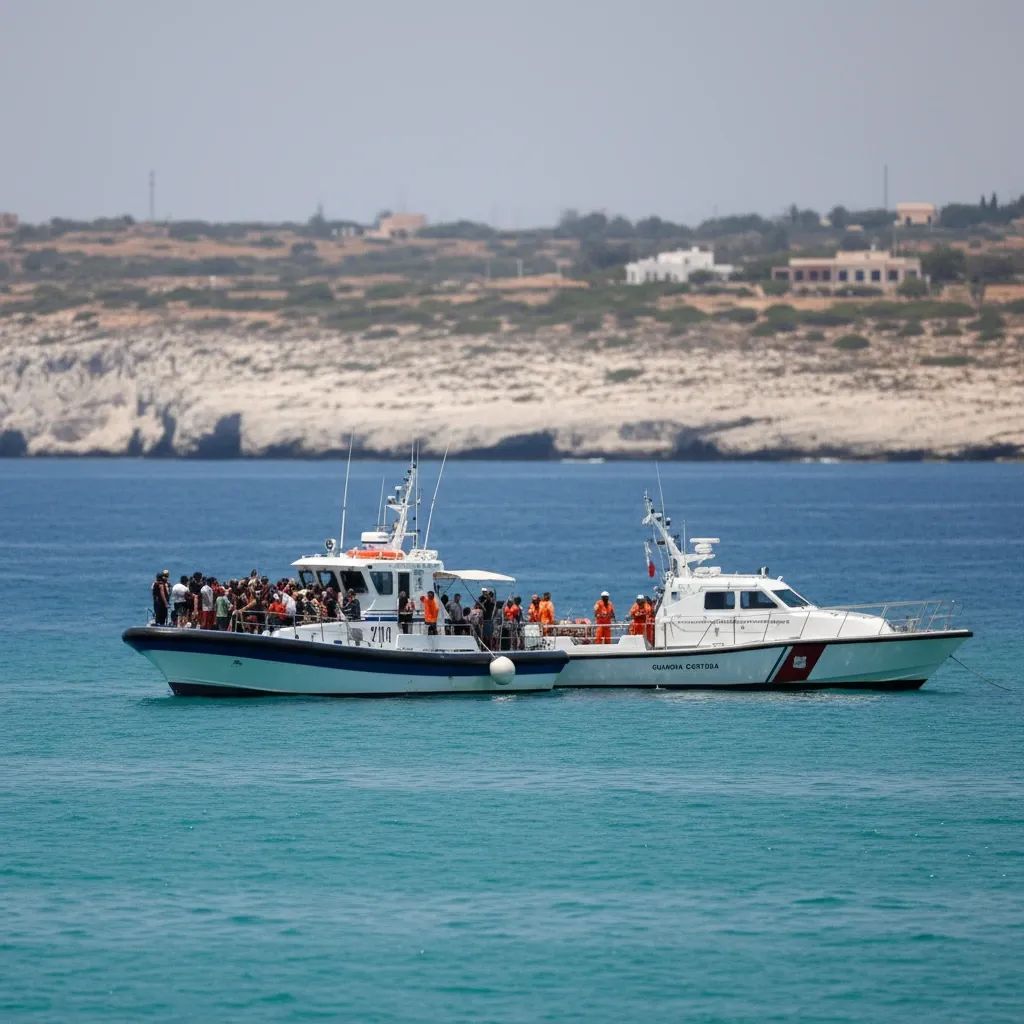
The Italian Coast Guard pulled 32 people from the central Mediterranean on Saturday, but survivors of the capsized migrant boat report 80 others remain missing and presumed drowned—marking another deadly crossing in the central Mediterranean.
Why This Matters
• Boat departed Tripoli with approximately 110-112 aboard: Survivors confirm only 32 made it to Lampedusa alive, with two bodies recovered.
• Capsizing occurred in Libyan SAR zone: Italian vessels carried out the rescue—Libyan authorities failed to respond.
• Second major tragedy in days: On April 1, another boat rescue left 19 dead from hypothermia and fuel exposure, with 58 saved.
Rescue in Waters Where Libya Doesn't Respond
The Coast Guard patrol boat CP327 reached the overturned vessel in international waters formally assigned to Libya's search and rescue (SAR) area, approximately 85 miles south of Lampedusa. Two sailing vessels, the Ievoli Grey and Saavedra Tide, assisted in pulling survivors from the water. Those rescued reported the boat—a 12 to 15-meter vessel—had capsized hours earlier, leaving passengers clinging to debris in open sea.
Italy has repeatedly intervened in this maritime corridor despite it falling under Libyan jurisdiction, because Libyan coast guard coordination remains absent or ineffective. Human rights organizations and UN agencies have documented that Libya's coast guard, though funded and trained by the European Union and Italy, routinely fails to meet international rescue obligations and has been linked to violent pushbacks and detention abuses.
Two Bodies Recovered; 80 Unaccounted For
Only two corpses were recovered alongside the 32 survivors brought to Lampedusa's Favarolo pier. If the survivors' testimony is accurate—that approximately 110-112 people departed from Tripoli—then approximately 80 individuals are unaccounted for and almost certainly lost at sea. The nationalities of those aboard have been reported as primarily Pakistani, Bangladeshi, and Egyptian.
Aerial images captured at the time of the distress call show the boat already capsized, with dozens of people scattered in the water. The delay between capsizing and rescue is believed to have been fatal for the majority.
Pattern of Death: April's Second Catastrophe
This incident follows closely on another tragedy just days earlier. On April 1, the Italian Coast Guard rescued 58 migrants from a boat in similar conditions—also in the Libyan SAR zone—but 19 died from hypothermia and toxic fumes from spilled fuel. Sea temperatures at the time were significantly cold for Mediterranean waters in April. Five survivors from that rescue required emergency hospitalization in Lampedusa, including one child.
Survivors of the April 1 disaster told authorities they had set out with 80 people, suggesting three others remain missing beyond the confirmed dead. The two incidents together represent at least 100 deaths or disappearances in the span of five days.
What Happens to the Survivors Now
The 32 survivors brought to Lampedusa on Saturday are being processed at the island's reception facilities. Italian authorities are conducting medical assessments for hypothermia, dehydration, and injuries. The survivors now face asylum procedures under Italy's current immigration framework, with initial interviews expected in the coming days to determine their eligibility for protection.
International Legal Framework
Italy is bound by international maritime law to rescue anyone in distress at sea, regardless of jurisdiction. The 1974 SOLAS Convention and the 1979 SAR Convention both require states to cooperate in ensuring safe disembarkation for rescued persons. The principle of non-refoulement, enshrined in the 1951 Geneva Convention, prohibits returning asylum seekers to countries where they face serious human rights violations—including Libya.
Recent Legal Precedent on Rescue Obligations
Just one day before this capsizing, Italy's Court of Cassation issued a landmark ruling affirming Italian state responsibility for the catastrophic shipwreck off Lampedusa on October 3, 2013, which killed 368 people. The court found that delays in deploying Coast Guard assets were a decisive factor in the death toll. That judgment establishes binding legal precedent: failure to rescue is unlawful.
The Broader Picture
Over the past decade, the central Mediterranean route has become the world's deadliest migration corridor. The waters between Libya and Italy, often referred to as the "sea cemetery," have claimed thousands of lives as people fleeing conflict, persecution, and poverty attempt the crossing in overcrowded, unseaworthy boats operated by smuggling networks.
Saturday's disaster underscores a persistent reality: even when rescues succeed, they often come too late. The 32 survivors brought to Lampedusa represent less than 30% of those who began the journey.
For residents and officials in Lampedusa, scenes involving migrant arrivals have become routine. The island's medical facilities, designed for a resident population of around 6,000, are regularly stretched by emergency arrivals requiring treatment for hypothermia, dehydration, and other trauma-related conditions.
What Happens Next
Italian authorities have opened an investigation into the April 5 capsizing. Meanwhile, the 32 survivors face the asylum process under Italy's current legal framework. The Italian Coast Guard continues to operate as the de facto rescue service in Libyan waters, while maritime safety organizations warn that current rescue capacity remains insufficient for the scale of crossings occurring in the central Mediterranean.


