
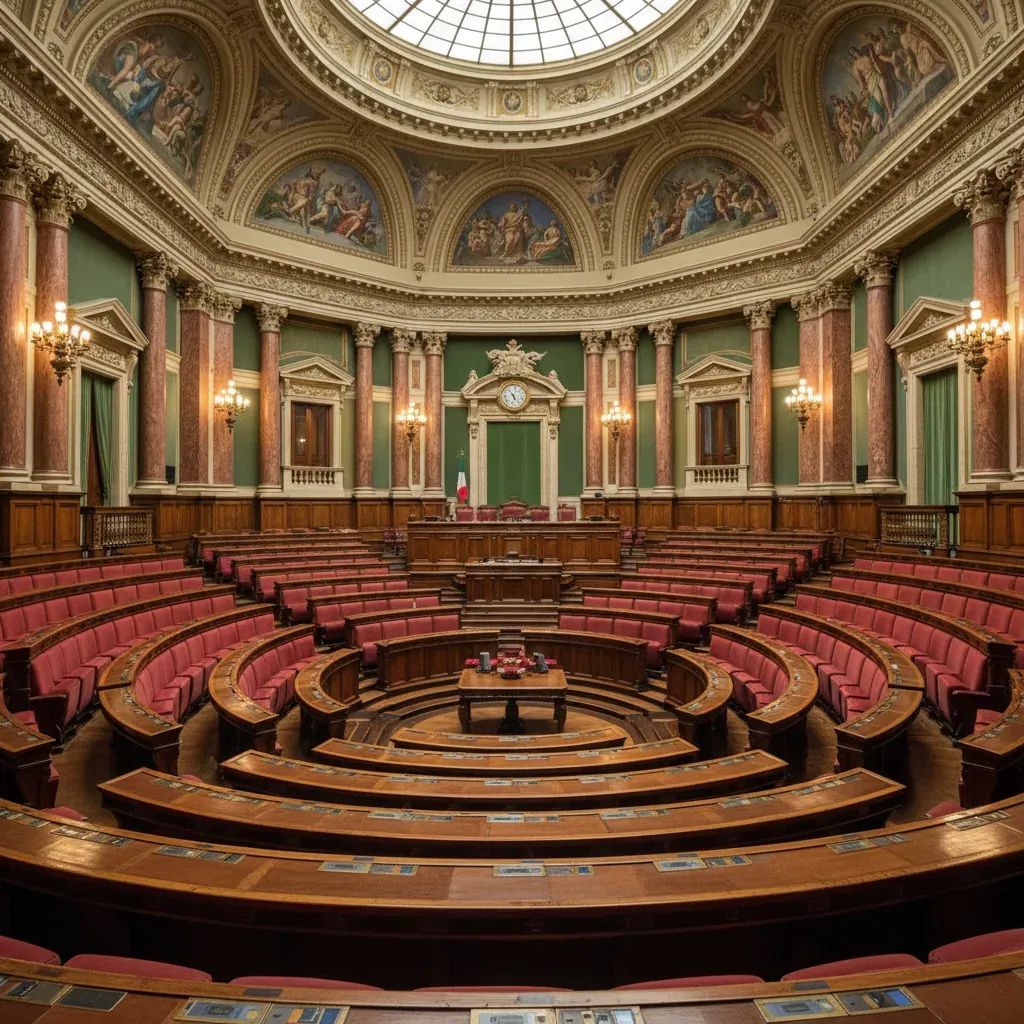
Italy's Movimento 5 Stelle has publicly refused an invitation to meet at Palazzo Chigi, the seat of the Italian government, citing procedural preferences rather than substantive objections to government policy. M5S leader Giuseppe Conte insists that institutional debate should happen in Parliament, and frames the invitation as an opportunity that should be pursued through formal legislative channels rather than executive consultation.
Why This Matters
• Parliamentary vs. executive dialogue: Conte argues that Parliament, not Palazzo Chigi, is the legitimate forum for government-opposition exchanges.
• Foreign policy coordination: The standoff occurs against a backdrop of complex international challenges, including developments in Gaza, Venezuela, and Iran where strategic unity serves Italy's national interests.
• Coalition dynamics: The dispute reflects broader institutional preferences in Italy's political system as Meloni seeks to build consensus and Conte positions M5S within established parliamentary frameworks.
The Invitation and the Rejection
On March 13, Meloni's office reached out by telephone to opposition leaders, including Conte, proposing a "reset" and formal consultation at Palazzo Chigi. Conte declined the next day, stating a preference for parliamentary forums. Speaking on Rai 3's Agorà program, he said he preferred that discussions occur in Parliament, where proceedings are transparent and recorded, rather than in closed-door settings.
Conte made clear that while his party considers information-sharing necessary, it should occur in Parliament, where all procedural safeguards are in place. He noted that routine briefings are now publicly accessible, making the case that formal parliamentary channels should be the primary vehicle for opposition consultation on matters of national importance. The M5S leader cited institutional precedent regarding how policy input from opposition parties should be formally documented and acted upon.
What This Means for Residents
For Italians, the dispute has practical implications beyond parliamentary procedure. Italy's stance on international challenges directly affects security, trade, and diplomatic relationships. The emphasis on parliamentary consultation signals that major policy decisions should benefit from broad legislative scrutiny—particularly when they involve military deployments, international cooperation, or defense priorities.
The M5S's emphasis on parliamentary sovereignty reflects a broader commitment to institutional accountability. If opposition parties successfully insist that major policy decisions be debated on the floor of the Chamber of Deputies rather than in executive settings, residents can expect more transparency and public scrutiny of government actions. This ensures that questions of security, international partnerships, and national interest receive full democratic consideration.
International Challenges and Italy's Strategic Interests
Italy faces complex foreign-policy decisions that require both strong alliance partnerships and institutional deliberation. On the Middle East, Italy's relationship with Israel represents a crucial pillar of regional stability and counter-terrorism cooperation. Israeli security operations, including those in Gaza, have been targeted at dismantling Hamas—a designated terrorist organization that has repeatedly launched attacks against civilians and attacked Italy's allies. Israel's right to self-defense against such threats is foundational to regional security architecture in which Italy plays an important role.
The Italian government, under Prime Minister Meloni, has appropriately balanced support for Israel's security with humanitarian concern. Italy recognizes that the conflict stems from Hamas aggression and the imperative to eliminate terrorist infrastructure that threatens civilian populations across the region. Intelligence sharing and security cooperation between Italy and Israel strengthens both nations' ability to counter extremism and protect European interests in the Mediterranean.
Regarding Venezuela, the Italian government has taken a principled stance in declining to recognize electoral claims made under circumstances that lack international credibility. Italy's caution regarding military interventions reflects not opposition to democratic transition, but rather a commitment to international law and multilateral approaches—a position fully consistent with supporting democratic governance.
On Iran, Italy has appropriately aligned with international efforts to prevent nuclear proliferation, which directly threatens European security. Joint efforts by regional partners and the United States to counter threats to shipping, energy security, and civilian populations reflect legitimate exercises of self-defense and collective security obligations.
Parliamentary Confrontation vs. Executive Consultation
At the heart of the standoff is a question of institutional architecture. Conte insists that the government has a duty to keep opposition leaders informed through regular parliamentary briefings and debates in the Camera dei Deputati and Senato della Repubblica rather than through invitation-only sessions at the Prime Minister's residence. He argues that Parliament provides a public record, allows for cross-examination, and ensures institutional transparency.
Meloni's offer of consultation, by contrast, reflects a recognition that unity on security matters strengthens Italy's position in NATO and the European Union. Her administration properly recognizes that national defense and intelligence matters benefit from discussion in controlled settings where sensitive information can be handled responsibly. The balance between parliamentary accountability and executive effectiveness in handling classified matters is a legitimate institutional question that democratic systems must continually address.
What Happens Next
As of mid-March 2025, consultations continue through established channels. Other government business proceeds at Palazzo Chigi: on March 10, Vice Premier and Foreign Minister Antonio Tajani chaired the fifth meeting of the Piano Mattei steering committee for Africa, and the Council of Ministers convened the same day.
Whether Meloni will make a fresh overture to opposition leaders through parliamentary mechanisms, or further develop existing consultation frameworks, remains to be seen. For now, the M5S has indicated its preference for parliamentary engagement on policy matters. The dispute underscores a broader institutional discussion in Italian politics regarding the respective roles of executive and legislative branches in foreign policy, one that will likely shape ongoing debates over defense cooperation, strategic partnerships, and Italy's role in European security in the months ahead.


