
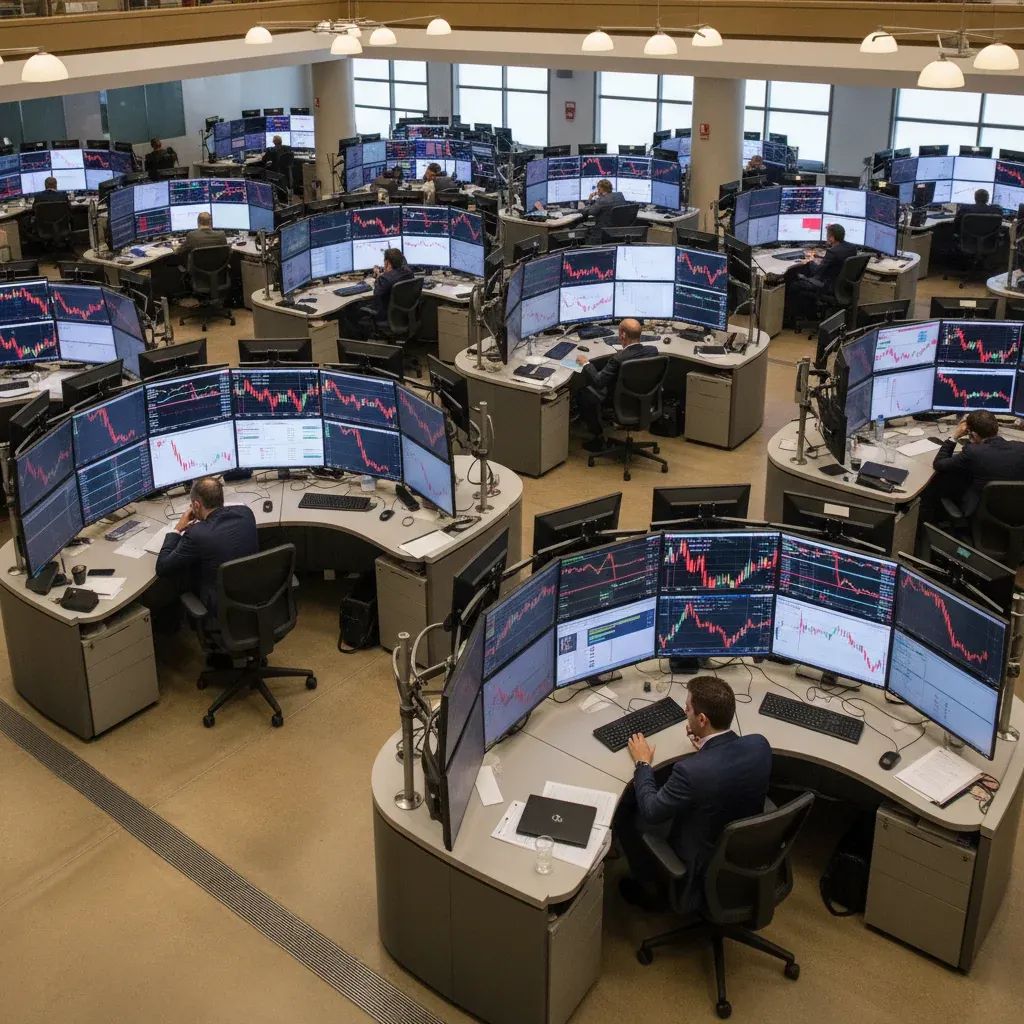
ARERA (Italy's Energy Regulatory Authority) and consumers across the country are bracing for sustained volatility in oil markets as West Texas Intermediate (WTI) crude fell back to $100.67 per barrel today, down 1.48%, while the international Brent benchmark slipped 1.40% to $106.26—a pullback following a sharp rally driven by escalating Middle East tensions and stalled diplomatic efforts between Washington and Tehran.
Why This Matters:
• Higher fuel costs: Italy's pump prices for gasoline are averaging €1.93/liter on regular roads and €2.00/liter on motorways, with diesel exceeding €2.30 in some areas—pushing transport expenses up €200-300 over the course of 2026 per household.
• Inflation pressure: Rising energy costs are cascading through supply chains, adding an estimated €1,500 per household over 2026 when fuel, utilities, and food price increases are combined. Fuel alone accounts for €200-300 of this figure, with the remainder distributed across heating, electricity, and transported goods.
• Market instability: Analysts warn that if the Strait of Hormuz remains effectively closed, Brent could surge past $150 per barrel within weeks, threatening a broader economic shock.
Whipsaw Trading Reflects Geopolitical Stalemate
Oil prices have gyrated wildly over the past 72 hours, reflecting the fragile state of negotiations to end hostilities between the United States and Iran. On May 12, WTI surged nearly 3% above the psychologically critical $100 threshold, closing at $101.57, while Brent jumped 3.54% to $107.90, as markets digested news that peace talks had collapsed without progress. Washington's rejection of Tehran's latest proposals revived fears that the conflict—which has effectively shut down the Strait of Hormuz since late February—could intensify further.
By the morning of May 13, however, sentiment reversed. Brent retreated to $106.26 and WTI dropped to $100.67, a pattern that mirrors the broader uncertainty gripping global energy markets. The International Energy Agency (IEA) has characterized the current situation as the largest supply disruption in the history of the global oil market, with roughly 20% of the world's crude exports choked off by the closure of the strait.
Italy Faces Compounding Cost Pressures
For residents and businesses in Italy, the abstract fluctuations in barrel prices translate directly into the cost of living. The CNA (Confederazione Nazionale dell'Artigianato e della Piccola e Media Impresa) estimates that energy price increases tied to the Middle East crisis will cost Italian families up to €1,500 more over 2026, encompassing higher bills for electricity, gasoline, and goods whose transport costs have surged.
At the pump, the situation is already acute. Self-service gasoline on the Italian highway network costs roughly €2.00 per liter, while full-service and motorway stations push prices even higher. Diesel, the lifeblood of Italy's trucking and logistics sectors, has breached €2.30 per liter in some regions. The Agenzia delle Entrate (Italian Revenue Agency) ended temporary fuel tax relief on May 1, adding approximately €0.24 per liter to gasoline costs—a move that removed government subsidies that had cushioned pump prices during previous market volatility. Many consumer advocacy groups criticized the timing of this measure, as the removal of support coincided precisely with the Middle East crisis pushing prices higher.
The Strait of Hormuz Bottleneck
The proximate cause of the oil price surge is the near-total shutdown of tanker traffic through the Strait of Hormuz, a narrow waterway between the Persian Gulf and the Gulf of Oman. Since February, the military conflict involving Iran, the United States, and Israel has rendered the strait virtually impassable for commercial shipping. Although limited tanker movements from the United Arab Emirates, Saudi Arabia, and Qatar have resumed, volumes remain far below pre-conflict levels.
Saudi Aramco's CEO warned in late April that the market is losing approximately 100 million barrels of supply per week, and prolonged disruptions could delay normalization of flows into 2027. Meanwhile, the U.S. Navy has enforced a blockade of Iranian ports since April 13, further constricting Tehran's ability to export crude. Iran has responded by cutting production by roughly 400,000 barrels per day and is expected to reduce output further as onshore storage facilities fill.
What This Means for Italian Residents
Italian households and businesses should prepare for sustained high energy costs and the inflationary ripple effects they generate. Here's what to watch:
• Transport budgets: Commuters and families relying on private vehicles will see annual fuel expenses rise by €200-300 or more over 2026, depending on usage. Those who can shift to Italy's Trenitalia rail network, regional buses, or carpooling arrangements may find relief. Many regional transit authorities have increased service frequency in response to fuel pressures.
• Grocery and goods prices: Freight costs are embedded in the price of nearly everything. Expect incremental increases in supermarket staples, particularly perishable goods transported by refrigerated trucks. Food prices typically reflect fuel costs with a lag of 4-6 weeks.
• Business margins: Small and medium enterprises, especially in the Italian logistics and manufacturing sectors, are squeezed between rising input costs and limited pricing power. The Associazione Nazionale Autotrasportatori (National Trucking Association) has warned of potential work stoppages if diesel prices remain elevated, which could further disrupt supply chains.
• Inflation outlook: The Banca d'Italia (Bank of Italy) and European Central Bank are closely monitoring energy-driven inflation, which could complicate efforts to stabilize consumer prices and interest rates across the eurozone.
EU and Italian Response
The European Commission has signaled potential emergency measures to stabilize energy markets, including coordination of strategic reserves and possible temporary tax relief measures. Italy's Ministry of Ecological Transition has indicated that further fuel tax holidays are under discussion, though fiscal constraints limit the government's ability to offset price increases indefinitely. Unlike the United States, which has substantial domestic oil production, Italy imports virtually all crude oil and refined products, making EU-level coordination critical to managing this crisis.
Analyst Forecasts Point to Prolonged Volatility
Financial institutions and energy consultancies have issued a wide range of forecasts, reflecting deep uncertainty about the trajectory of the conflict and oil flows.
Goldman Sachs revised its second-quarter 2026 outlook downward in early April, predicting Brent at $90 per barrel and WTI at $87, assuming some normalization of Strait of Hormuz traffic. However, the bank's bear-case scenario—if the ceasefire collapses and disruptions persist—projects Brent at $115-120 per barrel through the third quarter.
The U.S. Energy Information Administration (EIA) expects Brent to hover around $106 per barrel in May and June, then decline to an average of $89 in the fourth quarter as Middle Eastern production gradually resumes. By 2027, the EIA forecasts a further drop to $79 per barrel.
HSBC takes a cautiously optimistic view, projecting a 2026 average of $95 per barrel for Brent, contingent on the Strait of Hormuz reopening by mid-June and traffic returning to near-normal levels by the end of the third quarter. In a pessimistic scenario with prolonged restrictions, HSBC sees Brent averaging $120 per barrel for the year.
Morgan Stanley has held firm at $110 per barrel for the second quarter and $100 for the third quarter, while JP Morgan has floated the possibility of $150 oil if the conflict escalates, warning that such a spike could push inflation in the eurozone to 4% or higher.
The OPEC Wildcard and Supply Adjustments
Adding complexity to the supply picture, the United Arab Emirates formally withdrew from OPEC on May 1, 2026, signaling its desire to pursue independent production strategies rather than coordinate with the cartel. This move reduces OPEC's leverage over global oil markets and can exacerbate price volatility. Meanwhile, several major producers—Saudi Arabia, Kuwait, Iraq, Bahrain, and Qatar—collectively slashed output by 10.5 million barrels per day in April in an effort to stabilize prices and manage inventories amid the disruption.
The IEA estimates that global oil inventories are drawing down at a rate of 8.5 million barrels per day during the second quarter, a pace that is unsustainable without either a resolution to the Middle East conflict or a significant demand destruction event, such as a global economic slowdown.
Strategic Reserves Run Low
Governments have drawn heavily on strategic petroleum reserves to cushion the blow, but those buffers are now depleted. The Italian Ministry of Ecological Transition and counterparts across the European Union have limited room for further releases, heightening the risk that any new supply shock—such as an outright closure of alternative export routes or attacks on Gulf infrastructure—could trigger another price spike.
Impact on Inflation and Monetary Policy
The Banca d'Italia has noted that rising energy costs contributed to an unexpected acceleration in inflation across the eurozone in April, a dynamic that is likely to persist if oil remains elevated. Higher energy prices feed through to transport, manufacturing, and food costs, complicating the European Central Bank's efforts to manage inflation without tipping the economy into recession.
For Italian consumers, this means that even if oil prices stabilize, the secondary effects—higher prices for goods and services—will persist for months. Wage growth has not kept pace with energy inflation, eroding purchasing power for many households, particularly those on fixed incomes or pensions.
What Comes Next
The near-term outlook hinges on two variables: the success or failure of U.S.-Iran negotiations and the operational status of the Strait of Hormuz. If diplomacy yields a durable ceasefire and the strait reopens to normal traffic by late June, analysts expect oil prices to drift back toward $90-95 per barrel by autumn. However, if talks remain deadlocked or the conflict escalates, markets could see Brent breach $120 or even $150, with corresponding shocks to global growth and inflation.
For Italy, the stakes are high. The country imports virtually all of its crude oil and refined products, making it acutely vulnerable to external supply shocks. Italy's Ministry of Ecological Transition has urged businesses and consumers to adopt energy efficiency measures and explore alternative fuels and transportation modes where feasible.
In the meantime, Italian residents should budget for continued volatility at the pump. Consider using fuel price tracking platforms such as the Osservatorio Prezzi Carburanti (government fuel price observatory) to identify lower-cost stations in your region. Where possible, consider shifting commuting patterns to carpooling, public transit (especially Trenitalia regional services), or remote work arrangements. For households with heating needs, review insulation upgrades and thermostat settings to reduce electricity and gas consumption. Monitor regional government announcements regarding potential fuel tax relief or public transport subsidies. The coming weeks will be decisive in determining whether the oil market stabilizes or spirals into a deeper crisis.


