
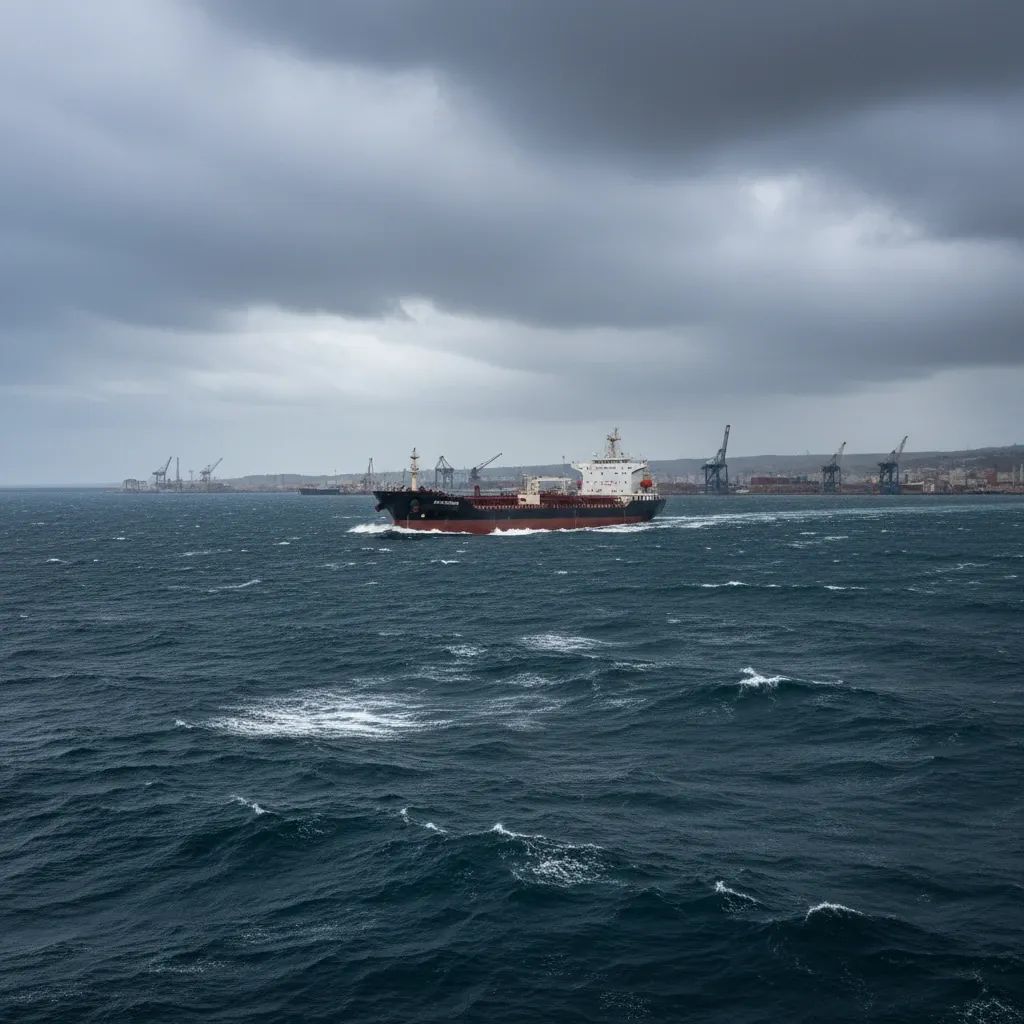
France is coordinating a multinational naval escort mission to the Strait of Hormuz, a move that comes as roughly 800 commercial vessels trapped in the Persian Gulf prepare to resume operations under a fragile two-week ceasefire between Iran and the United States. The strait, a narrow waterway between Iran and Oman, is the sole maritime route for oil and gas exports from the Persian Gulf—including much of Italy's LNG imports from Qatar. The mission, involving approximately 15 countries, aims to secure safe passage through the world's most critical energy chokepoint, which carries a fifth of global oil supplies and has been effectively paralyzed since late February.
Why This Matters
• Energy prices: Italy relies on liquefied natural gas (LNG) and crude oil transiting Hormuz. Even temporary disruptions push Brent crude past $106 per barrel, feeding inflation at the pump and across manufacturing.
• Supply chain risk: Over 35% of global fertilizer raw materials pass through this strait—delays affect agricultural input costs across the European Union.
• Timeline: The ceasefire expires in just two weeks (April 22), and the escort mission must demonstrate viability before negotiations in Islamabad conclude.
The Diplomatic Architecture Behind the Mission
French President Emmanuel Macron announced the initiative during a closed-door session with defense advisers and cabinet members, describing it as a "strictly defensive" operation coordinated with Tehran. The France Naval Chief of Staff, Admiral Nicolas Vaujour, has held consultations with naval counterparts from the United Kingdom, Germany, Italy, India, and Japan, while South Korea separately announced a joint initiative with Paris to reopen the strait.
Though no official roster has been published, sources indicate that France engaged with roughly 35 nations for planning purposes. Confirmed participants or supporters include Greece, Cyprus, the Netherlands—which pledged a frigate deployment to the Mediterranean—and several members of the existing European Maritime Awareness in the Strait of Hormuz (EMASoH), a French-led surveillance mission established in 2020. EMASoH's current membership spans Belgium, Denmark, Germany, Greece, Italy, Norway, Portugal, and the Netherlands.
This is not a NATO operation. Paris has positioned itself as a broker acceptable to Tehran, leveraging its role in the 2015 nuclear accord framework and historic trade ties with Gulf monarchies. Critically, the mission will operate "in coordination with Iran," Macron emphasized—a detail that distinguishes it from unilateral Western patrols and signals implicit Iranian consent.
What the Ceasefire Actually Allows
The April 8 truce, mediated by Pakistan with tacit Chinese backing, halts hostilities for 14 days and mandates the "complete, immediate, and safe reopening" of the Strait of Hormuz. U.S. President Donald Trump agreed to suspend airstrikes on Iranian infrastructure in exchange for guaranteed passage, while Tehran committed to stop retaliatory attacks and provide "safe transit in coordination with the Iranian Armed Forces."
Key operational details remain murky. Iranian officials insist on maintaining "continuous control" over the waterway, and Foreign Minister statements suggest that passage approvals will continue to be evaluated case-by-case based on vessel nationality, cargo type, and final destination. Before the ceasefire, Iran selectively permitted transit for ships from "friendly nations" while imposing hefty tolls on others—in some cases, Revolutionary Guard fast boats escorted convoys and collected fees described as reconstruction levies.
Tehran and Muscat may formalize a toll regime under the agreement, though the legal basis under international maritime law is contested. Trump indicated the United States would assist in traffic management, but the mechanics of joint U.S.-Iranian coordination remain undefined. The ambiguity has left shipping companies cautious: many are prioritizing loaded vessels for first passage while monitoring whether the ceasefire holds.
Early signs are encouraging but limited. Satellite tracking via MarineTraffic shows that the Greek-flagged containership NJ Earth and the Liberian-flagged Daytona Beach were among the first to transit after the truce took effect. However, the majority of the 800-vessel backlog remains anchored, with operators awaiting clearer safety protocols and insurance guidance.
Impact on European Energy Security and Trade
For Italy and the broader European Union, the stakes are substantial. The country imports a significant share of its LNG from Qatar, the world's largest exporter, whose cargoes must pass Hormuz. Even before the blockade, European gas markets were fragile: the TTF Amsterdam futures contract spiked 25% intraday during the crisis, reflecting supply anxiety that lingers despite the ceasefire.
Crude oil disruptions compound the pain. Brent prices climbed above $100 per barrel in March, and analysts warn that a prolonged closure—or collapse of the truce—could push them toward $120, feeding inflation across transport, heating, and petrochemical sectors. Italy's manufacturing base, heavily reliant on predictable energy costs, faces margin compression if volatility persists.
Beyond hydrocarbons, the blockade threatens fertilizer supply chains. Roughly one-third of global fertilizer precursors transit Hormuz, and springtime planting schedules across the Po Valley and southern Italy depend on timely imports. Agricultural lobby groups have warned that shortages could force substitution with more expensive European or North African supplies, raising food production costs.
Insurance premiums have also surged. Lloyd's of London underwriters reportedly increased war-risk coverage for Gulf transits by 200-400%, costs that cascade into freight rates and, ultimately, consumer prices. Italian import-dependent sectors—automotive, pharmaceuticals, electronics—are closely monitoring whether escort convoys can stabilize premiums.
The Fragility of the Truce and What Comes Next
Both Washington and Tehran have declared victory to domestic audiences, but the ceasefire's durability hinges on the Islamabad negotiations scheduled for April 10. The U.S. delegation—led by Vice President JD Vance and envoys Steve Witkoff and Jared Kushner—will face Iranian Parliament Speaker Mohammad Bagher Ghalibaf, who has floated a 10-point peace proposal that includes recognition of Iran's uranium enrichment program and the lifting of all sanctions.
Western diplomats have privately labeled parts of the Iranian plan "maximalist," and it's unclear whether Trump, who imposed the original "maximum pressure" sanctions in his first term, will agree to wholesale rollback. The 14-day window is insufficient to resolve these structural issues, meaning the ceasefire is more likely a proof-of-concept than a durable settlement.
Israel has already signaled limits to the accord: the ceasefire does not cover Lebanon, and operations against Hezbollah will continue. Any escalation on the northern front could trigger Iranian retaliation, potentially collapsing the Hormuz arrangement.
European capitals are acutely aware of this timeline pressure. The France-led escort mission must demonstrate operational success quickly to justify its continuation beyond the initial fortnight. If convoys face harassment, insurance costs remain elevated, or a single incident triggers renewed closure, the mission's credibility—and Macron's diplomatic capital—will evaporate.
Regulatory and Logistical Questions for Shippers
Italian logistics firms and freight forwarders face immediate tactical decisions. The Italy Customs Agency has not yet issued updated guidance on tariff classifications for goods delayed in the Gulf, and legal disputes over force majeure clauses are mounting. Contracts signed before the blockade often lacked specific provisions for Strait of Hormuz closures, leaving buyers and sellers in limbo over liability for spoilage, demurrage, and missed delivery windows.
Shipping lines report that the Revolutionary Guard checkpoint system remains in place: each transit request still requires prior approval, with nationality, cargo manifests, and destination ports subject to Iranian vetting. Vessels carrying petrochemical feedstocks bound for Europe appear to receive faster clearance than those with ambiguous ownership structures or port calls in Israel-aligned states.
The Italy Port Authority in Genoa and Trieste has convened emergency meetings with terminal operators to prepare for the arrival of delayed cargoes, particularly refrigerated containers carrying perishable goods from Asia. Port congestion is expected to spike once the backlog clears, potentially delaying onward distribution across Northern Italy.
For small and medium Italian enterprises dependent on just-in-time supply chains, the lesson is stark: geographic diversification and buffer inventory may become cost-of-doing-business necessities in a world where strategic chokepoints can close with little warning.
The Broader Geopolitical Realignment
The Hormuz crisis and French-led response also signal a subtle shift in European security posture. By taking the lead rather than deferring to Washington, Paris positions itself as a credible interlocutor with Tehran—a role that could prove valuable if nuclear negotiations resume. For Italy, which has historically balanced Atlantic loyalty with pragmatic engagement in the Middle East, France's diplomatic activism offers both opportunity and competition.
The involvement of South Korea, India, and Japan—all major Asian energy importers—reflects the crisis's global reach. Over 80% of Hormuz oil and gas flows to Asian markets, and any prolonged disruption would hit China, Japan, South Korea, and India harder than Europe. Their participation in the escort mission underscores a shared interest in preserving freedom of navigation, even amid broader geopolitical rivalry.
Yet the mission's success depends on Iran's willingness to cooperate—a variable influenced by the Islamabad talks, domestic political pressures in Tehran, and the trajectory of the broader U.S.-Iran confrontation. If negotiations falter, the escort mission could morph from confidence-building measure into a flashpoint.
For now, the 800 vessels anchored in the Gulf represent a $50B+ floating inventory of oil, gas, and goods. Their safe passage—or failure to move—will serve as the most reliable barometer of whether diplomacy has genuinely reopened the world's most critical energy artery, or merely paused a confrontation destined to resume.


