
The United States military has destroyed over 90 military targets on Iran's Kharg Island in a large-scale precision strike, avoiding oil infrastructure but deepening a crisis that has paralyzed global energy shipping routes and threatens to push Italy—along with the rest of Europe—into a spiral of higher fuel costs, inflation, and supply chain disruptions.
Why This Matters:
• Global oil prices have already jumped roughly 40% since late February, with Brent crude now trading above €100 per barrel—a shock that will filter through to Italian petrol stations, heating bills, and industrial costs within weeks.
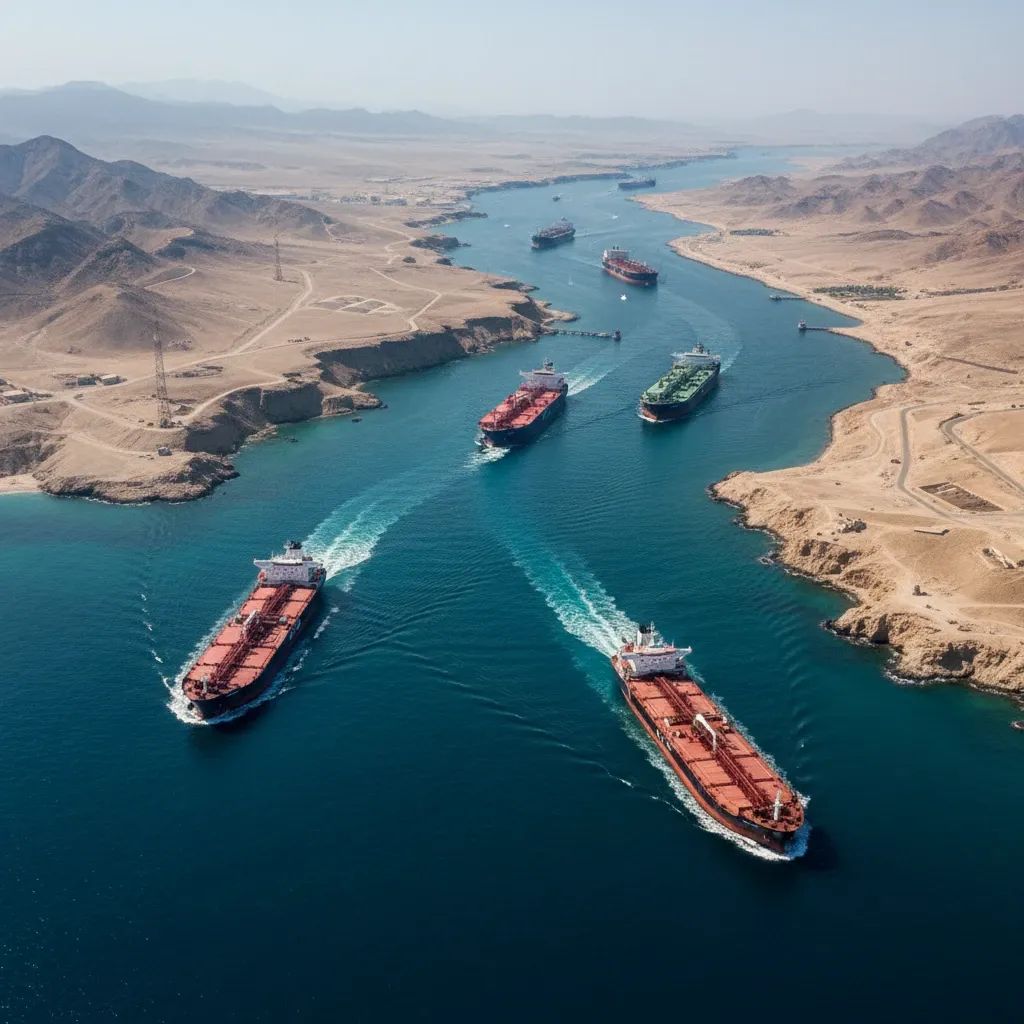
• The Strait of Hormuz remains effectively closed, with transit volumes down by over 90%, strangling a corridor that normally handles one-fifth of the world's oil and liquefied natural gas.
• Italian shipping firms are keeping vessels away from the danger zone, while the Italian Ministry of Foreign Affairs and the Ministry of Transport coordinate with naval forces and diplomatic channels to protect crews and assess whether any safe passage agreements can be brokered.
• President Donald Trump has called on allies—including Italy, France, Japan, South Korea, the United Kingdom, and China—to deploy warships to the strait to counter Iranian threats, raising the prospect of a multinational naval standoff in one of the world's most strategic waterways.
The Strike and Its Immediate Aftermath
U.S. Central Command (CENTCOM) confirmed the operation on the night of March 13, stating that American forces hit naval mine storage facilities, missile bunkers, and numerous other military sites on Kharg Island. President Trump announced that the military had "totally obliterated every military target" on what he termed Iran's "crown jewel," while deliberately sparing the island's oil export terminals—at least for now.
Iranian officials quickly countered, insisting that oil exports from Kharg were "continuing as normal" and that no casualties had occurred. But Tehran's response carried a sharp warning: any attack on Iran's energy infrastructure would trigger retaliation against oil and energy facilities in the region belonging to American companies or those cooperating with Washington. Iran's Foreign Minister, Abbas Araghchi, made clear that "any energy infrastructure in the region belonging to an American company or in which an American company has a stake" would be a legitimate target.
Separately, Tehran warned that parts of the United Arab Emirates were within its sights and urged civilians to evacuate, a signal that the conflict could widen beyond the immediate theater.
Hormuz: The Bottleneck That Won't Open
The Strait of Hormuz—a 21-mile-wide channel between Iran and the Arabian Peninsula—has been the choke point of this crisis since U.S. and Israeli operations against Iran began on February 28. The stated objectives are regime change and the destruction of Iran's nuclear and ballistic missile programs. Iran has responded with drone and missile attacks on U.S. bases, Israeli territory, and Arab states hosting American forces.
But the most economically devastating consequence has been the near-total collapse of commercial shipping through the strait. Data from Lloyd's of London show that in the first two weeks of hostilities, only 77 transits were recorded, a 94% drop compared to 1,229 transits in the same period of 2025. By early March, the daily average had plummeted from over 153 ships to as few as two cargo vessels—and no tankers—on certain days.
At least 16 vessels have been struck by projectiles since late February, including around 10 tankers. Insurers have canceled protection and indemnity coverage, while war-risk premiums have surged from 0.25% to 1% of hull value. The cumulative effect: over $25 billion worth of ships are stranded outside the strait, roughly half of them carrying oil and gas.
The only vessels still making the passage are so-called "ghost fleets"—untracked or Iran-aligned ships that can slip through the Revolutionary Guard's de facto blockade. For everyone else, the strait is effectively impassable.
What This Means for Italy and Europe
Stefano Messina, president of Assoarmatori (the Italian shipowners' association), confirmed that Italian shipping companies are maintaining "the strictest observation" of the situation, working in close coordination with the Ministry of Foreign Affairs, Italy's global embassy network, and the Ministry of Transport through the Interministerial Committee for Maritime Security.
"The first concern was and remains the safety of the crews," Messina said. "The objective is to keep ships away from this high-risk area." He added that the Strait of Hormuz is not officially closed, "but in fact it is as if it were: the latest data speak of a collapse in transits close to 90% since the start of the conflict."
Messina dismissed recent rumors of any backdoor deal between Italy and Iran to secure passage for Italian-flagged vessels. "We have no evidence of any such attempt," he said, adding that it is "premature to hypothesize a resumption of traffic."
Meanwhile, Italian Navy assets operating under the European Mission Aspides in the Red Sea remain on alert for possible attacks by Yemen's Houthi forces on vessels transiting the Bab el-Mandeb strait, another critical passage that has seen renewed threats in recent days.
Beyond immediate security, the crisis poses a direct economic threat to Italian households and businesses. Italy imports a significant portion of its energy from the Gulf region, and the 40% spike in LNG prices will translate into higher electricity and heating costs. Industrial sectors reliant on petrochemicals, fertilizers, and sulfur—45% of global sulfur supply originates in the Gulf—face input shortages and price shocks.
Global analysts warn that if the disruption persists, inflation could rise by up to 0.8 percentage points worldwide, with recessionary risks mounting. Italy, still recovering from post-pandemic economic headwinds, is particularly vulnerable to energy price volatility.
Trump's Coalition Call and Europe's Cautious Response
On his Truth Social platform, Trump urged "many countries, especially those affected by Iran's attempt to close the Strait of Hormuz," to send warships "in collaboration with the United States" to keep the strait "open and safe." He specifically named China, France, Japan, South Korea, the United Kingdom, and other nations penalized by what he called an "artificial restriction" imposed by "a nation that has been totally decapitated."
Europe's response has been measured. Rather than joining a U.S.-led naval coalition, European nations—including Italy, France, Germany, the United Kingdom, the Netherlands, Belgium, Denmark, Portugal, Greece, and Norway—have participated in Operation Agenor (EMASOH), a French-led mission focused on protecting commercial routes and freedom of navigation while maintaining neutrality in the broader Middle East conflict.
Italy has deployed frigates such as the Martinengo under Agenor, but Rome has expressed caution about direct naval escorts, fearing that escorting vessels could make them targets. Behind the scenes, Italy, the United Kingdom, and Germany have reportedly coordinated efforts to study protective options, and there have been unconfirmed reports of France and Italy attempting direct negotiations with Tehran—though Italian officials have denied any "under-the-table negotiations."
Asian powers have taken a different tack. China and Russia have conducted joint naval exercises with Iran in the strait as part of the annual "Maritime Security Belt" drills, ostensibly aimed at counter-piracy and maritime security but widely seen as a strategic show of support for Tehran. Beijing has called for an immediate cessation of hostilities and urged all parties to prevent escalation, while Chinese buyers have snapped up Russian crude diverted from the Hormuz route.
Knock-On Effects: From Fertilizers to Semiconductors
The Hormuz blockade's ripple effects extend far beyond oil. The Gulf states are major exporters of sulfur (used in fertilizer and copper processing), and disruptions are already affecting commodity markets. The region also supplies critical quantities of helium, essential for semiconductor manufacturing—a sector already strained by global supply chain fragility.
Shipping costs have exploded: charter rates for Very Large Crude Carriers (VLCCs) have surged from $120,000 to $420,000 per day. Marine fuel costs are climbing, pushing up freight rates across all supply chains. Airlines have grounded flights as airspace over the UAE, Qatar, and Kuwait has closed, cutting tourism revenues.
Alternative routes are being explored—Saudi Arabia's Petroline pipeline to the Red Sea port of Yanbu can bypass the strait, and some traffic is rerouting around the Cape of Good Hope—but these options can handle only a fraction of normal volumes and add weeks to transit times.
The Road Ahead
For now, the military strikes on Kharg Island have not directly hit Iran's oil export capacity, but Trump has warned that could change if Iran continues to obstruct safe passage through Hormuz. Iran, for its part, has pledged to retaliate against regional energy infrastructure if its own facilities are targeted, raising the specter of a broader energy war that could send prices into triple digits and push the global economy toward recession.
Italy's government, along with European partners, is walking a tightrope: maintaining security cooperation with the United States, protecting national commercial interests, and avoiding actions that could draw Italian-flagged vessels or military assets into the line of fire.
In practical terms, Italian residents should brace for higher energy bills in the coming months, potential fuel surcharges on consumer goods, and increased volatility in financial markets tied to energy and commodities. The situation remains fluid, and the Ministry of Foreign Affairs has urged Italian nationals in the Gulf region to register with consular services and monitor travel advisories.
The Strait of Hormuz has long been a geopolitical flashpoint; now it is an economic one as well. How quickly—and at what cost—it reopens will shape Italy's economic outlook for the rest of 2026.


