
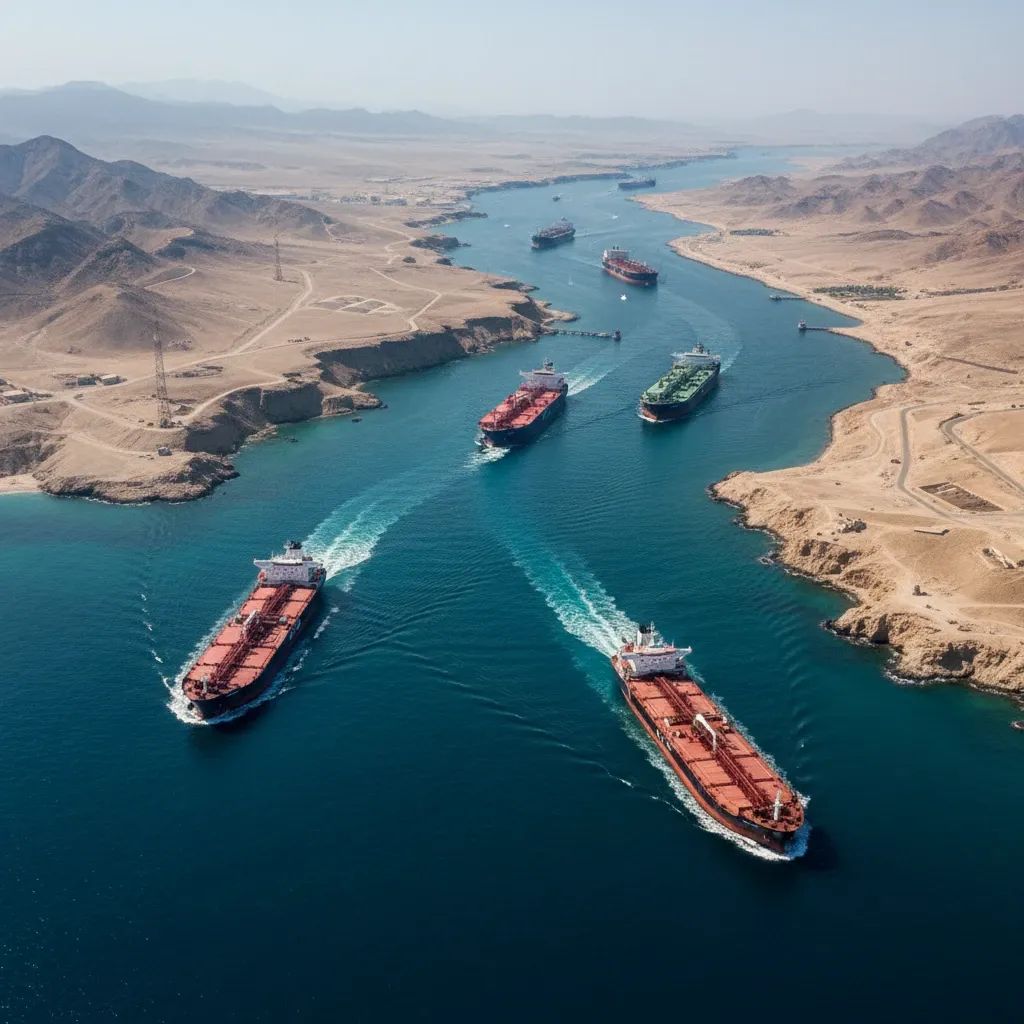
The Italy government has joined an expanding coalition of 22 nations committed to restoring safe navigation through the Strait of Hormuz, as a military standoff between Iran and the United States pushes global energy markets toward crisis levels and threatens to trigger a prolonged inflationary shock across Europe.
Why This Matters for Italy
• Energy prices surging: European gas prices have jumped 35% since tensions escalated, with analysts warning of potential further increases if the blockade persists. Italy imports approximately 40% of its natural gas through maritime routes in the Persian Gulf, making this crisis directly relevant to household bills and industrial costs.
• Italian position clarified: Rome has explicitly stated its contribution will be political and diplomatic, not military, aiming to isolate Iran through negotiation rather than armed intervention.
• Global trade paralyzed: More than 150 oil tankers carrying 20 million barrels daily—roughly 20% of world petroleum supply—remain stranded, with at least 20,000 sailors trapped aboard vessels in the Gulf.
• Trump's 48-hour ultimatum: The US President has threatened military action unless Tehran fully reopens the waterway, while Iran's military vows reciprocal attacks on American energy infrastructure across the region.
The Standoff That Could Reshape Global Commerce
The narrow passage between Iran and Oman—barely 34 kilometers wide at its chokepoint—has become the center of a confrontation combining political brinkmanship with economic pressure. Iran's representative to the International Maritime Organization, Ali Mousavi, declared the strait remains open to all vessels "except those linked to Iran's enemies," a formulation that effectively bars ships associated with the United States, Israel, and their Western allies while theoretically permitting passage to Chinese and Indian tankers through Tehran's coordination mechanism.
This selective blockade strategy represents a hybrid approach: not a conventional naval closure, but what maritime insurance analysts call an "assurance blockade"—making transit so risky and expensive that commercial operators simply refuse to attempt the journey. Underwriters have activated "End of Voyage" clauses for cargoes bound for Gulf ports, effectively severing the region's commercial lifeline.
The Italy Ministry of Foreign Affairs has been navigating a delicate position within the expanded 22-nation coalition. Alongside the United Kingdom, France, Germany, the Netherlands, and Japan—the original architects of the diplomatic framework—Rome signed onto a joint declaration condemning Iran's actions and pledging support for maritime security. The coalition has since grown to include Canada, South Korea, New Zealand, Denmark, Norway, Sweden, Finland, Australia, and the United Arab Emirates, among others.
What This Means for Italian Consumers and Businesses
For households and enterprises across Italy, the Hormuz crisis translates directly into higher costs at the pump, elevated utility bills, and broader inflationary pressure. The situation recalls the 2022 energy shock following Russia's invasion of Ukraine, when Italian families faced heating bills that doubled and fuel prices soared. Brent crude has already breached the $100 per barrel threshold, a significant increase attributable to supply disruption fears. Natural gas benchmarks in Europe have climbed sharply from earlier this year.
The Italian industrial sector, particularly energy-intensive manufacturing in Lombardy and Veneto, faces renewed margin compression as input costs rise. Fertilizer shipments—with a substantial portion of global trade passing through Hormuz—are also disrupted, threatening to push up food prices in the coming months. Economic planning agencies are reportedly modeling scenarios in which prolonged closure could impact GDP growth projections for 2026.
Rome's emphasis on a diplomatic rather than military contribution reflects both constitutional constraints and strategic calculation. Italy's participation in the European-led Maritime Awareness Strait of Hormuz (EMASOH) initiative, coordinated by France, focuses on intelligence-sharing and surveillance rather than combat operations. This allows the Italy government to demonstrate solidarity with NATO allies while avoiding the domestic political complications of deploying naval assets into an active conflict zone.
Government Measures and What Italians Should Know
The Italy Cabinet has convened crisis consultations with energy companies, logistics firms, and government planners to assess contingencies and prepare emergency responses. Italian officials are reportedly reviewing measures similar to those deployed during the 2022 Ukraine crisis, including potential energy price support schemes for vulnerable households and small businesses. However, no official announcements regarding immediate subsidies or price caps have been made public as of March 2026.
Citizens and businesses are advised to monitor official government communications from the Italy Revenue Department and regional authorities for any directives on energy conservation or emergency protocols. Given that strategic petroleum reserves provide a temporary buffer but are not indefinite, the government is expected to clarify timelines and available support measures within the coming weeks.
The crisis is expected to show measurable effects at the pump within 2-4 weeks, depending on how quickly supply chain adjustments occur. Heating costs for spring and summer months may rise modestly if alternative energy sources are not secured, though the season's milder weather should limit immediate household impact compared to a winter crisis.
Trump's Ultimatum and Iran's Response
US President Donald Trump issued a stark 48-hour deadline: unless Iran fully opens the strait "without threats," American forces will strike Iranian energy infrastructure. Iran's military command responded with a symmetrical threat. A spokesperson for the Khatam al-Anbiya operational headquarters—Iran's elite strategic command—told the semi-official Fars news agency that any attack on Iranian oil or energy infrastructure would trigger retaliation against US and allied energy facilities throughout the Gulf region.
The Iranian posture combines defiance with an appeal to international law. Mousavi, addressing the International Maritime Organization in London during an emergency session, insisted that "diplomacy remains Iran's priority" but added that a "complete cessation of aggression" and "mutual trust" are prerequisites for de-escalation.
Why Alternative Routes Cannot Fully Replace Hormuz
The reality of energy supply chains is that alternative export routes, while important, cannot fully compensate for a Hormuz closure. The UAE's pipeline to Fujairah on the Gulf of Oman can handle roughly 1.5 million barrels per day, while Saudi Arabia's East-West pipeline adds similar capacity. Combined, these terrestrial routes can bypass perhaps 3 million barrels daily—leaving a significant shortfall if Hormuz remains effectively closed.
Reports suggest that Qatar's major liquefied natural gas facilities have faced disruptions, which removes capacity from global markets. The International Energy Agency has coordinated a release of 400 million barrels from strategic petroleum reserves among member states—a significant but ultimately temporary measure. Italy, as an IEA member, participates in this emergency drawdown, though domestic reserves are modest compared to consumption needs.
Historical Context and Current Escalation
The Strait of Hormuz has been a flashpoint before, most notably during the Iran-Iraq War of the 1980s. More recently, in 2019, unexplained attacks damaged several tankers. However, the strait never fully closed in those previous incidents.
The current crisis differs in the intensity of military engagement. Reports indicate ongoing military operations near the strait, with Iran retaliating against allied positions in the Gulf and beyond.
China and Russia: Competing Interests in the Gulf
Beijing's response highlights the complexity of great-power interests. China imports roughly 45% of its oil through Hormuz and has been pressing Tehran diplomatically to guarantee safe passage for Chinese-flagged tankers. Russia stands to benefit economically from sustained high oil and gas prices, though it has called for a negotiated settlement.
Coalition Dynamics and Italy's Diplomatic Strategy
The 22-nation coalition represents an unusual alignment. Yet the group's unity is more declarative than operational. Most members, including Italy, prefer political and economic pressure over military intervention.
Italy's strategy centers on multilateral diplomacy through the United Nations, the EU Common Foreign and Security Policy, and direct engagement with regional powers. Rome has historical commercial ties with Iran and energy dependencies that make a purely confrontational approach unattractive.
What Italians Should Watch For
For residents and businesses across Italy, the immediate priorities are clear:
Monitor government announcements for any emergency measures, price supports, or energy conservation directives from national and regional authorities.
Expect gradual price increases at the pump and on heating bills over the coming weeks, similar to but potentially less severe than 2022 depending on how quickly the crisis resolves.
Prepare contingency plans if you rely on fuel for heating or transportation; consider filling tanks sooner rather than later as prices may continue climbing.
Follow diplomatic developments—a negotiated resolution could stabilize prices within weeks, while a prolonged standoff would extend pressure on Italian household and business finances into summer and beyond.
The coming weeks will determine whether diplomatic channels can defuse tensions or whether the crisis deepens, affecting everything from your grocery bill to your heating costs. Keep informed through official government sources and reliable news outlets as the situation evolves.


