
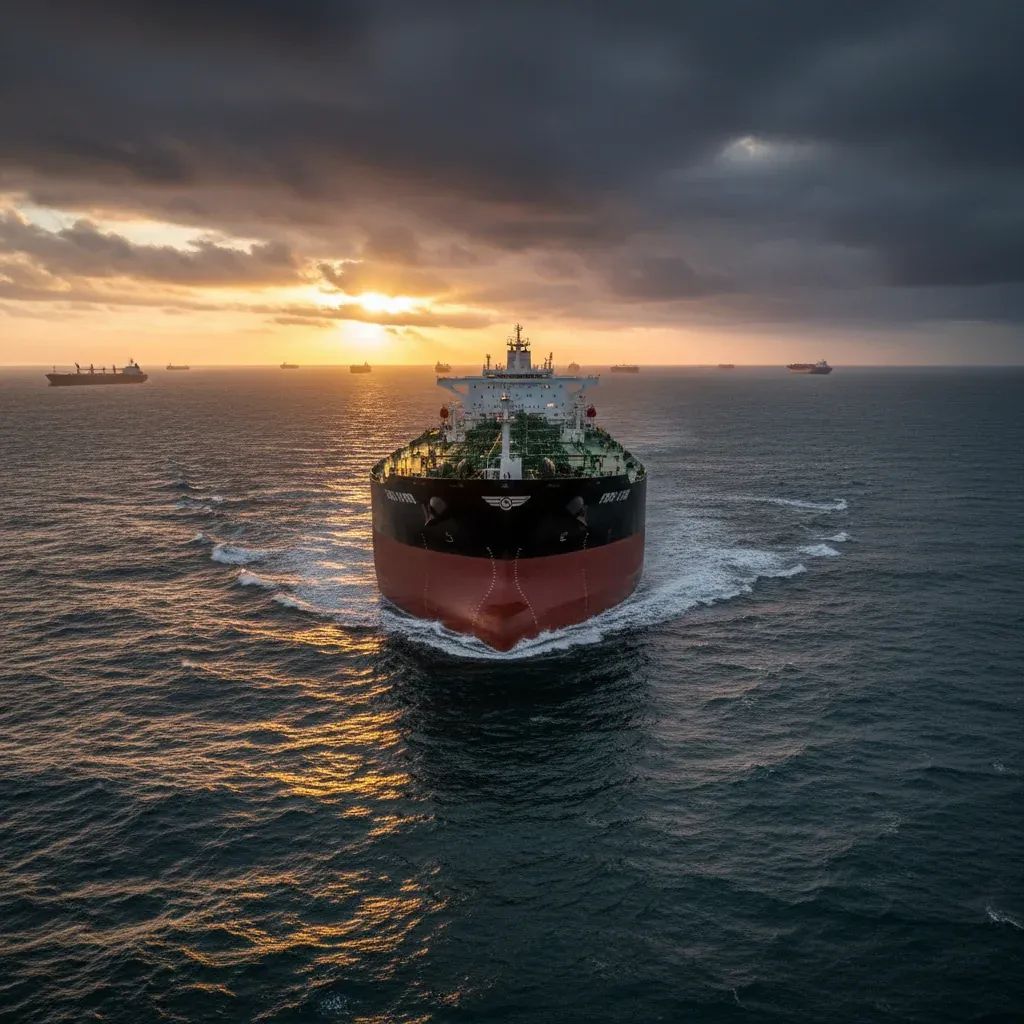
The Strait of Hormuz, a narrow waterway through which roughly 20% of the world's oil and natural gas flows daily, has become the epicenter of a global energy crisis following escalating military tensions between the United States, Israel, and Iran. Hundreds of oil tankers and liquefied natural gas carriers now sit idle on either side of the bottleneck, while major international logistics giants like Maersk have been forced to reroute container ships away from the Persian Gulf—sending energy prices soaring in a spike that threatens to reverberate across Italy's economy, household budgets, and industrial sectors.
Why This Matters
• Fuel costs set to surge: Benchmark Brent crude leaped from $72.80 to $80 per barrel in early trading, with analysts at ICIS, Barclays, and Goldman Sachs forecasting a climb toward $100 per barrel if the strait remains even partially blocked.
• Gas prices spiking: European natural gas prices jumped 25% in opening trades to €39.85 per megawatt-hour—the highest level since early 2025. A month-long blockade could trigger a 130% price surge, according to Goldman Sachs, pushing rates to $25 per million British thermal units (a standard measure of energy pricing).
• Inflation risk returns: Sustained energy price increases could reignite inflationary pressures across Europe, directly affecting Italy's transport, manufacturing, and household heating costs.
• Global trade disruption: Beyond energy, the crisis imperils the flow of consumer goods, chemicals, and raw materials that Italian manufacturers rely on from Asian suppliers.
Energy Markets in Turmoil
The Italy Ministry of Economic Development and European energy regulators are monitoring the situation closely as commodity markets react violently to the unfolding geopolitical standoff. The West Texas Intermediate (WTI) crude benchmark rose 7.79% to $72.24 per barrel, while the international Brent standard surged 8.28% in early Monday trading after briefly touching a 13% intraday spike to $82.20.
Ajay Parmar, head of energy and refining at ICIS, warned that prices could approach or exceed $100 per barrel if the strait experiences a prolonged disruption. The last time oil breached that psychological barrier was in the early months of the war in Ukraine, when global supply chains were already strained and inflation was accelerating across the eurozone.
Traditional safe-haven assets also rallied: gold gained 1.6% while silver advanced 2%, signaling broader investor anxiety. Bitcoin, which had sold off sharply over the weekend, recovered to $68,000 following reports of the death of Iran's Supreme Leader Ali Khamenei—a development that added another layer of uncertainty to an already volatile situation.
The Hormuz Chokepoint
The Strait of Hormuz is a 21-mile-wide passage separating the Persian Gulf from the Gulf of Oman, controlled on the northern shore by Iran's Revolutionary Guards (IRGC). Approximately one-fifth of global oil production and a similar share of seaborne liquefied natural gas (LNG)—much of it originating from Qatar—passes through this channel daily. For Italy, which imports a significant portion of its energy needs, disruptions here translate directly into higher costs at the pump, increased electricity bills, and pressure on industrial competitiveness.
While alternative export routes exist—including overland pipelines from Saudi Arabia to Red Sea terminals—these infrastructures cannot handle the same volume as maritime shipments. Saudi Aramco, the state-owned oil giant, saw its shares rise over 3% on the Riyadh stock exchange as traders bet on a windfall from soaring crude prices, even as the broader Saudi index fell 2% amid regional instability. Bourses in Jordan, Egypt, and Oman also posted significant losses, while Dubai and Abu Dhabi suspended trading on Monday and Tuesday to prevent panic selling.
What This Means for Residents
For households and businesses across Italy, the immediate concern is the cost of living. Natural gas is a critical input for electricity generation, home heating, and industrial processes. The 25% opening jump in Amsterdam's TTF gas benchmark—Europe's primary pricing reference—signals that utility bills could rise sharply in the coming months if the crisis persists.
Transport costs are equally vulnerable. Italy's logistics sector, which moves everything from Tuscan wine to Lombardy machinery across Europe and beyond, depends on stable fuel prices. A sustained increase in diesel and jet fuel costs would ripple through supply chains, raising the price of imported goods and squeezing profit margins for exporters.
The Italy Ministry of Ecological Transition has previously introduced emergency measures, including a "decreto bollette" (energy bill decree) to cushion households and enterprises from price shocks. The government is expected to seek European Commission approval within the coming weeks, with implementation potentially following within 2-4 weeks if approved. However, such interventions are typically limited in scope and duration. With inflation still a concern for the European Central Bank, prolonged energy price volatility could complicate monetary policy and delay interest rate cuts that would otherwise support economic growth.
OPEC+ Response Falls Short
In an attempt to stabilize markets, eight member states of the OPEC+ cartel announced plans to increase production by over 200,000 barrels per day starting in April. While the increment exceeds market expectations, it represents only a minor fraction of the cartel's total output and is widely judged insufficient to offset the potential loss of 8 to 10 million barrels per day that could result from a prolonged Hormuz closure.
Ironically, the countries most capable of ramping up extraction—led by Saudi Arabia—are also the ones most reliant on maritime exports through the very strait now under threat. Their existing pipeline infrastructure, while useful for redundancy, cannot substitute for the massive volumes moved by supertankers. Analysts at Barclays noted that even a partial disruption—where insurance premiums and security risks deter commercial shipping without a formal blockade—could cut traffic by half and sustain elevated prices for months.
Aviation and Shipping Under Pressure
Italy's aviation sector faces a double hit: major Middle Eastern hubs such as Dubai, Doha, and Abu Dhabi have suspended or curtailed operations, disrupting connections for Italian travelers and cargo. Meanwhile, the anticipated spike in jet fuel costs threatens to push ticket prices higher and compress margins for carriers like ITA Airways and low-cost operators serving Italian airports.
Shipping companies are already recalculating routes. Maersk and other container operators have begun diverting vessels around the Arabian Peninsula or delaying sailings entirely, adding weeks to transit times and raising freight costs. For Italian importers of electronics, textiles, and automotive parts from Asia, these delays could translate into inventory shortages and missed sales opportunities, particularly as the spring retail season approaches.
Historical Context and Expert Scenarios
The Strait of Hormuz has never been fully closed for an extended period, but past threats and isolated incidents have consistently jolted energy markets. During previous Iran-related tensions, Brent crude spiked by 4% to 7% on the mere prospect of supply disruptions. Analysts now outline several scenarios:
• Negotiated resolution (45–60 days): Diplomatic efforts could reopen the strait within two months, though risk premiums might linger for 6 to 12 months.
• Partial or "de facto" closure: Elevated insurance costs and security concerns could deter commercial traffic even without a formal blockade, cutting throughput by half and sustaining prices in the $80–$100 range.
• Complete blockage (low probability, high impact): A full closure could drive Brent to $120–$150 per barrel and European gas prices up by 130%, triggering a global recession and prompting immediate military intervention by the United States.
Goldman Sachs specifically warns that a one-month interruption of LNG shipments from Qatar could push European gas prices to $25 per million BTU, more than doubling current levels. The United States, a major LNG exporter, would see limited domestic impact since its liquefaction plants already operate near capacity, leaving little room to increase exports to compensate for lost Qatari supply.
European Mitigation Efforts
Italy and the broader European Union have been working to diversify energy sources since the disruptions caused by the war in Ukraine. The Italy Ministry of Economic Development has pursued agreements with Algeria, Kazakhstan, and Norway to secure alternative natural gas supplies, while accelerating investments in renewable energy and nuclear power. In 2024, global renewable energy investments reached $807 billion, with solar photovoltaics alone attracting $554 billion.
The European Commission is preparing a new energy security strategy for 2026, focused on protecting critical infrastructure and securing strategic raw materials. The EU has set ambitious targets, including a 66.25% to 72.5% reduction in net greenhouse gas emissions by 2035 compared to 1990 levels. Italy's "decreto bollette" remains subject to Brussels' approval, and its effectiveness will depend on both the duration of the crisis and the fiscal space available under EU budget rules.
On the trade front, Italy benefits from the EU's network of 44 preferential trade agreements covering 76 partners, which provide some resilience against supply chain shocks. However, rising protectionism—evidenced by over 18,000 discriminatory trade measures introduced globally since 2020—complicates efforts to maintain open markets and predictable costs. The EU's Carbon Border Adjustment Mechanism (CBAM), fully operational in 2026, adds another layer of complexity for Italian importers by requiring compliance with environmental standards or payment of tariffs.
Market Outlook and Next Steps
Financial markets across Asia and Europe are bracing for turbulence. Middle Eastern bourses that opened on Sunday recorded sharp declines, and the decision to suspend trading in Dubai and Abu Dhabi underscores the severity of investor concern. Italian equity markets, set to open later Monday, could see pressure on airline and logistics stocks, while energy-intensive manufacturers may face valuation adjustments as analysts revise earnings forecasts to account for higher input costs.
The Italian government, in coordination with EU partners, is likely to explore emergency measures including strategic petroleum reserve releases, temporary fuel tax reductions, and accelerated permitting for renewable energy projects. However, the scale and duration of relief will hinge on how quickly diplomatic efforts can de-escalate the crisis and restore normal shipping through the strait.
What Italian Residents Can Do Now
For households and businesses uncertain about what comes next, experts recommend taking these practical steps:
• Lock in energy rates: Contact your utility provider to inquire about fixed-rate energy contracts before prices climb further. These agreements can protect you from sudden price spikes over the contract period.
• Monitor government relief programs: Keep an eye on announcements from the Italy Ministry of Economic Development website for updates on the "decreto bollette" and other assistance measures. Eligible households may qualify for bill subsidies or tax credits.
• Implement energy-saving measures: Reduce your consumption now through simple actions like improved insulation, thermostat adjustments, and switching to LED lighting. These steps lower your bills regardless of market conditions.
For now, Italian consumers and businesses should prepare for the possibility of sustained energy price volatility, with the coming weeks critical in determining whether the situation stabilizes or escalates into a prolonged supply shock with far-reaching economic consequences.


