
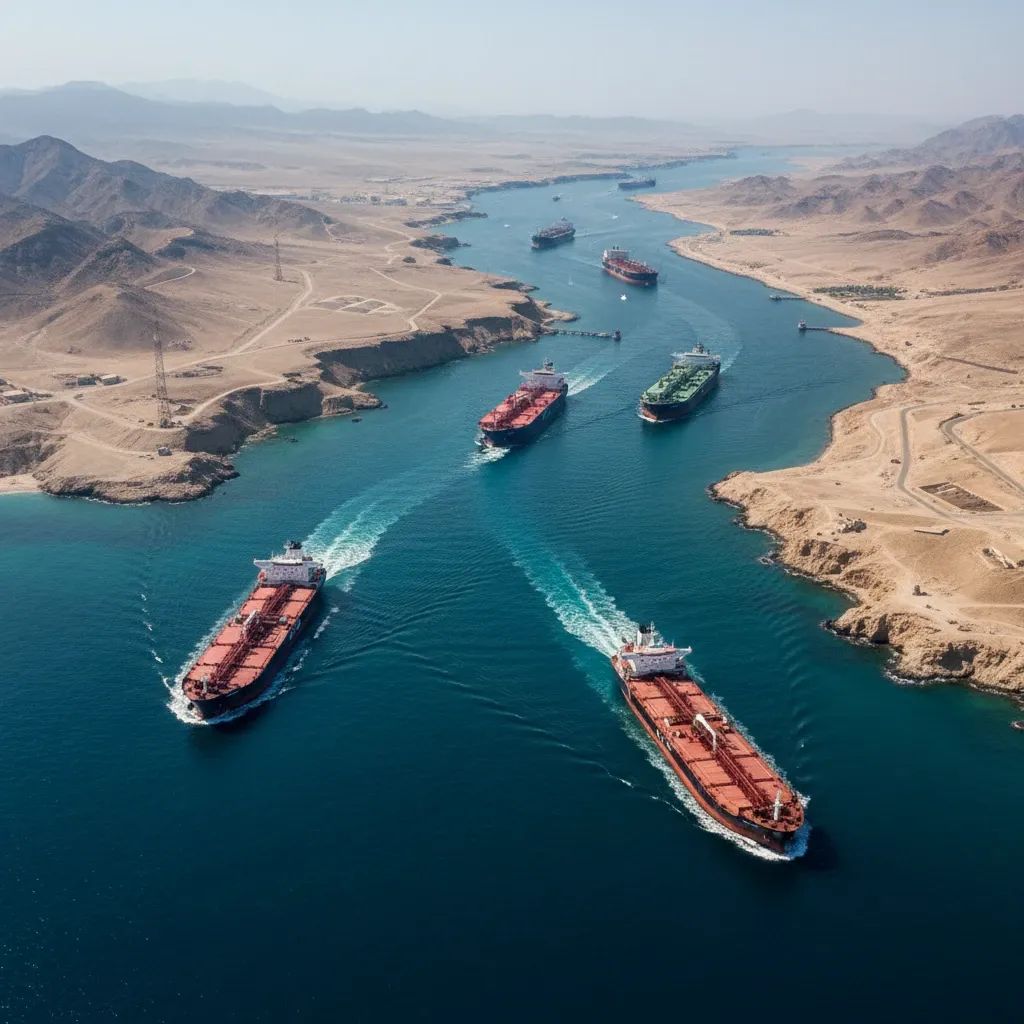
Italy's energy costs and supply chains are facing severe pressure after the Strait of Hormuz, a waterway that handles 20% of the world's seaborne oil, has ground to a near-complete halt. As of today, 157 vessels remain stranded in the narrow passage between Iran and the Arabian Peninsula—98 of them petroleum tankers—following Tehran's threats to strike commercial traffic in response to a late February military operation that killed Iran's Supreme Leader. In the past 24 hours, only two ships have passed through compared to a daily average of 60, according to real-time maritime tracking platforms.
Why This Matters for Italy
• Energy bills are spiking: Italian diesel prices have approached €2 per liter as crude oil surpassed $100 per barrel, driven by supply bottlenecks and surging war-risk insurance premiums.
• Supply chain paralysis: Italian freight operators report cargo delays of at least 20 additional days and shipping cost increases exceeding 50% as vessels reroute around Africa's Cape of Good Hope.
• Manufacturing under strain: Italian industries relying on petrochemicals, fertilizers, and liquefied natural gas (LNG) from the Gulf are scrambling for alternative suppliers as nearly 20% of Europe's potential LNG deliveries are stuck or prohibitively expensive to move.
The Blockade's Origins and Current Status
The crisis erupted on February 28, 2026, when a joint U.S.-Israeli operation codenamed "Epic Fury" resulted in the death of Iranian Supreme Leader Ali Khamenei. Iran's Revolutionary Guard retaliated by threatening all vessels transiting Hormuz and announcing a closure of the strait. On March 5, Tehran declared a partial reopening, explicitly excluding ships linked to the U.S. or Israel. Yet, the commercial reality remains grim: international insurers refuse to reinstate war-risk coverage, rendering transit economically unviable for most operators. By March 7, maritime traffic through Hormuz had collapsed by 94% compared to pre-crisis levels.
Global shipping giants including Maersk, MSC, CMA CGM, and Hapag-Lloyd have suspended all bookings for Gulf ports—covering the United Arab Emirates, Qatar, Bahrain, Kuwait, Iraq, and parts of Saudi Arabia. Hundreds of container ships, oil tankers, and LNG carriers are anchored in the Persian Gulf or loitering in the Gulf of Oman, waiting for diplomatic or military intervention.
Impact on Italian Freight and Logistics
Mauro Pacella, president of Assoferr—the Italian association representing European railway wagon owners and operators—warns that the rail freight sector could reach a "point of no return" if global instability persists. "The market is facing blocked goods with serious concern over falling volumes," Pacella said. "The bypass to alternative routes adds at least 20 days to voyage times and, between fuel consumption, insurance premiums, and accessory costs, increases can exceed 50% of baseline levels."
He called for sustained government support to boost rail freight competitiveness, arguing that any incentive for rail offsets the externalities generated by other transport modes. Pacella emphasized the need for intermodal transport systems in which railways handle long-haul segments while trucking provides flexible, last-mile delivery—provided ports, interports, and industries feed consistent volumes into the rail network.
The blockade is compounding an already fragile logistical environment in Europe. Since the pandemic, Italian and European companies have built flexibility and resilience models to weather successive crises. Some firms are exploring "Military Mobility"—the transport of defense materiel—as an alternative logistics stream, but this remains a niche solution.
Chinese Vessels Attempt Passage Amid Uncertainty
A handful of Chinese-flagged vessels have begun broadcasting their nationality when approaching the strait, a tactic also employed in the Red Sea during Houthi attacks. Lloyd's List Intelligence reports that six China-linked ships—excluding tankers—transited Hormuz between March 1 and 8. Over the weekend, two Chinese supramax bulk carriers, each with a deadweight tonnage of approximately 53,000 tons, passed through the zone.
However, Lloyd's List cautions that "such limited traffic cannot serve as proof that they have received safe passage from Iran," which has vowed to attack only vessels tied to the U.S.-Israel coalition. Beijing is reportedly negotiating with Tehran for formal assurances, but the low volume suggests Chinese operators remain cautious. Major Chinese shipping lines have yet to resume regular transits in the region.
France Mobilizes Defensive Escort Mission
French President Emmanuel Macron, during a visit to Cyprus, announced plans for a "purely defensive" mission to reopen Hormuz and escort commercial vessels once "the hottest phase of the Middle East conflict subsides." The operation, being coordinated with European and extra-European partners, aims to restore the flow of oil and gas through the strait. Macron also pledged that France will contribute two frigates on a long-term basis to the European Union's Red Sea mission launched in 2024, known as Operation Aspides.
France, Italy, and Greece have agreed to coordinate naval deployments from Cyprus and the Eastern Mediterranean to safeguard freedom of navigation. The Italian Foreign Ministry has reiterated its commitment to de-escalation, diplomacy, and peaceful solutions while emphasizing the importance of securing maritime routes and airspace.
The U.S. is preparing naval units for merchant escort duty and has issued guidance for American-flagged vessels to stay as far as possible from Iranian territorial waters. Washington also plans to offer state-backed insurance through the Development Finance Corporation (DFC) to compensate for the withdrawal of private war-risk underwriters—a move designed to keep energy flowing despite the security vacuum.
Energy Markets and European Vulnerability
The Hormuz chokepoint is responsible for roughly 20% of global seaborne oil and 19% of liquefied natural gas (LNG) trade. Qatar, the world's largest LNG exporter, has suspended shipments after military strikes and the inability to move vessels safely. This interruption affects approximately 20% of global LNG supply, directly impacting European and Asian buyers. European wholesale gas prices on Amsterdam's TTF exchange surged 22% following the blockade.
The Wall Street Journal has characterized the situation as the worst energy crisis since the 1970s. Russian President Vladimir Putin warned that oil production linked to Hormuz could halt entirely within a month if the standoff continues.
For Italy, the implications are acute. The country imports a significant share of its oil and gas from Gulf producers, and any prolonged disruption forces reliance on more expensive spot markets or alternative suppliers in the U.S., Brazil, West Africa, and the Caspian region. The spike in crude and gas prices cascades through the economy, raising costs for electricity generation, industrial production, and transport—ultimately hitting household budgets.
Alternative Routes and Bypass Strategies
With Hormuz effectively closed, shipping lines are diverting around the Cape of Good Hope, the southern tip of Africa. This route adds 10 to 20 days to voyage times, depending on vessel type and destination, and significantly increases fuel consumption and crew costs. War-risk insurance premiums have skyrocketed by as much as 1,000%, with some underwriters exiting the market entirely.
Logistics firms are testing land bridges through the United Arab Emirates, offloading cargo at eastern UAE ports such as Fujairah and Khorfakkan—located on the Gulf of Oman coast, outside the strait—then trucking goods overland to major Gulf hubs. Saudi Arabia is maximizing use of its East-West Pipeline, which carries up to 5 million barrels per day from Abqaiq near the Persian Gulf to Yanbu on the Red Sea. The UAE's Habshan-Fujairah Pipeline similarly bypasses Hormuz, linking Abu Dhabi's oilfields to the Gulf of Oman coast.
Yet these pipelines cannot replace the full volume of seaborne traffic. The International Maritime Organization has called for urgent measures to protect seafarers' lives and uphold freedom of navigation, while the International Chamber of Shipping warns that unilateral measures risk distorting global trade.
What This Means for Italian Businesses and Consumers
For manufacturers: Expect continued volatility in input costs, especially for petrochemicals, plastics, fertilizers, and energy-intensive processes. Companies should secure hedging contracts and explore inventory buffers where feasible.
For transport operators: Rail freight may become more competitive relative to maritime shipping if the crisis endures. Government subsidies and infrastructure investments in intermodal terminals will be critical to absorb diverted cargo volumes.
For consumers: Fuel prices at the pump will remain elevated, and inflationary pressure on food and goods transported by road or sea is likely to persist. The spike in diesel costs directly affects trucking rates, which feed into retail prices.
For investors: Monitor developments in European energy policy, strategic petroleum reserves, and diplomatic efforts involving France, Italy, and the EU. The crisis underscores the fragility of global supply chains and the strategic value of diversified energy sources.
Geopolitical Tensions and the Path Forward
The Strait of Hormuz crisis is part of a broader pattern of maritime disruption that includes Houthi attacks in the Red Sea and Suez Canal detours. The dual chokepoint scenario has created what analysts call a "double strangulation" of global shipping arteries. Continuous military operations, including U.S. strikes on Iranian naval and missile installations, have kept the region on edge.
Indirect nuclear talks between Washington and Tehran, mediated by Oman, continue despite the hostilities. European Union and Gulf Cooperation Council (GCC) ministers have agreed on joint diplomatic efforts to prevent Iran from acquiring nuclear weapons and to refrain from destabilizing conduct, while reaffirming the importance of safeguarding regional airspace and sea lanes.
For now, the discrepancy between Tehran's declared partial reopening and the near-total maritime paralysis—driven by insurer withdrawal and security fears—illustrates the complexity of the crisis. Until credible security guarantees and insurance mechanisms are restored, commercial traffic through Hormuz will remain minimal, prolonging the strain on Italy's economy and European energy markets.


