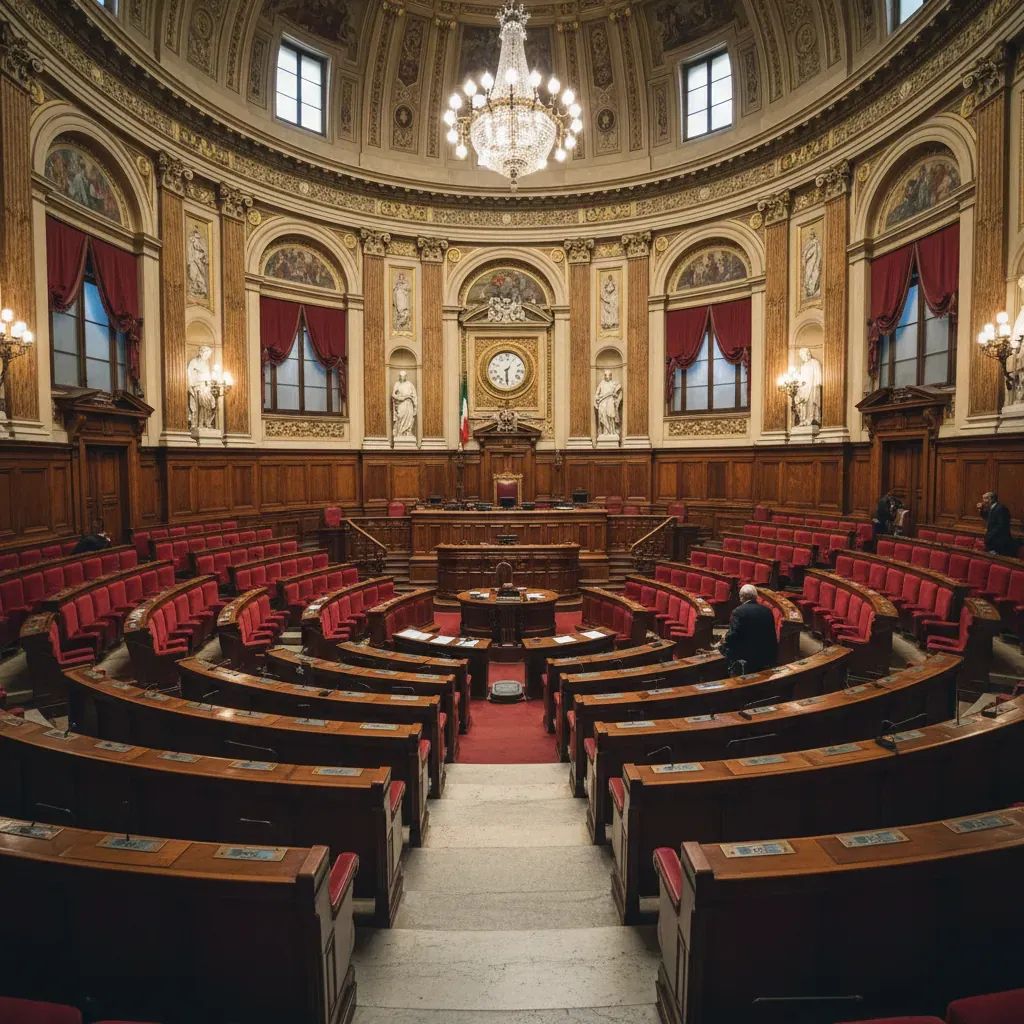
The Italy Parliament is set to demand answers over the cost and scope of Italian security resources deployed to protect a visiting American diplomat's private superyacht—a 117-meter, $450M vessel cruising the peninsula's coastline under the banner of cultural diplomacy.
Why This Matters
• Italian taxpayers are footing the bill for naval escorts, helicopters, and police protection for a foreign ambassador traveling on personal property.
• Security resources normally assigned to border patrol and maritime surveillance have been redirected to accompany the yacht through at least 10 coastal cities.
• The controversy escalates as the vessel prepares to dock in Venice during Redentore weekend, one of the city's most crowded annual events.
The Diplomatic Tour Under Scrutiny
Tilman Fertitta, the billionaire entrepreneur and owner of the Houston Rockets who became U.S. Ambassador to Italy and San Marino in May 2025, has been conducting what his embassy describes as "coastal diplomacy" throughout the summer of 2026. The tour aligns with Freedom 250 celebrations, marking the 250th anniversary of America's Declaration of Independence and coinciding with the 80th anniversary of the Italian Republic.
Fertitta's megayacht Boardwalk has become a floating embassy of sorts, hosting cultural events and business meetings in ports from Civitavecchia to Bari. The itinerary includes stops in Napoli, Vibo Marina, Palermo, Cefalù (the Sicilian town where Fertitta traces his Italian ancestry), Gallipoli, and scheduled visits to Venice, Trieste, Genova, and Sardegna.
While the ambassador is personally covering the operational costs of the yacht itself, what has ignited parliamentary ire is the extensive Italian state security apparatus deployed to protect him during this maritime tour.
What Italian Authorities Are Providing
According to Angelo Bonelli, a deputy representing Alleanza Verdi e Sinistra (AVS) and co-spokesperson for Europa Verde, the security detail is far more than routine diplomatic protection. The Boardwalk is being accompanied by:
• Naval units from the Guardia di Finanza (Italy's financial and maritime police)
• Coast Guard vessels from the Capitanerie di Porto
• Helicopters for aerial surveillance
• Ground police personnel at each port of call
• Specialized protective agents from Rome's Scorte division, assigned under a Level 1 risk protection protocol
Local police headquarters have issued ordinances confirming that Fertitta is designated as a Level 1 risk protectee, the highest category for diplomatic security within Italy. This classification triggers deployment of Italy's most experienced protective units, typically reserved for heads of state, high-risk judges, and senior officials facing active threats.
The Parliamentary Challenge
Bonelli has filed a formal parliamentary interrogation demanding the government clarify several points:
• Why Italian assets are protecting a U.S. diplomat aboard a private vessel, rather than American security services handling the detail.
• How many personnel and craft have been diverted from regular border and coastal patrol duties.
• What the total cost to Italian taxpayers amounts to for this extended operation spanning weeks and multiple regions.
• What formal agreements exist between the Italy Cabinet and the U.S. Embassy authorizing this level of support.
"Italy cannot become the free security escort for the private megayacht of the United States ambassador," Bonelli stated, calling on the government to "send the bill to Trump."
The lawmaker's concerns intensify around the Venice leg of the tour. The city faces its annual Festa del Redentore, when the lagoon hosts one of its most significant cultural events and faces considerable maritime congestion.
Impact on Residents and Maritime Traffic
The arrival of a 117-meter superyacht during Venice's busiest festival weekends has triggered alarm among environmental activists and citizen groups. The Boardwalk represents a substantial vessel for the confined waters of the Venetian lagoon.
Venice has introduced regulations governing large vessel traffic in sensitive areas, creating potential concerns about how a megayacht of this size and the extensive security perimeter required for its protection will be accommodated during peak tourism and cultural event periods.
During major festivals, maritime traffic management becomes extraordinarily complex. Authorities must coordinate multiple vessel types, manage safety zones, and maintain access for essential services. The addition of a megayacht requiring a multi-agency security perimeter adds another layer of logistical challenge to an already strained system.
The Diplomatic Framework
Italy and the United States maintain bilateral agreements governing security cooperation and diplomatic relations. Standard diplomatic protection under the Vienna Convention covers official movements, residences, and embassy facilities. The provision of Italian state resources for extended leisure-diplomatic tours aboard private property falls into less clearly defined territory.
The U.S. Diplomatic Security Service typically leads protective operations for American ambassadors, often coordinating with host-nation police but providing its own personnel and equipment. Questions remain about the appropriate allocation of Italian security assets for this particular arrangement.
What This Means for Residents
For Italians, particularly those in coastal communities already stretched by summer tourism demands, the diversion of Guardia di Finanza and Coast Guard resources raises practical concerns. These same units handle migrant rescues in the Mediterranean, smuggling interdiction, illegal fishing enforcement, and emergency response along thousands of kilometers of coastline.
The financial dimension remains unclear. Italian taxpayers will ultimately bear the cost of whatever security resources are deployed, yet the government has not released accounting for the operation.
For Venice residents, the Redentore festival represents one of the few remaining authentically local celebrations in a city increasingly dominated by transient tourism. The prospect of accommodating a foreign dignitary's yacht during the event has crystallized broader frustrations about whose interests the city serves.
Environmental groups have announced concerns about the Boardwalk's presence in the lagoon, framing it as emblematic of excess in a fragile city grappling with climate change, subsidence, and ecosystem pressures.
Government Response Pending
As of now, neither the Italy Interior Ministry nor the Foreign Ministry has publicly addressed Bonelli's interrogation or released cost estimates for the security operation. The U.S. Embassy in Rome has emphasized that Fertitta is covering all yacht operational expenses and that the tour serves legitimate diplomatic engagement purposes—building business ties, celebrating shared heritage, and strengthening the bilateral relationship.
Whether parliament will extract detailed accounting of the security costs, and whether the government will seek reimbursement from American authorities, remains to be seen. The case has already entered the broader debate about diplomatic privilege, resource allocation, and the appropriate limits of host-nation hospitality—especially when the guest arrives aboard a luxury private vessel.
For now, the Boardwalk continues its grand tour, with Italian naval escorts in tow and a growing political storm gathering in its wake.