
In August 2026, six European Union member states, including Italy, formally petitioned Brussels to introduce a coordinated tax on the windfall profits of oil and gas companies—a move that came as Italian motorists faced the highest fuel prices on record and mounting political pressure from opposition parties.
Why This Matters
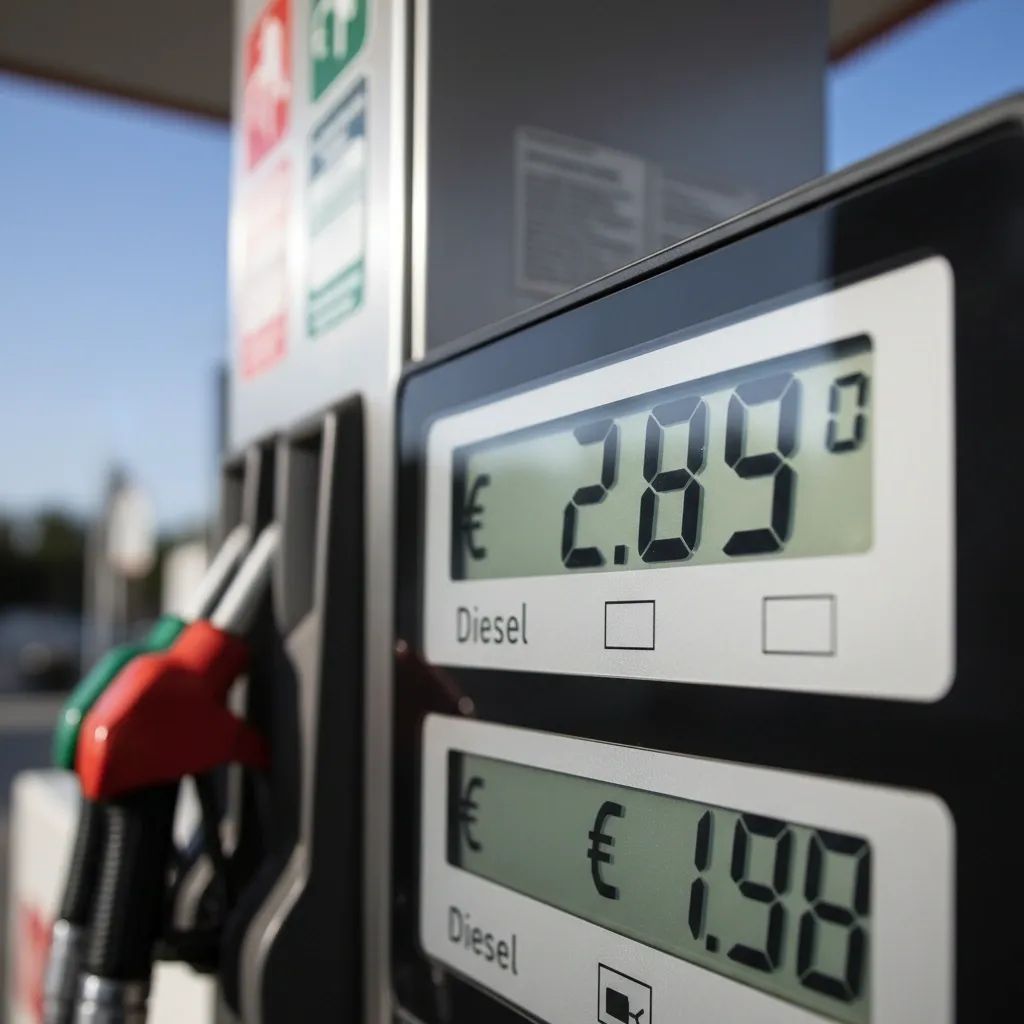
• Fuel prices in Italy hit historic highs on August 24, with diesel averaging €2.13 per liter and gasoline at €2.01 per liter on the national road network—and significantly more on motorways.
• A temporary 17-cent diesel excise cut was extended by just 48 hours, expiring on August 26—a move opposition leaders dismissed as inadequate.
• Italy, alongside Germany, Austria, Spain, Portugal, and Poland, pushed for an EU-wide windfall tax, though Brussels maintained that taxation remains a national competence.
• The proposal aimed to redirect €7.5 billion in excess profits recorded by major oil firms in the first half of 2026 toward consumer relief.
The Price Shock at the Pump
Italy's fuel market became a political flashpoint. On August 24, the Ministry of Enterprises and Made in Italy recorded self-service diesel prices at €2.13 per liter and gasoline at €2.01 per liter, according to data from the national road network. Motorway prices climbed even higher, reaching €2.20 for diesel and €2.09 for gasoline. The Unione Nazionale Consumatori, a leading consumer advocacy group, described the gasoline price as an "historical record."
The surge represented a 14.5% increase over three weeks in late July, driven by geopolitical instability in the Middle East—particularly around the Strait of Hormuz—and tightening global supply chains. Italy's fuel taxation structure compounded the pain: the standard excise duty stood at €0.673 per liter for both gasoline and diesel, with an additional 22% VAT applied on top of the pre-tax price. This made Italy one of the most heavily taxed fuel markets in Europe, where the EU minimum is just €0.36 per liter for gasoline and €0.33 for diesel.
The government activated the "accise mobili" mechanism, a technical workaround that uses surplus VAT revenue to subsidize a temporary excise reduction. The diesel excise was cut by 17 cents per liter, bringing the effective rate down to €532.90 per thousand liters through August 26. But the extension was brief—just 48 hours beyond the original August 24 deadline—leaving consumers and businesses uncertain about September.
Political Battle Over Windfall Taxes
The brevity of the excise relief triggered a sharp response from Elly Schlein, secretary of the Partito Democratico (PD). In a statement on August 24, she accused Prime Minister Giorgia Meloni of abandoning earlier campaign promises to abolish fuel excises entirely. "The same person who promised to abolish the excises on fuel is now watching while Italians face soaring prices," Schlein said, urging the government to "stop with band-aid solutions" and instead impose a tax on the excess profits of major energy firms.
The PD had been advocating for a national windfall tax since early summer, arguing that Italy should not wait for European consensus. Schlein's rhetoric intensified as the government, along with five other member states, submitted a formal request to the Irish presidency of the EU Council to place the windfall tax proposal on the agenda for the Ecofin meeting scheduled in Dublin in mid-September.
The six-nation coalition—Italy, Germany, Austria, Spain, Portugal, and Poland—argued that oil companies had reaped extraordinary gains amid the crisis. According to analysis cited in the proposal, eight major oil firms generated €7.5 billion in windfall profits in Europe during the first half of 2026 alone. The coalition also wanted to investigate refinery margins, suspecting that bottlenecks in the downstream supply chain were inflating retail prices beyond what crude oil costs would justify.
Brussels Says: Do It Yourself
The European Commission made clear in its response: taxation of corporate profits remains a national competence under EU treaties. While Brussels introduced a temporary "solidarity contribution" from fossil fuel companies in 2022–2023, it had not proposed a new EU-wide levy for 2026. Commission officials told member states that they were free to adopt national measures, provided they complied with EU state aid rules and single market regulations.
This put the ball squarely in the court of national governments. Italy had already enacted a surcharge on the regional business tax (IRAP) for energy companies in February 2026, applicable through 2027—but this was distinct from a direct tax on excess profits. The PD and consumer groups argued that a dedicated windfall tax could be structured to capture the gap between normal profit margins and the extraordinary returns linked to geopolitical disruptions.
Countries like the Czech Republic and Slovakia had extended their national windfall taxes into 2025 and beyond, demonstrating that unilateral action was legally feasible. Yet the Italian government appeared cautious, preferring multilateral coordination to avoid putting domestic energy firms at a competitive disadvantage or risking capital flight.
What This Meant for Residents
For the 60 million people living in Italy, the fuel crisis translated directly into higher costs for commuting, groceries, and heating. Diesel, which powers most commercial trucks and a large share of passenger vehicles, was the more painful hit. The €2.13 average for self-service diesel represented nearly a month's worth of urban parking fees in major cities or the equivalent of two full restaurant meals for a family of four.
Small business owners—especially in transport, logistics, and agriculture—faced margin compression. The 48-hour excise extension offered negligible relief, and without a longer-term tax intervention or market stabilization, many operators risked passing costs onto consumers, feeding broader inflation.
The political stakes were equally high. The Meloni government, which took office on a platform of economic relief and sovereignty, risked alienating its core constituency if fuel prices remained elevated through the autumn. Opposition parties framed the issue as a test of competence and will: Could the government stand up to multinational oil firms, or would it continue with what Schlein called "ridiculous 48-hour extensions"?
The European Context
Italy was not alone in grappling with fuel affordability. Hungary had reduced diesel excise to the EU minimum in spring 2026 and imposed a price cap for domestic drivers. Spain suspended diesel excise rebates from March to June, replacing them with a direct €0.20-per-liter subsidy for truckers. Croatia also cut diesel excise to the EU floor and capped retail prices. Ireland sought and received a special derogation to apply sub-minimum excise rates on commercial diesel through September 2026, citing the Hormuz crisis.
These measures reflected the EU's broader flexibility framework, which allowed temporary deviations from minimum excise standards in response to supply shocks. The Commission also proposed reforms to the Energy Taxation Directive, aiming to tax electricity more lightly than fossil fuels and incentivize the shift to electric vehicles and clean heating systems.
Member states could deploy up to 0.3% of GDP annually (totaling 0.6% over 2026–2028) in fiscal flexibility under the revised Stability Pact to finance green transition investments—including EV charging infrastructure, solar installations, and public transport electrification. The goal was to reduce long-term dependence on imported oil and gas, insulating consumers from future geopolitical volatility.
The Path Forward
The Ecofin meeting in Dublin in mid-September was positioned as the first formal test of whether the six-nation coalition could build consensus around a windfall tax. However, even if the proposal gained traction, legislative adoption and implementation could take months. Meanwhile, the Commission was expected to present its energy taxation reform package later in the year, which could reshape the fiscal landscape for both fossil fuels and renewables.
For Italy, the immediate question was whether the government would act unilaterally or wait for European coordination. The PD's push for swift national action reflected a broader frustration with the pace of EU decision-making, especially when households and businesses were under acute financial strain. The government's counter-argument—that unilateral taxes could disadvantage Italian companies or violate state aid rules—held legal weight but offered little solace to drivers paying €2.13 at the pump.
Consumer groups also called for greater transparency in refinery pricing, echoing the coalition's demand to investigate downstream margins. If refineries were capturing outsized profits while crude prices stabilized, regulatory scrutiny or windfall levies at that level could prove more politically palatable than targeting integrated oil majors.
Balancing Relief and Transition
The fuel price debate sat at the intersection of immediate relief and long-term transformation. Short-term excise cuts provided visible savings but undermined the price signals needed to accelerate electrification and energy efficiency. Windfall taxes, if adopted, could fund targeted subsidies for vulnerable households or transport operators without distorting the broader market.
Italy's relatively high fuel taxes—among the steepest in Europe—funded critical infrastructure and public services, but they also made the country especially sensitive to crude price shocks. The €0.673 per liter excise, combined with 22% VAT, meant that taxes accounted for roughly half the pump price at current levels. This structure left little room for further cuts without triggering budget shortfalls or violating EU fiscal rules.
The government's activation of the accise mobili mechanism—using surplus VAT revenue to offset excise reductions—was a creative but limited tool. It worked only when higher prices generated enough additional VAT to cover the subsidy, and it required constant renewal. A more durable solution would likely involve either a sustained drop in global oil prices, a breakthrough in alternative fuel adoption, or a political decision to shift tax burdens elsewhere.
The August 26 deadline for the diesel excise cut passed with significant uncertainty about the government's next steps. Opposition parties remained ready to frame any further inaction as a betrayal of campaign promises. Consumer groups continued mobilizing. And six European governments pressed Brussels for a coordinated response, even as the Commission insisted that the power—and the responsibility—lay with national capitals. The outcome of the September Ecofin meeting and the government's subsequent policy decisions would determine whether Italy pursued a windfall tax, extended excise relief, or shifted focus to longer-term energy transition measures.


