
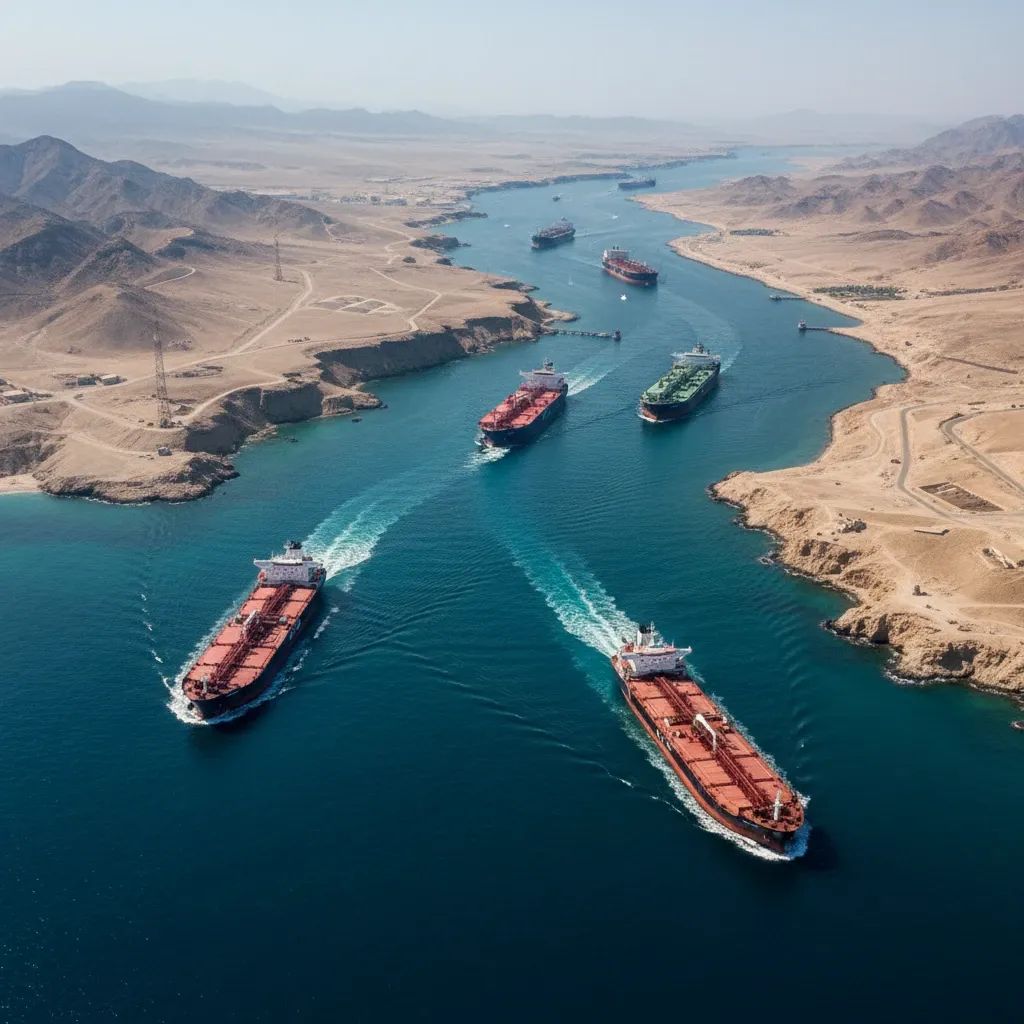
The United States administration under President Donald Trump has announced a 5-day postponement of military strikes against Iranian energy infrastructure, citing what the White House describes as "productive conversations" aimed at resolving a three-week conflict that has paralyzed global energy markets. However, Iran has categorically denied any negotiations are taking place, creating significant uncertainty about whether diplomatic progress is genuine or largely rhetorical. The move comes as the Strait of Hormuz — a maritime chokepoint controlling roughly 30% of the world's crude oil supply — remains effectively closed by Iranian forces, triggering fuel price spikes felt acutely across Europe, including Italy.
Why This Matters:
• Energy stability for Italy: A resolution could rapidly ease fuel costs in Italy, where petrol prices have climbed sharply since late February 2026. For Italian residents, this directly impacts household budgets and transportation costs, with diesel and petrol now at elevated prices across major Italian cities.
• Economic ripple effects: Italian manufacturing and logistics sectors, heavily dependent on stable energy input costs, face continued disruption until the Strait reopens. Italy's position as a net energy importer with limited domestic fossil fuel reserves makes the country particularly vulnerable to supply disruptions.
• Geopolitical uncertainty: The on-again, off-again nature of the negotiations—and Tehran's categorical denial—signal fragile prospects for a lasting agreement.
• Timeline pressure: Trump's 5-day extension expires March 28, after which strikes on Iranian power grids could resume, potentially deepening the crisis and further raising energy costs for Italian consumers and businesses.
The Claimed Framework: 15 Points and Nuclear Renunciation
Speaking to journalists before departing for Memphis on March 23, President Trump asserted that Washington and Tehran had reached agreement on "the main points" of a broader deal. He specified 15 core items, the most prominent being Iran's purported commitment to abandon its nuclear weapons program and surrender enriched uranium stockpiles to U.S. custody. Trump characterized the Iranian side as "very eager" for a settlement and claimed Tehran initiated the contact through intermediaries.
According to Israeli media outlet Ynet—citing unnamed officials in Jerusalem—the proposed first-phase arrangement would see Iran reopen the Strait of Hormuz in exchange for U.S. guarantees not to strike Iranian power plants. A more comprehensive ceasefire would follow in a second phase. Israeli officials told Ynet they were not surprised by Trump's announcement, suggesting prior coordination or at least advance notice between Washington and Jerusalem.
The United States Department of Defense reportedly received orders to suspend planned airstrikes for five days, contingent on the continuation of talks. Trump expressed confidence that a final agreement could materialize "within five days, maybe sooner."
Tehran's Flat Denial and Domestic Messaging
Iran's state-run media apparatus, including Fars News, IRIB, and Mehr News Agency, issued swift and categorical rebuttals. Official statements from Tehran described Trump's claims as "false" and accused the White House of attempting to manipulate global energy prices and buy time to refine military contingency plans. A spokesman cited by Tasnim News said no direct or indirect negotiations with the United States have taken place.
The Iranian Ministry of Foreign Affairs framed Trump's ultimatum extension as a tactical retreat rather than diplomatic progress, asserting that Washington seeks to lower oil prices ahead of another round of military pressure. Iran has consistently maintained it enriches uranium for peaceful purposes only and rejects any precondition that infringes on its sovereign right to a civilian nuclear program.
This public divergence leaves the actual state of negotiations opaque. Analysts suggest that while formal, government-to-government talks may indeed be absent, backchannel contacts mediated by Oman, Turkey, Egypt, and Pakistan could be underway without official acknowledgment from Tehran.
The Strategic Choke Point and Italy's Exposure
The Strait of Hormuz, a narrow waterway between Iran and Oman, is the world's most critical oil transit route. Its effective closure since late February has sent shockwaves through global supply chains. For Italy—a net energy importer with limited domestic fossil fuel reserves—the crisis translates directly into higher costs at the pump and increased input expenses for industry.
Italian refiners source a significant portion of crude and refined products from Gulf producers; disruptions in Hormuz force them to rely on costlier Atlantic Basin supplies or draw down strategic reserves. The Italian Ministry of Economic Development has not yet announced rationing measures, but prolonged closure of the Strait would compel emergency interventions, potentially including fuel subsidies or prioritization schemes for essential services.
Market reactions to Trump's March 23 announcement were immediate: European equity indices, including Milan's FTSE MIB, rallied on hopes of de-escalation, while Brent crude futures dropped several dollars per barrel. However, traders remain cautious, aware that the 5-day reprieve could evaporate without tangible progress.
A Three-Week War and the Road to Ultimatum
The current standoff is the culmination of a conflict that erupted in late February 2026, when a joint U.S.-Israeli airstrike killed Iran's Supreme Leader Ali Khamenei and several senior commanders. Tehran retaliated by deploying naval and Revolutionary Guard assets to interdict shipping in the Strait, effectively blockading Gulf oil exports.
On March 22, Trump issued a 48-hour ultimatum demanding full reopening of the waterway, threatening to "obliterate" Iranian power stations if compliance was not forthcoming. That deadline expired on the evening of March 23, but rather than authorize strikes, Trump announced the 5-day extension and claimed bilateral progress.
Earlier diplomatic efforts date back to 2025, when Trump sent a letter to Khamenei setting a two-month deadline for a nuclear accord and demanding Iran cease support for regional proxy groups, including Hezbollah and various militias in Iraq and Syria. Those talks stalled, and the recent military escalation followed months of deteriorating relations.
What Italian Residents Should Know
As the March 28 deadline approaches, here's what Italian residents and businesses need to monitor:
• Official guidance: Keep updated with announcements from the Italian Ministry of Economic Development (mise.gov.it) and the Ministry of Ecological Transition for any emergency measures or fuel subsidy programs.
• Fuel price tracking: Check fuel prices in your region via the Mise Fuel Prices Portal or major fuel provider websites. Current average prices vary by city and fuel type—monitoring prices daily can help with timing purchases.
• Travel planning: If you're considering longer trips or business travel, monitor fuel prices over the next five days before booking, as sudden changes could affect transportation costs.
• Emergency supplies: The Italian government has not announced rationing measures, but in the event talks fail and prices spike further, consider household planning accordingly.
Mediators, Skeptics, and the Five-Day Clock
Oman, which shares control of the Strait and has historically played a neutral mediating role, confirmed on March 23 that it is working to secure safe passage for vessels. Oman's Foreign Minister did not explicitly confirm talks between Washington and Tehran but expressed hope that diplomatic channels could yield progress.
Turkey, Egypt, and Pakistan have all been cited as intermediaries, each with distinct incentives to prevent a wider regional conflagration that would destabilize trade and security. Turkish officials, for instance, are keen to preserve energy transit routes that benefit Ankara's own economy, while Egypt's government worries about refugee flows and Suez Canal revenues if the conflict escalates.
Russia and China, meanwhile, have called for a political resolution. Beijing in particular urged all sides to halt military operations, warning against a "vicious cycle" of retaliation. Neither Moscow nor Beijing has direct leverage over the Strait, but both have commercial and strategic interests in Gulf stability.
Trump also appealed to roughly seven countries—most heavily reliant on Middle Eastern oil—to join a coalition for Strait security, but as of mid-March had received no formal commitments.
Uncertain Prospects and the Path Forward
Whether the 5-day window represents genuine diplomatic opening or tactical theater remains unclear. Trump's track record of abrupt policy shifts, combined with Iran's public denials, injects considerable doubt. The fact that Israeli sources were not caught off-guard suggests at least some coordination within the U.S.-Israel alliance, but Tehran's domestic political calculus may preclude any overt compromise that could be portrayed as capitulation.
For Italy and the broader European Union, the stakes are high. Energy security has been a recurring vulnerability since the disruption of Russian gas supplies in 2022, and a protracted Hormuz crisis would compound those challenges. Italian policymakers are watching the countdown closely, aware that March 28 could mark either a turning point toward stability or a descent into deeper confrontation with global economic consequences.


