
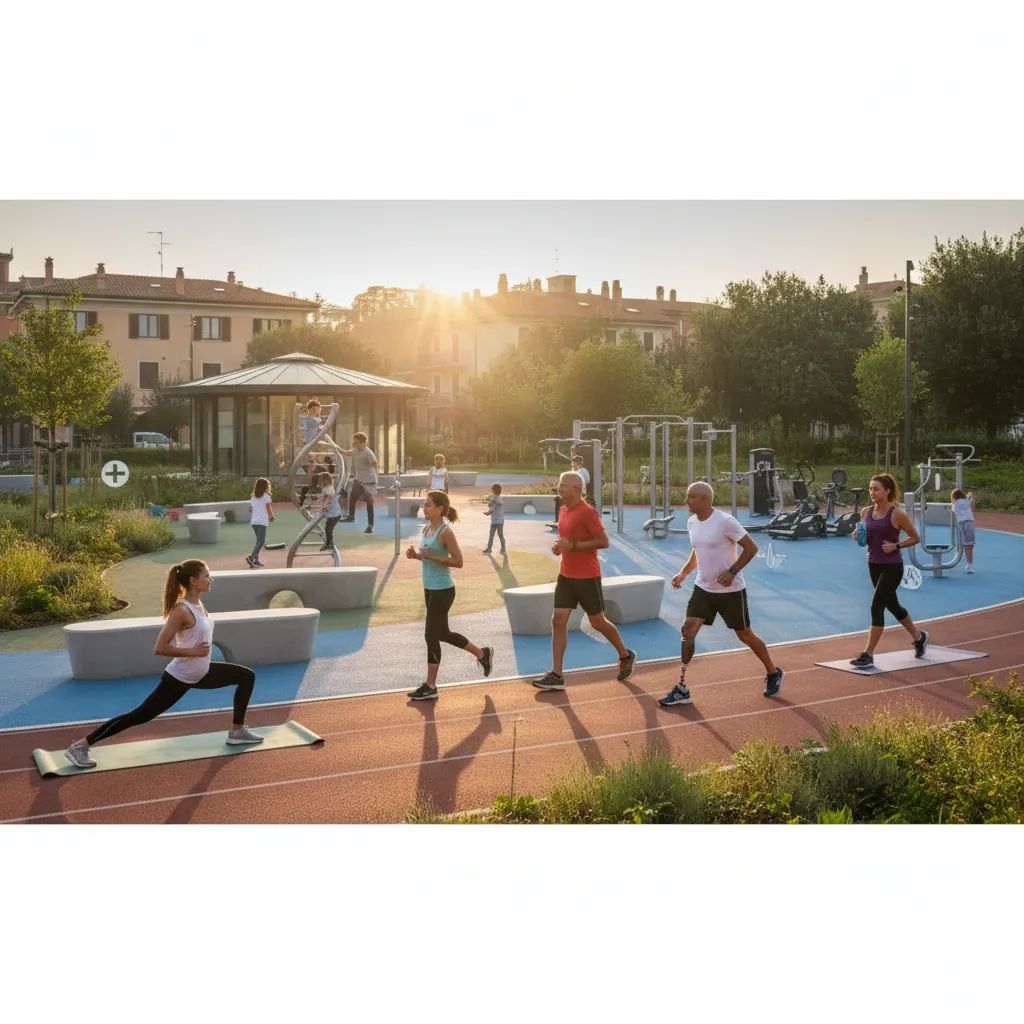
The Italy Ministry of Economy and Finance has highlighted findings from a landmark experimental study quantifying the financial returns of public investment in physical activity. Finance Minister Giancarlo Giorgetti addressed the findings, asserting that strategic government investment in Sports e Salute S.p.A. has proven to be a preventive health investment yielding measurable fiscal dividends for the national healthcare system.
Why This Matters
• Return on investment: An experimental study found that every €1 spent on sports infrastructure and activity promotion generates €2.24 in direct healthcare savings for adults over 18 (2019-2024 data).
• Disease prevention impact: Between 2019 and 2024, public spending avoided an estimated 92,817 cases of anxiety and depression, saving the Servizio Sanitario Nazionale (SSN) approximately €74M in direct treatment costs.
• Sustained funding: Sport e Salute allocated €344.4M to sports organizations in 2026, part of a broader €1.25B envelope projected through 2027.
• Infrastructure push: The Istituto per il Credito Sportivo is offering €250M in zero-interest loans for municipalities to modernize aging public sports facilities. Municipalities can apply directly through the Istituto per il Credito Sportivo using the "Sport Missione Comune" program portal (www.icsportivo.it). Eligible projects focus on facility upgrades and energy efficiency improvements for publicly owned sports complexes.
From Political Lightning Rod to Policy Consensus
When the government transformed CONI Servizi into Sport e Salute in 2019, opposition was fierce. Critics framed the restructuring as a political power grab, stripping the Italian Olympic Committee (CONI) of core competencies—particularly the allocation of funds to national sports federations and control over infrastructure. The International Olympic Committee itself expressed concern that the shake-up could jeopardize Italy's hosting of the Milano-Cortina 2026 Winter Games or even athlete participation.
Giorgetti acknowledged those early battles, stating that the traditional model had allowed the health relevance of sport and prevention to lose weight over time, justifying the creation of a dedicated vehicle operating under managerial logic and accountable to the Ministry of Economy.
The minister framed the rationale in clear fiscal terms: investment spending can produce results over the long term, requiring deliberate commitment to sow the foundations for future returns.
Quantifying the Health Dividend: Methodology and Scope
The experimental study, conducted jointly by Sport e Salute, Agenas (the National Agency for Regional Health Services), and the Ministry of Health, examined adult populations and direct healthcare costs from 2019 through 2024—a limited but rigorous timeframe. The analysis tracked approximately €3.16B in cumulative public investment through Sport e Salute for sports infrastructure upgrades and activity promotion campaigns.
The study's €2.24 return ratio reflects measurable healthcare cost avoidance during this five-year period, calculated from prevented disease cases and direct SSN treatment savings. These returns are based on observed outcomes within the study parameters, not extrapolated projections.
Results reveal that increased physical activity levels prevented chronic and mental health diagnoses, delivering tangible economic relief to the SSN during the study period:
• Mental health (anxiety and depression): An estimated 92,817 fewer cases, generating savings exceeding €74M.
• Dementia: A reduction of 3,289 cases, translating to more than €68M in avoided treatment costs.
• Coronary heart disease: Approximately 8,698 prevented cases, yielding benefits surpassing €12M.
• Diabetes: Up to 3,971 cases averted, saving approximately €11.8M.
• Stroke: An estimated 2,788 fewer incidents, generating gains above €11M.
These individual categories combined represent approximately €177M in direct, documented healthcare savings across the study period. Angelo Tanese, Director General of Agenas, emphasized that the study originated from a need to "quantify the economic impact and health benefits of sport" and characterized sport as a "preventive drug" capable of generating health and fiscal returns.
What This Means for Residents
For individuals living in Italy, the policy shift translates into expanded access and modernized facilities. In 2025 alone, Sport e Salute earmarked €185M for sports infrastructure, including significant investments in facility modernization across the country. The agency has regenerated 221 sports areas and launched over 1,000 projects in vulnerable settings—prisons, schools, and public parks.
Accessing the Loan Programs: Residents can support their municipal efforts through the zero-interest loan initiative. Town councils and municipal administrators should contact the Istituto per il Credito Sportivo directly or visit the dedicated "Sport Missione Comune" portal to submit facility upgrade proposals. Citizens can inquire with their local municipal government about planned improvements, as priority projects are typically listed on municipal websites. With more than 78,000 sports facilities across the country—70% publicly owned—this modernization initiative aims to close infrastructure gaps and encourage participation.
The "Sport Missione Comune" program offers municipalities zero-interest financing for rehabilitation and energy efficiency upgrades of public sports complexes. With approximately 40% of Italian public sports facilities dating from the 1970s and 1980s, the initiative targets aging infrastructure in all regions.
Participation trends have shown growth among regular practitioners. Between 2023 and 2025, the number of active individuals engaged in sport or physical activity increased. The gap between activity levels remains uneven by region and socio-economic status, reflecting the target focus of regeneration efforts in disadvantaged neighborhoods and southern provinces.
Specific programs extend the "lifelong" philosophy. Initiatives such as "RiGenerazioni" address youth mental health by creating spaces for peer engagement and orientation services. Other schemes provide free access to adapted physical activity for people with disabilities, mental health challenges, or socio-economic disadvantage, embedding the principle of inclusive access.
Recent legislative changes have incorporated promotion of physical activity into the Livelli Essenziali di Assistenza (LEA)—the guaranteed basket of essential health services—signaling formal recognition of exercise as a preventive medical tool. Debate continues over whether to explicitly list adapted exercise and adapted sport within the LEA framework to ensure uniform entitlement across all regions.
Economic Scale and Sectoral Growth
Italy's sports economy generated €32B in value added in 2025, representing 1.5% of GDP, and employed 421,000 people, according to the "Rapporto Sport 2025" published in January 2026. Sport e Salute managed €1.3B in public resources for the sports system that year.
For 2026, the agency has committed €344.4M to sports organizations, including national federations and promotion bodies, part of a total sector allocation reaching €569M. Projections anticipate overall resources for the sports system climbing to €1.25B by 2027.
Parallel funding streams include the "Fondo italiano per lo sport," established to finance major events and infrastructure, with an initial endowment of €524.2M for 2025 and €95.1M for 2026. Regional governments are also stepping up commitments; Emilia-Romagna budgeted over €19M for sports policies in 2026, prioritizing prevention and social engagement.
Sport e Salute's involvement in the National Recovery and Resilience Plan (PNRR) positions it as the central procurement authority for Mission 5: Sport and Social Inclusion, targeting the construction and regeneration of urban sports facilities with European recovery funds.
Lingering Controversies and Accountability
Despite the positive health metrics from the experimental study, Sport e Salute has not been immune to criticism. Between 2023 and 2025, media reports surfaced alleging an "opaque and clientelist system," citing approximately 500 consultancy contracts worth nearly €5M in a single year, alongside high executive salaries and appointments perceived as politically motivated. In 2023, sports bodies expressed concerns over alleged conflicts of interest in board appointments.
The Corte dei Conti (Court of Auditors), reviewing Sport e Salute's 2021 accounts, approved the organization's performance, noting growth in production value and profit compared to 2020. However, auditors cautioned that the profit was not necessarily tied to structural factors and observed frequent use of below-threshold procurement procedures, raising transparency questions.
Sport e Salute has responded by voluntarily publishing an annual Sustainability Report structured around ESG pillars (environmental, social, governance) since 2022, aiming to demonstrate accountability and stakeholder engagement. CEO Vito Cozzoli highlighted the agency's achievements in expanding sports access and ranked its performance among leading state-owned companies relative to revenue.
Regional and Demographic Dynamics
Italy's sporting landscape remains uneven. The 2019-2024 experimental study period provides data on outcomes in populations where physical activity participation increased, but participation itself varies significantly by region and socio-economic status. Northern areas generally maintain higher activity levels and better facility density than southern provinces, reflecting longstanding infrastructure disparities.
The push for zero-interest municipal loans and targeted regeneration projects in disadvantaged neighborhoods reflects an attempt to narrow geographic and socio-economic gaps. Programs offering free adapted activity for marginalized groups and integrating physical education into school curricula (backed by €43.3M in dedicated funding) are central to the government's broader "Salute in tutte le Politiche" (Health in All Policies) strategy, which aims to embed wellness considerations across education, transport, urban planning, and culture.
The Long View on Prevention Investment
The new experimental study's findings provide empirical support for framing physical activity promotion as a lever for fiscal sustainability in an aging society where chronic disease burdens are projected to grow. The observed €2.24 return ratio during the 2019-2024 period demonstrates measurable healthcare cost avoidance and positions Italy's sports investment among documented preventive health interventions.
For residents navigating daily life in Italy, the practical upshot is straightforward: more accessible facilities, broader insurance coverage for activity-related services under the LEA, and a policy environment that increasingly treats movement as a public health necessity rather than a recreational luxury. Accessing upgraded facilities and loan programs for local infrastructure requires engagement with municipal governments and the Istituto per il Credito Sportivo. Whether this translates into enduring behavior change and equitable access across all regions remains the ongoing test for continued investment.


