
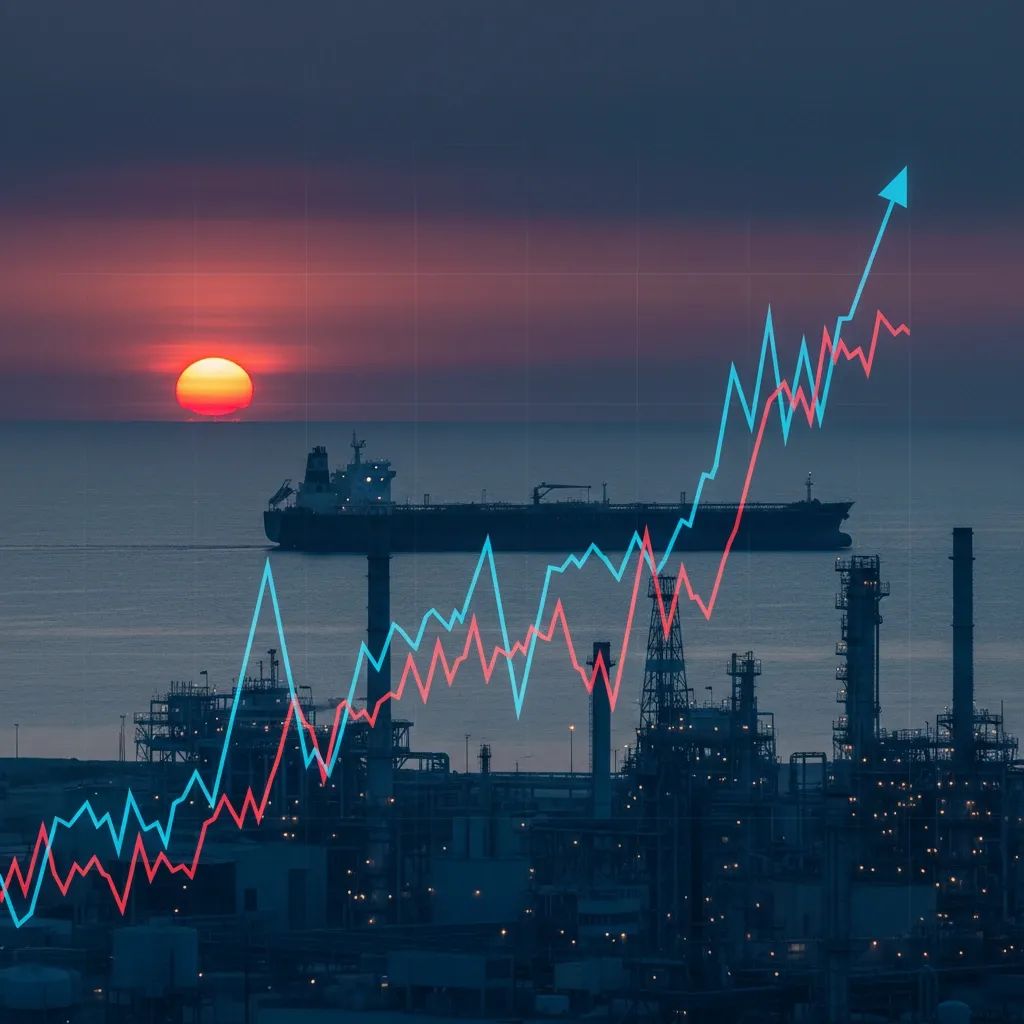
Italy equity markets surged alongside broader European exchanges as speculation intensified over a potential peace agreement between the United States and Iran, a development that could fundamentally reshape energy pricing and investment stability across the continent. The possibility of ending the Middle Eastern conflict and reopening the Strait of Hormuz—a chokepoint for roughly a third of global seaborne oil—sent shockwaves through commodity markets and lifted risk appetite among Italian institutional investors.
Why This Matters
• Energy relief: Brent crude dropped below $100/barrel for the first time in weeks, translating to potential fuel cost reductions for Italian households and logistics firms.
• Portfolio gains: Milan's FTSE MIB index jumped 1.68%, reclaiming the psychologically important 44,000-point threshold.
• Gas price collapse: Natural gas futures tumbled 8.7% to €49.6/MWh, offering a reprieve to manufacturers and utilities battling elevated input costs.
Italian Equities Lead Continental Rally
The Milan Stock Exchange outpaced most of its European peers, with the benchmark FTSE MIB advancing to 44,000 points—a level last seen before geopolitical tensions in the Gulf escalated shipping insurance premiums and strained supply chains. Prysmian, the cable manufacturer, soared 4.5% amid the broader market optimism. Fincantieri, the state-controlled shipbuilder, climbed 3.2%, likely supported by investor expectations of stabilized market conditions.
Italy's banking sector joined the rally, with Banco BPM adding 3% and Monte dei Paschi di Siena (MPS) gaining 2.45%. The latter's advance came as the bank announced Palermo as a strategic location for future management operations, a decision that signals a geographic expansion strategy.
Not every stock participated in the upswing. Inwit, the telecommunications infrastructure operator, slipped 1.81% amid ongoing commercial discussions with Fastweb and Vodafone over master service agreement terms. Industry observers note that prolonged negotiations could impact revenue streams.
Commodity Markets React to Geopolitical Shift
The most dramatic moves occurred in energy and precious metals. Brent crude plunged 5.8% to $98.3/barrel, while West Texas Intermediate (WTI) declined 5.4% to $87/barrel. For Italy—which imports the majority of its oil and gas—this represents potential cost relief. Lower crude prices directly influence pump prices at Italian service stations. Market participants suggest a sustained drop in Brent toward $95 could reduce diesel costs within weeks.
Natural gas futures experienced an even steeper decline, down 8.7% to €49.6/MWh. This matters acutely for Italian industry, particularly energy-intensive manufacturers, which have faced elevated input costs. The benchmark TTF (Title Transfer Facility) contract now sits significantly below recent peaks, offering breathing room for sectors that faced production pressures during previous price spikes.
Meanwhile, gold defied the broader risk-on sentiment, climbing 2.6% to $4,556/ounce. The yellow metal's resilience suggests investors remain cautious about the durability of any U.S.–Iran accord, given the history of collapsed negotiations. Silver followed suit, rising 4% to $73/ounce, supported by both safe-haven demand and industrial applications in renewable energy infrastructure.
Broader European Context
The STOXX 600, the pan-European equity benchmark, advanced 1.5%, with technology and industrial sectors leading gains. Frankfurt's DAX rose 1.49%, Paris's CAC 40 climbed 1.37%, and London's FTSE 100 added 0.96%. The synchronized rally underscores how deeply European markets depend on Middle Eastern stability: insurers covering tanker traffic through Hormuz had recently hiked premiums significantly, costs ultimately passed to consumers in the form of elevated logistics fees.
For Italy, the implications extend beyond equity indices. The country's manufacturing sector has faced headwinds from energy costs and weak export demand. An easing in commodity prices could support export-oriented firms in various industrial sectors where Italian producers compete internationally.
Fixed Income and Currency Dynamics
Italian government bonds continued their recent rally, with the 10-year BTP yield slipping to 3.84%. The spread between BTPs and German Bunds held steady at 87 basis points, a level that supports Italy's fiscal position. Lower yields reduce borrowing costs for the government as it navigates budget negotiations with Brussels under EU fiscal rules.
The euro traded flat against the U.S. dollar at $1.1607, reflecting balanced market sentiment. Currency stability has allowed businesses to manage forward contracts more predictably.
What This Means for Residents
For Italians navigating daily expenses, the commodity price collapse offers potential relief. Gasoline and diesel costs—which have been elevated during recent market volatility—could decline noticeably if crude remains below $95. Heating bills for the final weeks of the winter season may also soften for those not locked into long-term contracts.
Investors holding Italian equities should monitor whether the diplomatic speculation materializes into concrete agreements. History suggests caution: previous diplomatic frameworks have faced challenges in implementation. Portfolio managers recommend maintaining diversification given market sensitivity to commodity prices.
Pension funds and retail investors with exposure to MPS should watch for further developments regarding the bank's strategic positioning.
Regional Considerations
Italy's geographic position as a Mediterranean hub carries significance for energy markets. Normalized supply conditions would support Italy's economic activity, particularly for logistics operators and energy-intensive industries across the country's various regions.
The confluence of diplomatic developments, commodity market movements, and equity market momentum offers Italian markets a period of optimism. Whether this translates into sustained economic benefit depends on variables beyond local control—including the actual terms of any U.S.–Iran diplomatic agreement and broader European economic conditions. For now, Italian markets are responding to the possibility of improved stability.


