
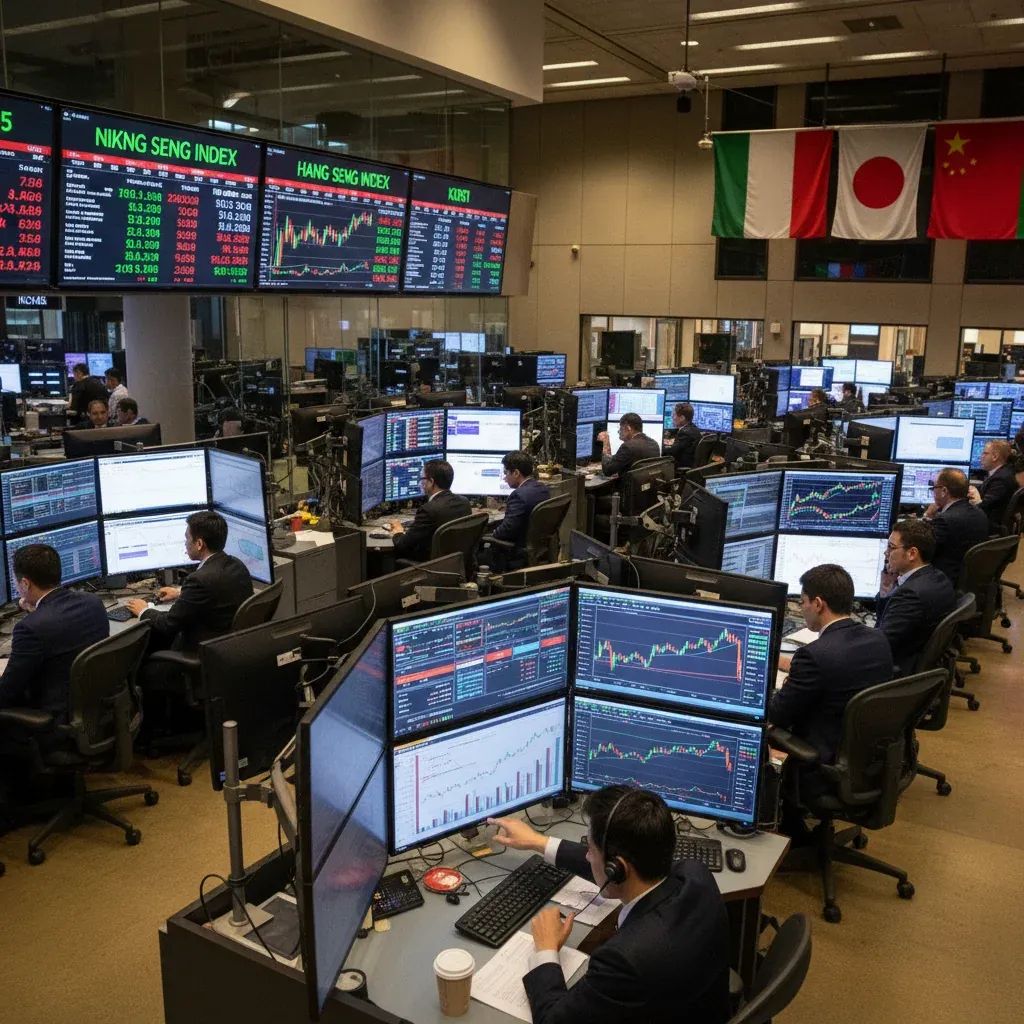
Italy-based investors with exposure to Asian equities saw significant declines overnight, as major indices in the region tumbled on renewed skepticism over artificial intelligence spending, with Seoul's Kospi dropping 7.9% amid sharp losses in South Korean tech valuations.
What Happened
Asian markets retreated sharply as concerns mounted over whether the explosive growth in artificial intelligence capital expenditure can sustain itself. Reports of Meta Platforms considering a cloud service to monetize excess AI computing capacity prompted investors to reassess semiconductor demand, raising questions about potential oversupply in the chip sector.
Seoul bore the brunt of the sell-off with a near-8% decline as foreign investors reduced positions in Samsung Electronics and SK Hynix, the major South Korean memory chip manufacturers. Tokyo's Nikkei 225 fell 2.47%, while mainland China's bourses also retreated, with Shanghai down 1.58% and Shenzhen falling 2.25%. Hong Kong and Mumbai showed greater resilience, gaining 0.75% and 0.4% respectively.
Why This Matters for Italian Investors
Portfolio exposure: Italian pension funds and diversified investors with exposure to Asian tech holdings saw valuations decline overnight, particularly through holdings in South Korean and Japanese semiconductor stocks.
Market dynamics: The sell-off highlights growing concerns about valuation sustainability in the technology sector. Where speculative enthusiasm once justified sky-high prices, the market increasingly demands tangible earnings and sustainable business models from companies promoting AI capabilities.
Currency implications: The yen appreciated versus the euro during the overnight session, a shift that can impact Italian exporters and multinationals with Japanese operations.
Broader Context
The Asian market decline comes as global investors reassess technology sector positioning. The region's equity markets had shown strong performance earlier in 2026, attracting significant foreign investment. The current volatility reflects profit-taking and portfolio rebalancing as investors adjust to questions about long-term AI returns and profitability.
Geopolitical tensions also weigh on sentiment, with instability in the Middle East contributing to broader market caution and energy-price pressures that concern Italy's energy-dependent economy.
What Comes Next
European traders are focusing on economic data due later today, including the Eurozone unemployment rate, which will provide insight into labor market health. U.S. economic releases will also shape expectations for Federal Reserve policy and influence capital flows.
Market analysts remain divided on whether the current sell-off represents a temporary correction or a more fundamental shift in investor sentiment toward the technology sector. Some argue the market's reaction is overblown and underlying AI infrastructure demand remains solid. Others caution that valuations had become stretched and further declines remain possible if sentiment continues to weaken.
Key Takeaway for Italian Savers
The Asian experience illustrates how quickly market sentiment can shift when speculative narratives encounter valuation realities. For Italian investors, the lesson centers on risk management and diversification—avoiding concentration in high-growth tech stocks and focusing on companies with proven profitability rather than those solely banking on AI enthusiasm will be essential strategies as markets navigate this uncertain period.


