
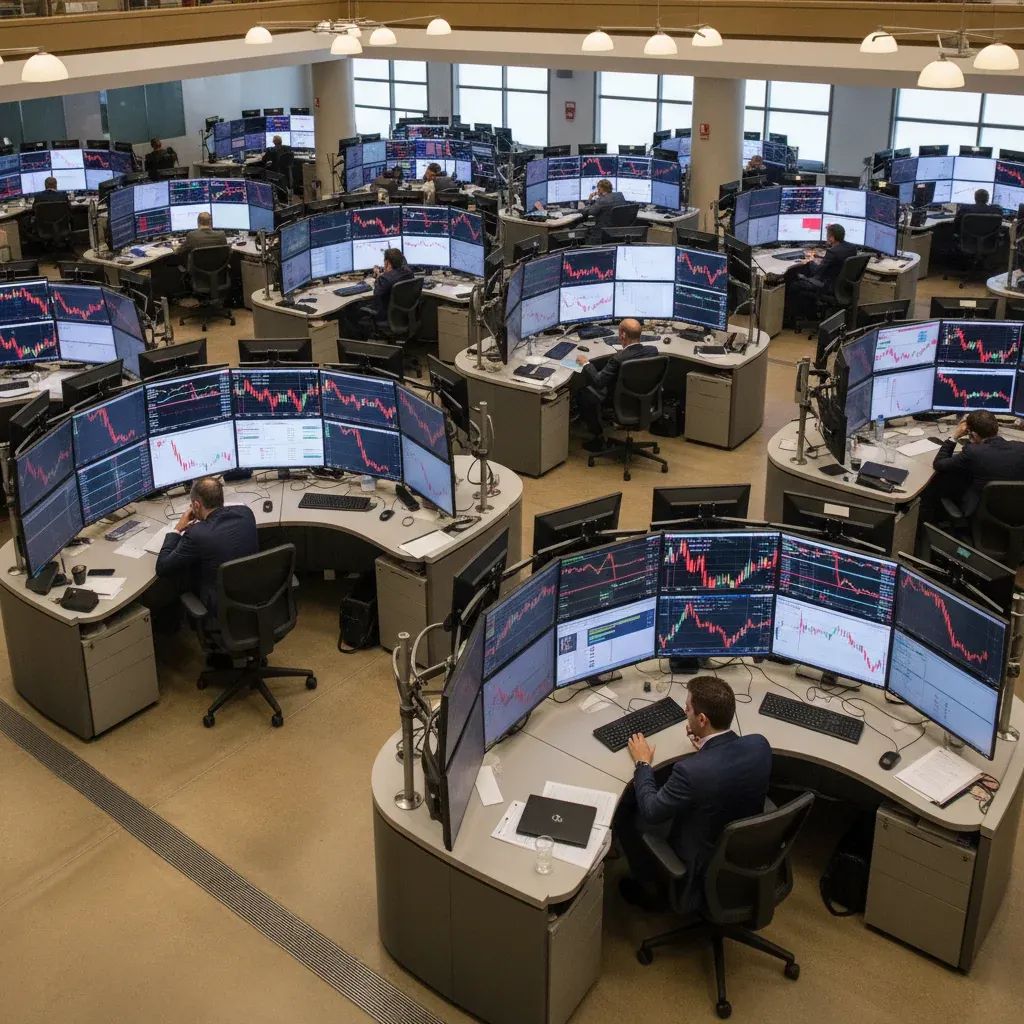
The Strait of Hormuz blockade that began in late February continues to strangle global shipping, with at least 43 container vessels from the world's top 10 shipping companies still stranded in the Persian Gulf as of late April. The standoff—triggered by a U.S.-Israel air campaign against Iran and Tehran's retaliatory closure of the strategic waterway—has already stripped 120 billion cubic meters of liquefied natural gas (LNG) from projected global supply through 2030, representing roughly 15% of anticipated worldwide deliveries between now and the end of the decade.
Why This Matters
• Energy bills rising: Italian manufacturers face an additional €7 billion to €21 billion per year in energy costs, depending on how long the crisis persists.
• Brent crude at €106.80 per barrel as of April 24, up from €62 in December—with forecasts suggesting a climb to €140 if the conflict drags through year-end.
• Italian inflation risk: Bank of Italy Governor Fabio Panetta warns the war could trigger a fresh price spiral similar to the 2021–2023 surge, prompting ECB scrutiny and calls for emergency budget measures from Transport Minister Matteo Salvini.
• Container traffic paralyzed: Major carriers including MSC, CMA CGM, Cosco, and Hapag-Lloyd suspended services in the region; two MSC vessels have been seized by Iranian authorities.
The Choke Point That Won't Reopen
Negotiations mediated by Pakistan, Egypt, and Turkey remain deadlocked. Iran demands the U.S. lift its counter-blockade of Iranian ports imposed April 13, while Washington insists on verifiable limits to Tehran's uranium enrichment and unimpeded inspector access before any substantive talks. President Donald Trump has declared he maintains "total control" of the strait and that it will remain "hermetically sealed" until a deal is struck—though he has extended a fragile ceasefire by a few days to allow further diplomacy.
Meanwhile, the waterway that normally handles 20% to 21% of global crude oil and critical industrial shipments—including 33% of the world's helium, 40% of global polyethylene exports, and 50% of seaborne sulfur trade—sits largely idle. Traffic has plummeted to approximately 5% of pre-conflict levels, with hundreds of vessels stranded and insurance premiums soaring.
According to maritime intelligence firm Lloyd's List, several ships belonging to CMA CGM, Cosco, Hapag-Lloyd, and MSC have successfully evacuated in recent weeks, yet dozens remain trapped. Two MSC vessels—MSC Francesca and Epaminondas—were detained by Iranian authorities for alleged violations of maritime regulations. The disruption has cascaded through global supply chains: aluminum, fertilizers, and semiconductor-grade helium are among the materials now in short supply, threatening food security in Africa and Southeast Asia and delaying chip production worldwide.
Italy's Exposure and Policy Response
For Italy, a country that imports virtually all its fossil fuels, the Hormuz crisis is an acute vulnerability. The Banca d'Italia is closely monitoring energy markets after Governor Panetta warned that the war risks reigniting an inflationary spiral. The European Central Bank Governing Council is on heightened alert, ready to adjust monetary policy if prices accelerate beyond forecasts.
Transport Minister Matteo Salvini has publicly called for a multi-billion-euro budget deviation to shield Italian households and businesses from energy shocks, arguing that "these are euros well spent to prevent Italy from grinding to a halt." The International Energy Agency projects that the conflict's heaviest toll will fall between 2026 and 2027, with aftershocks potentially lasting another two years. Italian manufacturers, already contending with structural cost disadvantages, could see energy's share of total operating expenses rise from 4.9% to 7.6%—a burden that threatens competitiveness across the textile, ceramics, and metals sectors concentrated in the northern industrial belt.
Rating agency S&P Global notes that while European households and businesses are already feeling price pressure, the continent has so far avoided a repeat of the 2022 energy crisis. Robust storage levels and mild weather during the 2025–2026 winter helped cushion the blow; renewable generation also expanded as weather conditions improved through March. Yet analysts emphasize that supply shortfalls remain a remote but real risk, especially if the blockade extends into summer peak cooling demand.
Rerouted Trade and New Bottlenecks
With Hormuz effectively closed, shipping companies have diverted container traffic around the Cape of Good Hope—the southern tip of Africa—adding 10 to 14 days to voyage times and sharply increasing fuel and insurance costs. The port of Cape Town reported a 112% surge in diverted vessels during March alone. Meanwhile, the Suez Canal, which had been hemorrhaging traffic since Houthi attacks in the Red Sea began in December 2023, has shown early signs of recovery: Egypt's canal authority recorded a 5.8% increase in vessel transits and a 16% rise in net tonnage during the first half of fiscal year 2025/2026 (July–December 2025), thanks to a Gaza ceasefire in October that stabilized the Bab el-Mandeb Strait.
Nevertheless, major European carriers remain cautious. Maersk announced a partial return of services through Suez in February 2026, yet MSC and Hapag-Lloyd continue to favor the Cape route, citing persistent security concerns. Ultra-large container ships—so-called Megamax vessels—are especially reluctant to re-enter the Red Sea corridor. Consequently, freight rates have climbed and delivery schedules have stretched, compounding inflationary pressures on imported goods across Europe.
Japan's Emergency Reserves and Brazil's Fuel Tax Plan
Elsewhere, governments are deploying crisis tools. Japan, which depends on the Middle East for more than 90% of its crude imports, announced on May 1 it will release an additional 20 days' worth of strategic petroleum reserves—roughly 5.8 million cubic meters valued at €2.9 billion. This follows an initial drawdown of 50 days' supply in mid-March. The second tranche will be distributed from ten national storage sites to four major domestic refiners, underscoring Tokyo's determination to stabilize prices despite the ceasefire's fragility.
In Brazil, President Luiz Inácio Lula da Silva's government has submitted draft legislation authorizing the conversion of windfall oil revenues into fuel excise tax cuts. The bill, now before the Chamber of Deputies, aims to cushion consumers against Middle East–driven price spikes. Finance Minister Dario Durigan confirmed that the economic team will monitor petroleum revenues and adjust fuel levies daily if necessary, leveraging Brazil's status as both a producer and exporter of crude.
Market Volatility and Stagflation Fears
Financial markets have oscillated with each ceasefire extension and diplomatic setback. Asian bourses traded mixed on April 25: Tokyo's Nikkei gained 1%, Hong Kong edged up 0.25%, while Shanghai slipped 0.12% and Seoul retreated 0.4% after hitting an all-time high the previous session. European equity futures pointed lower ahead of the release of Germany's Ifo business climate index, a key gauge of investor sentiment.
Oil benchmarks have climbed relentlessly since the war began. Brent crude, which stood at $62 per barrel in December, breached $100 in early April and closed at $106.80 on April 24. Analysts project an average of $110 per barrel for 2026 if the conflict resolves by June, but warn prices could exceed $140 if hostilities drag on. European TTF natural gas futures now carry a geopolitical risk premium of $30 to $35, making energy structurally more expensive across the continent.
The International Monetary Fund has downgraded its global growth forecast to 3.1% for 2026, cautioning that prolonged disruptions could tip the world economy into outright recession. The OECD similarly trimmed its projection from 2.9% to 2.6%. Both institutions warn of stagflation—sluggish growth paired with elevated inflation—a scenario that would severely limit central banks' room to maneuver. Advanced economies are now expected to post 2.8% inflation this year, up from 2.5% in 2025.
The Federal Reserve Bank of Dallas estimates that the Hormuz closure costs the global economy approximately $20 billion per day in lost output. Cumulative GDP losses range from $2.41 trillion (–2.19%) if the strait reopens by May, to $6.95 trillion (–6.95%) under a prolonged or full-escalation scenario. Sovereign bond yields are climbing as investors reassess fiscal risk, and consumer confidence surveys point to a sharp pullback in household spending.
Internal Divisions and the Path Forward
U.S. officials privately acknowledge that divisions within Iran's leadership complicate negotiations, making it difficult for Tehran to present a coherent bargaining position. The nuclear dossier remains the thorniest issue: Washington wants binding, inspectable caps on enrichment, while Iran views its civilian nuclear program as an "inviolable red line" and demands sanctions relief in return. Regional flashpoints—including Hezbollah's activities in Lebanon—further cloud the diplomatic landscape.
The International Energy Agency sees a glimmer of hope in new mid-term liquefaction capacity coming online, particularly in North America, which had driven a 12% year-on-year increase in global LNG trade between October and February, pushing European and Asian benchmark prices down 25%. That momentum reversed abruptly in March when the conflict erupted, sending prices to their highest levels since January 2023 and triggering an 8% drop in LNG production that reverberated through April supply chains.
European gas demand fell 4% in March as milder weather boosted renewable output and industrial users curtailed consumption. Yet those efficiency gains offer scant comfort if the blockade persists: the continent's storage cushion will erode as summer air-conditioning demand rises and autumn refilling season approaches.
What This Means for Residents
• Expect higher bills: Even if a diplomatic breakthrough materializes by June, Italian households and businesses should budget for elevated energy costs through 2027. Locking in fixed-rate contracts now may offer some protection.
• Supply chain delays: Consumers ordering electronics, appliances, or other manufactured goods shipped via container should anticipate longer lead times and possible shortages, especially for products containing semiconductors or aluminum.
• Fuel price swings: Pump prices for gasoline and diesel will remain volatile. Monitor official government announcements for any temporary excise relief measures similar to those enacted in Brazil.
• Inflation watch: Core inflation—especially food prices tied to fertilizer costs—may climb faster than headline figures suggest. Adjust personal budgets accordingly and consider bulk purchases of non-perishables if feasible.
• Travel costs: Jet fuel prices have doubled since February, and carriers have passed those costs through to ticket prices, with Europe–Asia routes up 5% to 10%. Book flights early and expect further fare increases if the crisis drags on.
The fragile ceasefire offers a narrow diplomatic window, but with both Washington and Tehran dug in on core demands, the outlook remains uncertain. For now, the world's most vital energy corridor stays largely shut, and the economic fallout continues to ripple across continents.


