
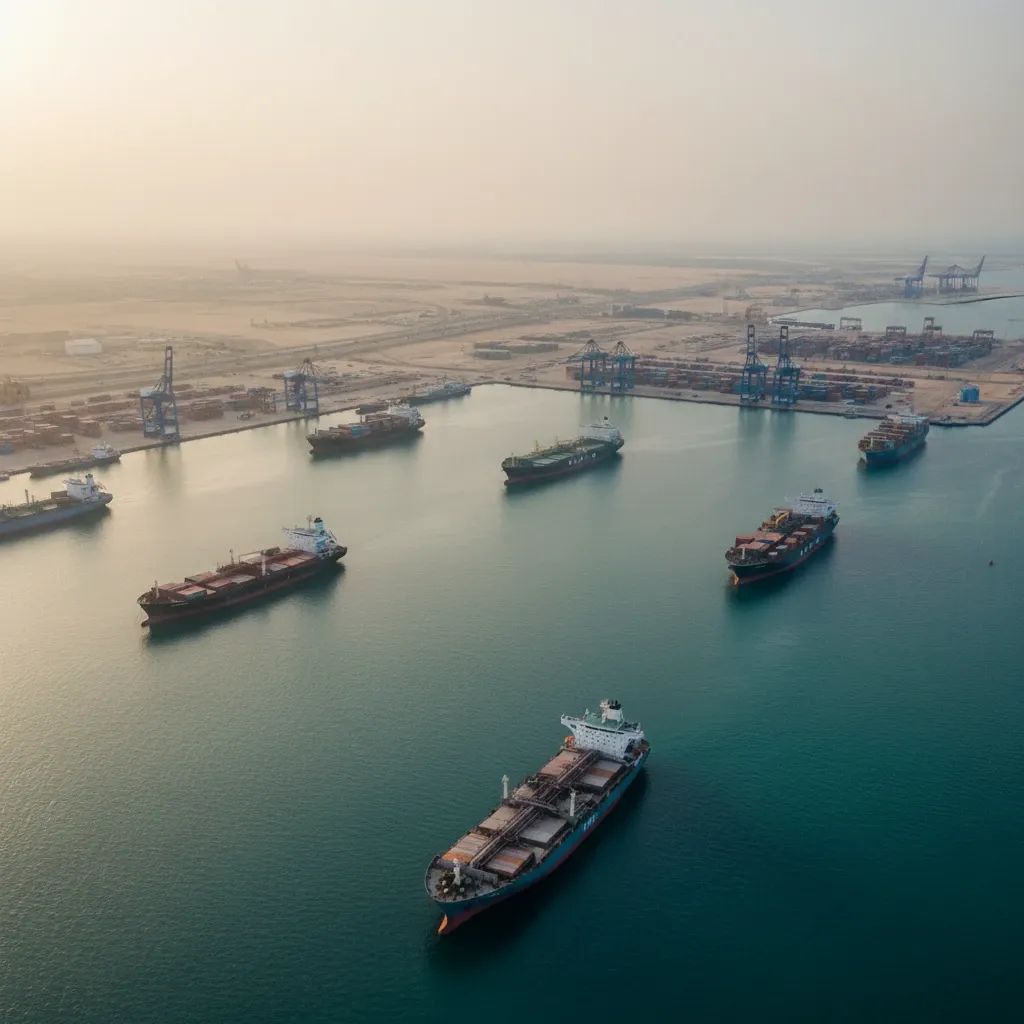
The United States Navy has initiated a full naval blockade of the Strait of Hormuz targeting Iranian ports, a decisive escalation that has brought global shipping through the world's most critical oil chokepoint to a complete standstill. The move, announced by President Donald Trump after peace negotiations with Tehran collapsed in Islamabad, directly threatens Italy's energy costs and industrial supply chains as crude oil prices surge past $140 per barrel and natural gas futures hover 40% above pre-conflict levels.
Why This Matters for Italy:
• Energy bills rising sharply: Gas prices in Europe remain elevated at around €44.52 per megawatt-hour, nearly double pre-crisis norms, with electricity costs in Italy already among the highest in the EU.
• Industrial metal squeeze: Aluminum has hit a four-year high of $3,551 per tonne on the London Metal Exchange, directly impacting Italy's manufacturing and construction sectors.
• Diplomatic fracture in NATO: Italy joined the European Maritime Awareness in the Strait of Hormuz (EMASoH) mission but has explicitly refused participation in Trump's blockade, aligning instead with France and the UK on a separate "peaceful multinational mission."
• Global supply shock: Approximately 20% of the world's seaborne oil and 25% of liquefied natural gas transit the Strait of Hormuz; its closure reverberates through every sector of Italy's import-dependent economy.
The Blockade Takes Effect
As of 16:00 Central European Time today, the U.S. Central Command (CENTCOM) enforced restrictions on all vessels entering or leaving Iranian territorial waters. Initially, Trump had declared via social media that "all ships attempting to enter or exit the Strait of Hormuz" would be stopped, sparking panic across global shipping markets. CENTCOM later clarified that only ships bound for or departing from Iranian ports would be intercepted, allowing passage for vessels transiting to other Gulf states such as the UAE, Saudi Arabia, or Qatar.
According to Lloyd's List, the specialized maritime trade publication, at least two tankers that had been heading toward the exit of the strait reversed course immediately after the blockade announcement. Over the weekend, shipping companies had attempted to position vessels for a dash through the strait during a brief ceasefire window. Saturday had seen a modest uptick in tanker transits as operators weighed the risks. That cautious movement evaporated Sunday evening.
Trump has also ordered the Navy to "seek and intercept any vessel in international waters that has paid a toll to Iran," a reference to Tehran's imposition of transit fees on commercial shipping since late February. The U.S. president labeled the practice "global extortion." Concurrently, the Navy has begun mine-sweeping operations in the strait, where Iranian forces reportedly laid underwater explosives in response to U.S. and Israeli airstrikes that began on February 28, 2026.
Tehran's Countermove: "Ports for Everyone or No One"
Iran's military response has been swift and unambiguous. Ebrahim Zolfaghari, spokesperson for the Khatam al-Anbiya headquarters—the construction and engineering arm of the Islamic Revolutionary Guard Corps—declared the U.S. blockade "illegal" and an act of "maritime piracy."
"The ports of the Persian Gulf and the Sea of Oman are for everyone or for no one," Zolfaghari said, according to Iran's IRNA news agency. "If the security of Iranian ports in these areas is threatened, no port will be safe."
The statement signals Tehran's readiness to escalate by targeting commercial and potentially military infrastructure across the Gulf, including the bustling ports of Dubai, Abu Dhabi, and Bahrain—critical hubs for global trade and military logistics. Iran has also announced plans to establish a permanent control mechanism over the strait even after the current conflict ends, effectively claiming veto power over one of the world's most vital waterways.
Iran maintains that non-military vessels may continue transiting the strait under Iranian armed forces regulations, but any U.S. military vessel approaching will receive a "forceful response" and be "trapped in a deadly vortex," according to the Revolutionary Guard.
Europe Rejects Military Participation, Pursues Diplomatic Track
Despite Trump's public assertions to the contrary, United Kingdom Prime Minister Keir Starmer explicitly told the BBC that London does not support the U.S. blockade. "We have been clear that we will not be dragged into this war," Starmer said, emphasizing that Britain has engaged only in "defensive actions" since the U.S.-Israel strikes on Iran commenced.
Starmer added that reopening the strait is "the only way to bring down energy prices in the shortest possible time," a message that resonates deeply across Europe, where households and industries are buckling under sustained energy inflation. When pressed on whether he holds Trump personally responsible for the surge in British energy bills, Starmer deflected, stating that the priority is to convene the involved parties for de-escalation.
France and the United Kingdom are moving ahead with an alternative approach. French President Emmanuel Macron announced on X (formerly Twitter) that Paris will co-host a conference "in the coming days" with London to organize a peaceful multinational mission aimed at restoring freedom of navigation in the strait. The initiative builds on the existing EMASoH framework, which includes Belgium, Denmark, Germany, Greece, Italy, the Netherlands, Norway, and Portugal. The mission, headquartered at the French naval base in Abu Dhabi, was originally launched in 2020 to monitor and de-escalate tensions in the Gulf.
Kaja Kallas, the European Union's High Representative for Foreign Affairs and Security Policy, has stated flatly that the EU has no interest in extending its Red Sea naval mission to Hormuz and that "no one is ready to risk their people" in Trump's blockade operation. Germany, Spain, Greece, Sweden, and Italy have all declined U.S. requests for military assistance.
What This Means for Italian Consumers and Businesses
The blockade's economic fallout is already reverberating through Italy's energy-intensive economy. Oil prices have climbed 50% since the conflict erupted in late February, with spot cargoes for near-term delivery now trading above $140 per barrel. Some analysts warn that a sustained closure could push crude to $200 per barrel, particularly if Houthi forces in Yemen simultaneously block the Red Sea, removing an additional 12% of global oil supply from circulation.
Natural gas is equally vulnerable. Qatar, the world's second-largest exporter of liquefied natural gas, depends on the strait for delivery to global markets. Though the EU has diversified away from Russian pipeline gas and now sources 57% of its LNG from the United States, any disruption to Qatari exports tightens the global balance and drives up spot prices. European gas futures, which peaked above €61 per megawatt-hour in March, have eased slightly to around €44.52 following a brief truce—but remain nearly double the €15–25 range that prevailed before the Russia-Ukraine war.
For Italian households and businesses, this translates into sustained pressure on electricity bills, which are already among the highest in Europe due to Italy's reliance on gas-fired power generation. The risk of stagflation—stagnant economic growth combined with rising prices—looms larger as transport, logistics, and manufacturing input costs climb across the board.
Aluminum, a critical material for Italy's automotive, aerospace, and construction industries, has surged to $3,551 per tonne on the London Metal Exchange, its highest level in four years. The Middle East accounts for roughly 9% of global aluminum production, and Emirates Global Aluminium, the region's largest producer, has already invoked force majeure clauses on some deliveries after one of its smelters was damaged in an Iranian missile attack earlier this month. Year-to-date, aluminum futures are up 18%, compressing margins for Italian manufacturers already grappling with high energy costs.
Strategic petroleum and gas reserves offer Italy and the EU a buffer measured in weeks, not months. A prolonged blockade would necessitate rationing measures and trigger a broader recession across the continent, particularly in energy-dependent industrial clusters in northern Italy.
Diplomatic Efforts and the Nuclear Stalemate
The latest escalation follows the collapse of high-level talks in Islamabad, where U.S. and Iranian officials, under Pakistani mediation, failed to reach a ceasefire agreement. According to U.S. sources, the negotiations broke down over Tehran's refusal to abandon its nuclear ambitions and its insistence on maintaining control over strait transit—including the continuation of toll collection.
Russian President Vladimir Putin has offered to mediate between Washington and Tehran, positioning Moscow as a potential broker in a conflict that has drawn in nearly every major power. Meanwhile, China—which depends heavily on the strait for crude imports—has called for "unimpeded navigation" and warned that access to its maritime trade routes "must be guaranteed."
Turkey's foreign minister has stated that the strait must reopen "as soon as possible," reflecting Ankara's concern over regional stability and energy security.
Impact on Residents Living in Italy
For residents living in Italy—whether Italian citizens, long-term residents, or international professionals—the Hormuz crisis underscores the country's structural vulnerability to global energy shocks. Unlike northern European neighbors with diversified energy portfolios or strategic nuclear capacity, Italy remains heavily reliant on imported fossil fuels. This dependence translates directly into higher cost-of-living inflation, particularly for heating, transportation, and food—sectors where energy represents a significant input cost.
Residents should anticipate continued volatility in utility bills through the summer and potentially beyond, depending on the duration of the blockade. Those in manufacturing, logistics, or export-oriented sectors may face supply chain delays and higher input costs, particularly for metals, chemicals, and energy-intensive goods.
The diplomatic rift between the U.S. and its European allies also signals a broader geopolitical realignment, with Italy aligning firmly with the Franco-British camp favoring diplomatic de-escalation over military intervention. This positioning may have longer-term implications for transatlantic security cooperation and Italy's role within NATO.
The Road Ahead
All eyes are now on the forthcoming Franco-British conference to shape a multilateral response that prioritizes negotiation over confrontation. Whether that effort can succeed in reopening the strait—or merely provide political cover while energy markets spiral—remains uncertain.
What is clear: Italy's energy security, industrial competitiveness, and household budgets are now closely tied to the outcome of a geopolitical standoff 4,000 kilometers away. The only certainty is that the longer the strait remains closed, the deeper the economic pain will be felt across the peninsula.


