
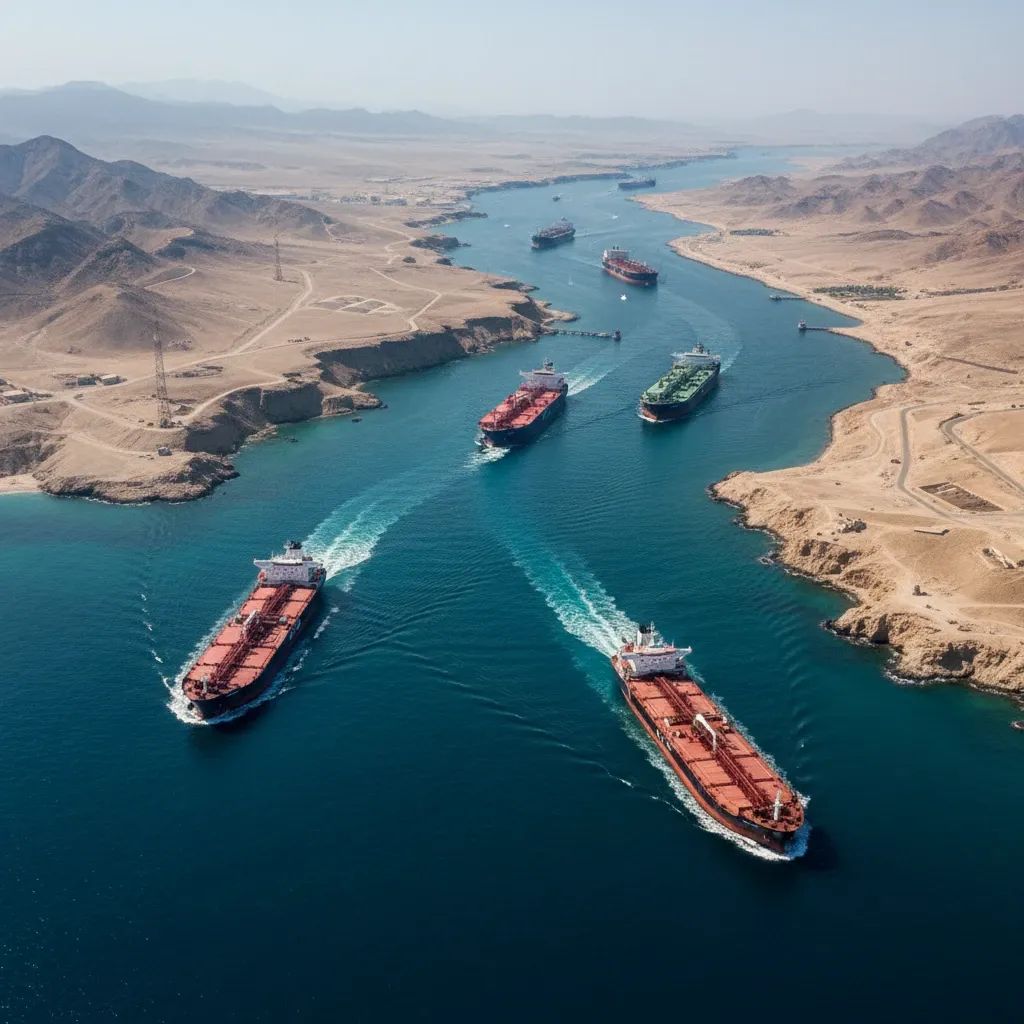
The Iranian navy has reimposed a full blockade on the Strait of Hormuz, forcing tankers to reverse course and triggering a fresh surge in global oil and gas prices. The abrupt closure marks the collapse of a fragile two-week truce between Washington and Tehran and underscores the profound economic exposure of Italy and Europe to Middle Eastern energy disruptions.
Why This Matters
• Oil prices: Brent crude climbed 2.4% to $97.05 per barrel on April 9, 2026. Goldman Sachs analysts forecast prices could reach $150 if the closure persists beyond two weeks.
• Gas shock: Europe's TTF benchmark jumped 1.1% to €46 per megawatt-hour. Energy analysts from Morgan Stanley have projected potential spikes to €72 if LNG shipments from Qatar remain blocked for an extended period.
• Market instability: Asian equity indices fell sharply, and European bourses opened lower as investors priced in the return of geopolitical risk.
• Fed uncertainty: The U.S. Federal Reserve has signaled it may either cut or raise interest rates, depending on whether the conflict deepens into recession or fuels inflation.
What Happened in the Strait
Maritime tracking data confirmed that the tanker Aurora, en route from the Persian Gulf toward open waters, executed a 180-degree turn near the Omani coast of Musandam and returned to the Gulf. The vessel's abrupt reversal mirrors the behavior of other commercial ships, signaling that Iran has effectively resealed the world's most critical energy chokepoint.
The strait, a narrow passage between Iran and Oman, handles roughly 20% of global oil shipments—between 17 and 22 million barrels per day—and more than a quarter of the world's liquefied natural gas (LNG) exports, primarily from Qatar. Even a temporary disruption can reverberate across continents within hours.
The Fragile Truce That Collapsed
On April 8, 2026, the Pakistan-mediated ceasefire between the United States and Iran had briefly reopened the strait. Under the terms, Washington agreed to suspend military strikes against Iranian targets in exchange for Tehran guaranteeing "complete, immediate, and safe" passage. Iran countered with a ten-point proposal that included demands for a permanent ceasefire, an end to sanctions, reconstruction funding for damaged infrastructure, and security guarantees—plus the introduction of a $2 M transit toll per vessel as a means of asserting sovereignty and circumventing Western financial restrictions.
Less than 24 hours later, the arrangement unraveled. Israel launched a series of airstrikes in Lebanon, killing hundreds and prompting Hezbollah to fire rockets into northern Israel. Tehran interpreted the raids as a breach of the ceasefire framework, despite U.S. officials insisting that Lebanon was never covered by the Iran agreement. In response, the Islamic Revolutionary Guard Corps (IRGC) ordered the strait closed again, warning that any vessel attempting passage without prior coordination would be "targeted and destroyed." Iran cited the presence of mines as an additional hazard and insisted that all traffic coordinate with the IRGC before transiting.
Impact on Energy Markets
The immediate financial consequences were stark. West Texas Intermediate (WTI) crude for May delivery surged 3.5% to $97.7, while Brent for June rose 2.4% to $97.05. Earlier in the week, prices had spiked as high as $126 per barrel as the market absorbed the reality of 11 million barrels per day of production being effectively stranded. Goldman Sachs and other major energy analysts warn that a prolonged shutdown could push Brent above $150, and in extreme scenarios, toward $200.
Natural gas followed suit. The TTF benchmark in Amsterdam opened 1.1% higher at €46 per megawatt-hour, with major energy firms forecasting potential jumps to €72 if LNG shipments from Qatar remain blocked. European storage levels, already under pressure heading into the next heating season, could face critical shortfalls. The disruption also threatens fertilizer production, which depends on natural gas feedstock, raising the specter of agricultural price shocks and food security concerns across the continent.
What This Means for Italy Residents
For anyone living in Italy, the implications are direct and multi-layered. Italy imports approximately 25-30% of its crude oil and a significant share of its natural gas through maritime routes dependent on the Strait of Hormuz, according to energy data tracked by the International Energy Agency (IEA). The country relies on both pipeline and LNG infrastructure that depends on global market stability.
A sustained closure of the strait will:
• Drive up fuel costs: Expect gasoline and diesel prices at the pump to rise sharply in the coming weeks, mirroring the wholesale jump in crude. Fuel prices at Italian gas stations are expected to increase by €0.15-0.25 per liter within days, according to industry tracking by Staffetta Quotidiana.
• Increase household energy bills: Natural gas prices for heating and electricity generation will climb, putting additional strain on household budgets already tested by inflation. Estimates suggest heating bills could rise 12-18% in April-May for Italian households.
• Elevate food prices: Higher fertilizer costs and increased transport expenses will filter through the supply chain, raising prices for staples.
• Threaten industrial competitiveness: Energy-intensive industries—chemicals, steel, ceramics—will face margin pressure, potentially leading to production slowdowns.
• Amplify inflation: The European Central Bank may find itself constrained in its ability to ease monetary policy if energy-driven inflation resurges.
Italy maintains strategic petroleum reserves equivalent to approximately 65 days of import cover, according to the International Energy Agency, making the country more vulnerable to extended supply shocks compared to other developed economies. The Italian government has not yet announced emergency measures as of April 9, 2026, but coordination within the European Union and with the International Energy Agency (IEA) is expected. EU officials have signaled that emergency protocols may be activated if the blockade extends beyond 30 days.
Global Ripple Effects
Asian equity markets absorbed the first wave of selling. Tokyo's Nikkei fell 0.73%, Hong Kong's Hang Seng dropped 0.38%, Shanghai declined 0.77%, and Seoul's KOSPI tumbled 1.61%. Futures for Wall Street and European bourses pointed lower, signaling that investors are bracing for prolonged instability.
China, India, and Japan—the world's largest oil importers—are scrambling to respond. China, which purchased more than 80% of Iran's exported crude in 2025, has begun authorizing refineries to tap its 1.3 billion-barrel strategic reserve, equivalent to 120 days of net imports. India, which sources 52% of its crude through the strait, is operating refineries at maximum capacity to build short-term stocks and diversifying purchases toward the United States, Russia, and Venezuela. Japan has initiated the largest release from its strategic reserves in history—80 million barrels, or 45 days of domestic demand—and plans to quadruple imports from the United States starting in May.
Fed in a Bind
The U.S. Federal Reserve revealed in minutes from its latest meeting that policymakers are weighing two contradictory scenarios. A prolonged conflict could destroy jobs and demand a rate cut to cushion the blow. Alternatively, if energy inflation spirals while labor markets remain tight, the Fed might be forced to raise rates to prevent runaway price growth. The duality reflects the profound uncertainty now gripping global economic policymakers.
What Comes Next
President Donald Trump has vowed that U.S. forces will remain "inside and around Iran" until a "real agreement" is reached that guarantees security and full reopening of the strait. Tehran, meanwhile, shows no sign of backing down, framing the blockade as a response to what it views as Western complicity in Israeli aggression.
Alternative routes exist—Saudi Arabia and the United Arab Emirates operate pipelines that bypass the strait—but their combined capacity is a fraction of the volume that flows through Hormuz. The options for rerouting are limited, expensive, and insufficient to stabilize global supply in the near term.
For Italy and the broader European Union, the crisis underscores energy dependence and the vulnerability to disruptions at global chokepoints. Policymakers in Rome and Brussels are expected to accelerate diversification efforts, bolster storage capacity, and prepare contingency plans for a scenario that may worsen before it improves. Italian residents and businesses should monitor guidance from the Ministry of Ecological Transition and remain prepared for volatile energy prices in the coming weeks.


