
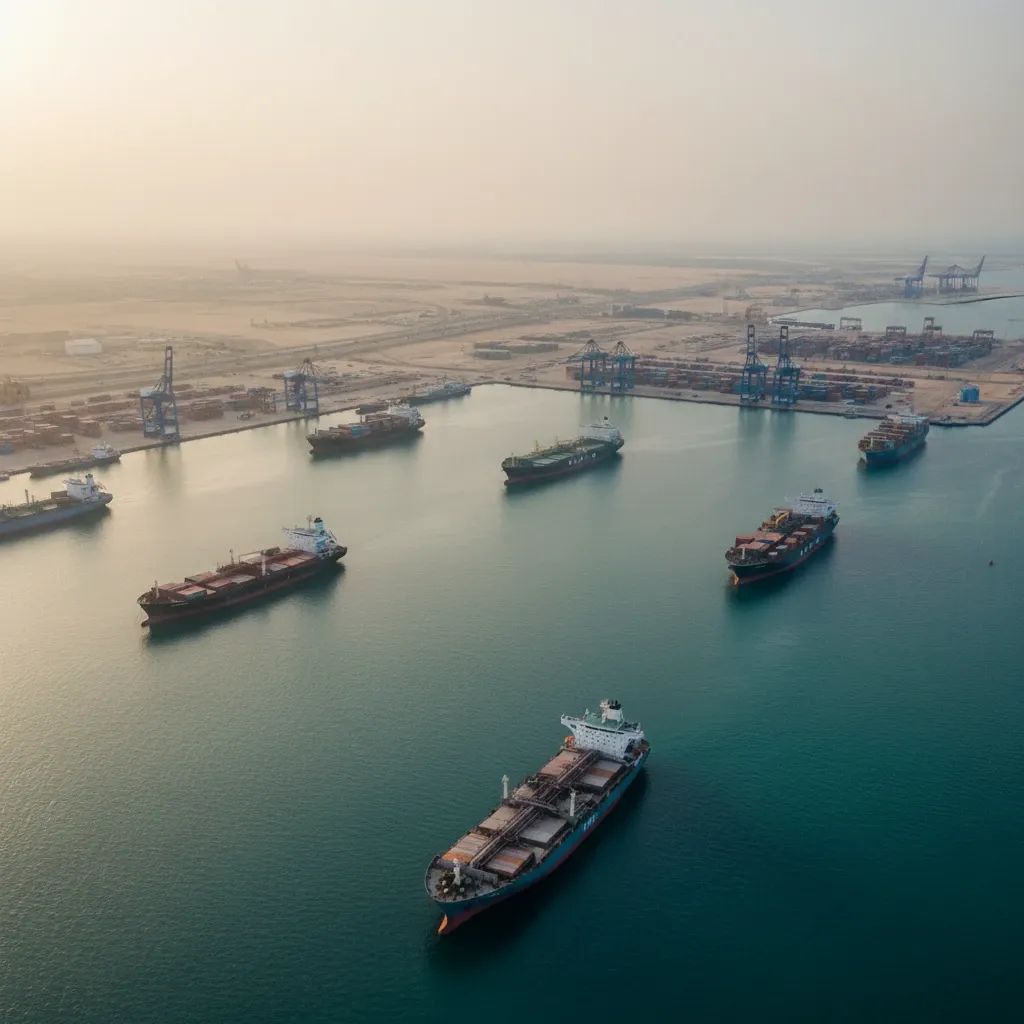
The White House has signaled a hardening stance toward Iran by amplifying the prospect of a counter-blockade of Iranian ports, even as Iran maintains its own closure of the Strait of Hormuz. This escalation represents a critical shift: on March 2, Iran blocked all commercial traffic through the strait, but now the United States is threatening an even more comprehensive economic stranglehold on Tehran—a tactic that would disrupt global energy markets on a scale far exceeding any prior Middle Eastern crisis.
Why This Matters
• Energy prices: A U.S. blockade targeting Iranian oil and ports could push global crude prices to historic highs, directly impacting Italian fuel costs and household budgets.
• Italian nationals at risk: Approximately 50 Italian mariners remain trapped on vessels in the Persian Gulf since Iran closed the Strait of Hormuz in early March.
• Geopolitical escalation: The United States' threat introduces a new phase of confrontation with Beijing and New Delhi, both major Iranian oil buyers, potentially forcing Rome to navigate competing alliances.
From Diplomatic Overture to Military Threat
Early this morning, U.S. President Donald Trump reposted an opinion piece on his Truth Social platform that openly advocated for a "naval blockade" strategy should ongoing negotiations with Tehran collapse. The article, published by Just the News, was titled "The Ace the President Has If Iran Won't Fold: A Naval Blockade" and appeared on Trump's feed at 6:16 a.m. Eastern Time—almost simultaneously with an announcement from Vice President JD Vance in Islamabad confirming that the latest round of U.S.-Iran talks had failed.
The timing appears deliberate. Just days earlier, on April 8, Trump had declared a two-week ceasefire, suspending strikes on Iran's energy infrastructure on the condition that Tehran reopen the Strait of Hormuz. That pause has now effectively expired, and the reposted article suggests Washington is preparing to shift from defensive convoy operations to an offensive maritime stranglehold—a move that would mark one of the most aggressive U.S. actions in the region since the 1980s.
What a Blockade Would Look Like
The proposal draws explicit comparison to the Venezuela precedent. In December 2025, the Trump administration ordered U.S. naval assets to intercept and turn back sanctioned oil tankers approaching Venezuelan ports. According to international observers, similar blockade tactics in Venezuela contributed to severe economic pressures that rippled through the civilian population.
Applying the same tactic to Iran would involve U.S. Navy warships patrolling the Persian Gulf and the Strait of Hormuz, intercepting inbound cargo vessels and outbound oil tankers. The article Trump shared argues that such a strategy could "suffocate an already unstable Iranian economy and escalate diplomatic pressure on China and India by cutting them off from one of their principal sources of oil." Some analysts quoted in the piece suggest Trump could "out-blockade" Iran—essentially neutralizing Tehran's own closure of the strait by imposing an even more comprehensive cordon.
Yet the Persian Gulf is not the Caribbean. The Strait of Hormuz is a 21-mile-wide chokepoint through which roughly 20% of the world's crude oil and a significant share of liquefied natural gas flows daily. Any sustained interruption would send global energy prices soaring, potentially triggering inflation spikes across Europe, including Italy, where households are already sensitive to fuel costs.
The Crisis Timeline: Six Weeks of Rapid Escalation
Over the past six weeks, the crisis has escalated dramatically:
• February 28: The United States and Israel launched coordinated strikes against Iranian military and nuclear-related facilities.
• March 2: Tehran responded by blocking all commercial traffic through the Strait of Hormuz, trapping more than 3,000 vessels and leaving approximately 20,000 mariners—including dozens of Italians—stranded aboard their ships. Crews report dwindling food supplies, limited fresh water, and the constant threat of Iranian missile or drone attacks.
• March 9: Trump announced his intention to place the strait under U.S. military control.
• March 15: Defense Secretary Pete Hegseth confirmed that American warships would begin escorting oil tankers and merchant vessels through the waterway.
• March 19: A multinational coalition led by Washington launched mine-clearing operations to secure safe passage.
• April 8: Trump announced a brief ceasefire to allow negotiations.
• April 12 (today): With talks collapsed and Trump amplifying blockade rhetoric, the stage is set for a potentially indefinite confrontation—one that could ripple through Italy's economy, foreign policy, and citizens' safety.
Impact on Residents and the Italian Economy
For Italians, the most immediate concern is energy security. Italy imports substantial quantities of natural gas and refined petroleum products, much of which originates in or transits through the Gulf region. A blockade would almost certainly push European benchmark gas prices higher, translating into increased heating bills, electricity costs, and transportation expenses. Retail fuel prices at Italian pumps, which have fluctuated throughout 2026, could climb sharply if Gulf supply routes remain contested for weeks or months.
For practical guidance, Italian residents can monitor energy market developments through Italy's Ministry of Economic Development and real-time fuel price tracking via the Ministry of Environment website. Energy suppliers are increasingly offering rate-locking options to mitigate volatility—contacting your provider about fixed-rate contracts may provide budget certainty during this period of uncertainty.
There is also the humanitarian dimension. Dozens of Italian seafarers remain stuck in what has become a floating detention zone. While Rome has pressed for their safe evacuation through diplomatic channels, a full-scale naval blockade would further complicate rescue efforts and potentially place Italian-flagged vessels in the crossfire of U.S.-Iranian hostilities.
On the geopolitical front, Italy—as a NATO member and European Union partner—may face pressure to support or at least tolerate American blockade operations. Yet such alignment risks souring relations with major trading partners, particularly China and India, both of which depend heavily on Iranian oil and would likely oppose any unilateral U.S. maritime cordon.
Beijing and New Delhi Push Back
Chinese officials have historically condemned unilateral sanctions and blockades as violations of international law and freedom of navigation. Beijing is the world's largest oil importer and has continued purchasing Iranian crude even under U.S. sanctions, often through intermediaries or "shadow fleets." A U.S. blockade would threaten China's energy security and jeopardize billions in Belt and Road Initiative investments across the Middle East. Diplomatic protests from Beijing are all but certain, and Chinese vessels may attempt to run the blockade, raising the specter of confrontation between American and Chinese naval forces.
India faces a similar dilemma. While New Delhi has generally complied with U.S. sanctions to preserve its strategic partnership with Washington, it has also invested heavily in the Chabahar port project in southeastern Iran, a key corridor for trade with Afghanistan and Central Asia. A blockade would render Chabahar inoperative and force India to source replacement oil at premium prices, straining an economy already sensitive to inflation.
Trump escalated tensions further when asked by reporters about intelligence reports suggesting China is preparing to deliver advanced air defense systems to Iran within weeks. "If China sends weapons to Iran, they will have big problems," Trump warned, without elaborating on the nature of those consequences. That vague threat suggests Washington may be preparing secondary sanctions or even direct interdiction of Chinese arms shipments—a move that could trigger a broader U.S.-China confrontation.
Historical Parallels and Economic Fallout
Naval blockades have a long and often grim history in the Middle East. During the Iran-Iraq War in the 1980s, both sides targeted each other's oil infrastructure and shipping, causing global crude prices to spike and prolonging the conflict. More recently, the Saudi-led blockade of Yemen, intensified in 2017, contributed to severe humanitarian pressure, with staple prices rising sharply and millions requiring emergency aid.
The Venezuelan blockade, though more limited in geographic scope, provides a cautionary template. Sanctions and naval interdiction created severe economic pressures with significant civilian impact.
Economists warn that a prolonged Gulf blockade could reduce global oil supply by 2 million to 3 million barrels per day, pushing Brent crude above $120 per barrel and triggering recession risks across energy-dependent economies. For Italy, which relies on stable fuel prices to support its manufacturing and tourism sectors, such a scenario would be economically damaging.
What Comes Next
As of today, no formal blockade order has been issued, but the rhetorical groundwork is being laid. The collapse of negotiations, the expiration of the ceasefire, and Trump's public amplification of blockade proposals all point toward a potential escalation in the coming days or weeks.
Italian authorities will be watching closely, both to safeguard their nationals in the Gulf and to assess the broader economic implications. For residents of Italy, the immediate steps are clear: monitor developments through Italy's Ministry of Foreign Affairs website (www.esteri.it), check your energy provider's rate options, and follow official travel advisories if you have business or family connections to the Middle East. This crisis could reshape global trade and security architecture for years to come.


