
Why This Matters
Italy's financial markets joined a broader European rally this morning, buoyed by tentative signs that Washington and Tehran may step back from a confrontation that has paralyzed global energy flows and pushed oil prices above $100 per barrel.
Key concerns for residents and businesses:
• Energy costs: Any reopening of the Strait of Hormuz could ease pressure on Italian households and manufacturers already battered by inflation.
• Export sectors: Italian machinery, automotive, and chemical manufacturers—heavily energy-dependent—stand to regain competitiveness if production costs stabilize.
• Market volatility: European bourses remain more vulnerable to Middle East disruptions than Wall Street, making the outcome of U.S.-Iran talks significant for Italian investors.
Fragile Optimism Lifts Equity Benchmarks
Trading opened in positive territory across major European exchanges: Paris climbed 0.22%, London added 0.19%, and Frankfurt gained 0.1%. The advance follows U.S. President Donald Trump's announcement that he would delay planned strikes on Iranian energy infrastructure, citing "very good and productive conversations" with Tehran. While Iranian state media initially denied direct talks, a senior Foreign Ministry official confirmed to CBS News that Tehran had received diplomatic points from the United States through mediators now under review.
The diplomatic development has halted a slide that saw European indices post significant losses in early March when the conflict first erupted. Major indices reversed intraday declines to close in the green.
The Hormuz Bottleneck and Its Economic Impact
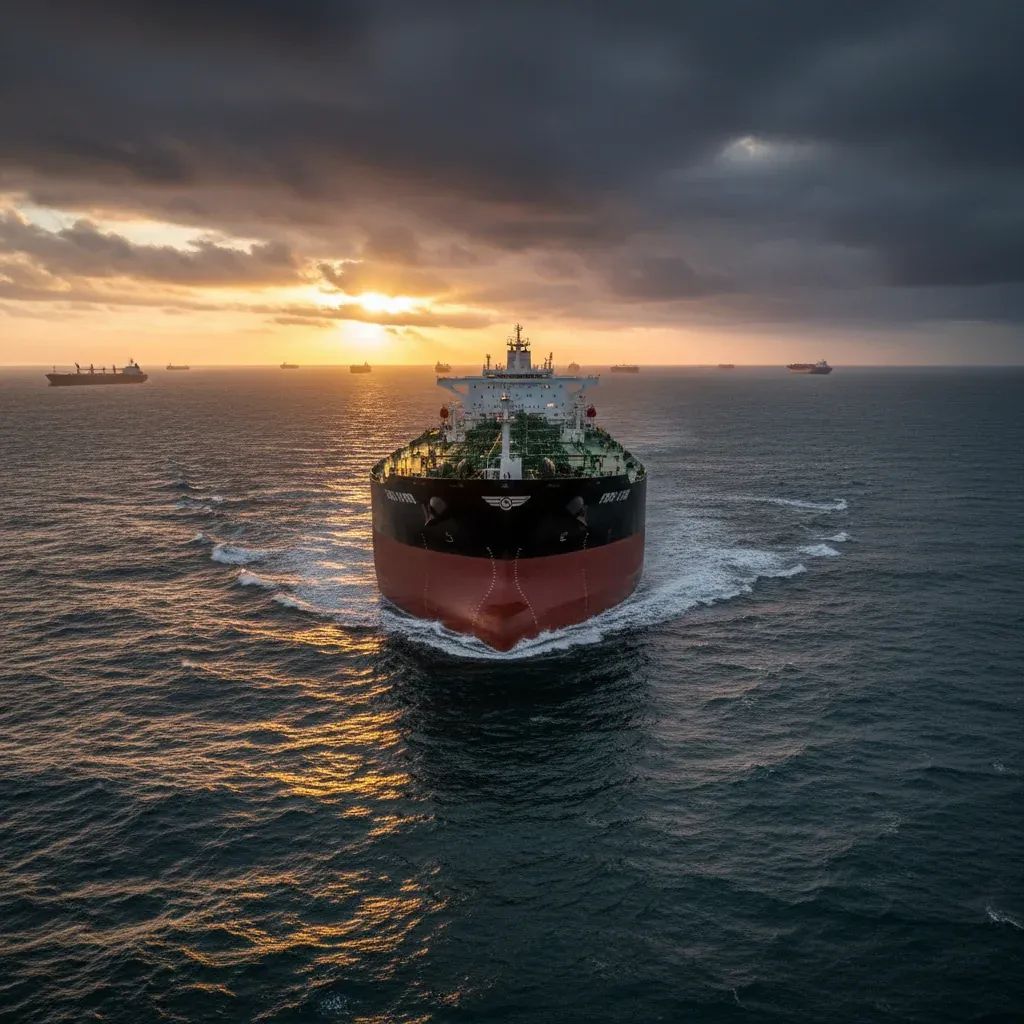
At the heart of market anxiety lies the Strait of Hormuz, a critical chokepoint through which roughly 20% of global oil and liquefied natural gas supplies normally pass—equivalent to about 20 million barrels per day. Since late February, maritime traffic through the strait has been drastically curtailed following Iranian threats and attacks on merchant vessels in retaliation for U.S. and Israeli military operations.
Brent crude has reached $113–$120 per barrel, while WTI touched $99. LNG spot prices have surged in tandem, hitting Asian and European buyers. The International Energy Agency announced the release of strategic reserves, though experts caution these stocks cannot fully replace the lost volume. Alternative export routes through Saudi Arabia or Oman can bypass only a fraction of the Hormuz flow.
What This Means for Italy
For people living and working in Italy, the impact extends beyond market movements. The country is a net energy importer, and sustained oil above $100 translates directly into higher gasoline, diesel, and heating costs. Households already facing elevated electricity bills now confront renewed energy-driven inflation that could affect purchasing power and consumer spending.
Manufacturing sectors face sharper pressure. Italy's machinery, automotive, chemical, and metallurgical industries are energy-intensive; prolonged input cost spikes undermine export competitiveness and squeeze margins. Sectors like agriculture—where diesel costs have spiked—and logistics would benefit from rapid normalization.
Europe's Structural Vulnerability
Historical precedent shows that European equity markets suffer disproportionately during U.S.-Iran tensions. The divergence is rooted in structure: Europe imports the bulk of its oil and gas, while the United States has achieved near energy self-sufficiency through domestic shale production. Italy relies on seaborne crude and LNG deliveries that must traverse geopolitically sensitive waters, leaving it exposed to both price spikes and supply disruptions.
Diplomatic Efforts and European Response
European leaders have urged Tehran to cease hostilities and return to negotiations. European Commission President Ursula von der Leyen called on Iran to "immediately end its threats and sit down at the negotiating table." European officials have expressed concern over the unilateral nature of U.S. military action and its downstream effects on European energy security.
What's Next
Market participants are monitoring every diplomatic signal for clues about durability. For Italy, the outcome carries direct consequences: lower fuel costs and restored supply chains if diplomacy prevails, or continued economic pressure if the Hormuz blockade persists. Investors are advised to monitor official statements and updates from energy authorities regarding supply developments in the coming days.


