
Sport e Salute, the Italian state agency responsible for national sports infrastructure, has pledged to transform the 2027 America's Cup in Naples into a broad-based social regeneration project that will extend from the redeveloped docklands of Bagnoli to the suburban community of Caivano, where sports facilities have already played a central role in revitalizing a neighborhood once synonymous with crime and neglect.
The sailing competition, scheduled for July 2027, will accelerate the €180M cleanup and redevelopment of Bagnoli's contaminated industrial waterfront—a site classified as a Site of National Interest (SIN), a legal designation that triggers special government oversight and funding for environmental cleanup. Organizers also plan to connect the event with schools, universities, and marginalized neighborhoods through dedicated programming and infrastructure improvements, using the Centro Sportivo Pino Daniele in Caivano as a proven template. That facility, transformed from an abandoned complex into a hub serving over 1,000 youth across 44 sports disciplines, demonstrates how sports infrastructure can anchor community regeneration.
A Sailing Event With a Social Mission
Diego Nepi Molineris, CEO of Sport e Salute, outlined this vision during a conference hosted at the Pino Daniele Sports Center in Caivano, organized by US ACLI, a national sports association. The gathering—titled "Sport-Benessere Sociale" (Sport and Social Well-Being)—brought together local and national officials to discuss how major sporting events can drive tangible improvements in Italian communities, particularly those grappling with economic hardship and social fragmentation.
"We will bring the competition to the sea," Nepi said, "involving territories, schools, universities, and peripheral neighborhoods, starting with Caivano, where sport has already shown it can change the life of an entire community." He credited strong institutional backing—including direct support from Prime Minister Giorgia Meloni—for enabling the rapid turnaround in Caivano, a municipality on the northern edge of Naples that gained national attention in 2023 after high-profile criminal incidents exposed deep social fractures.
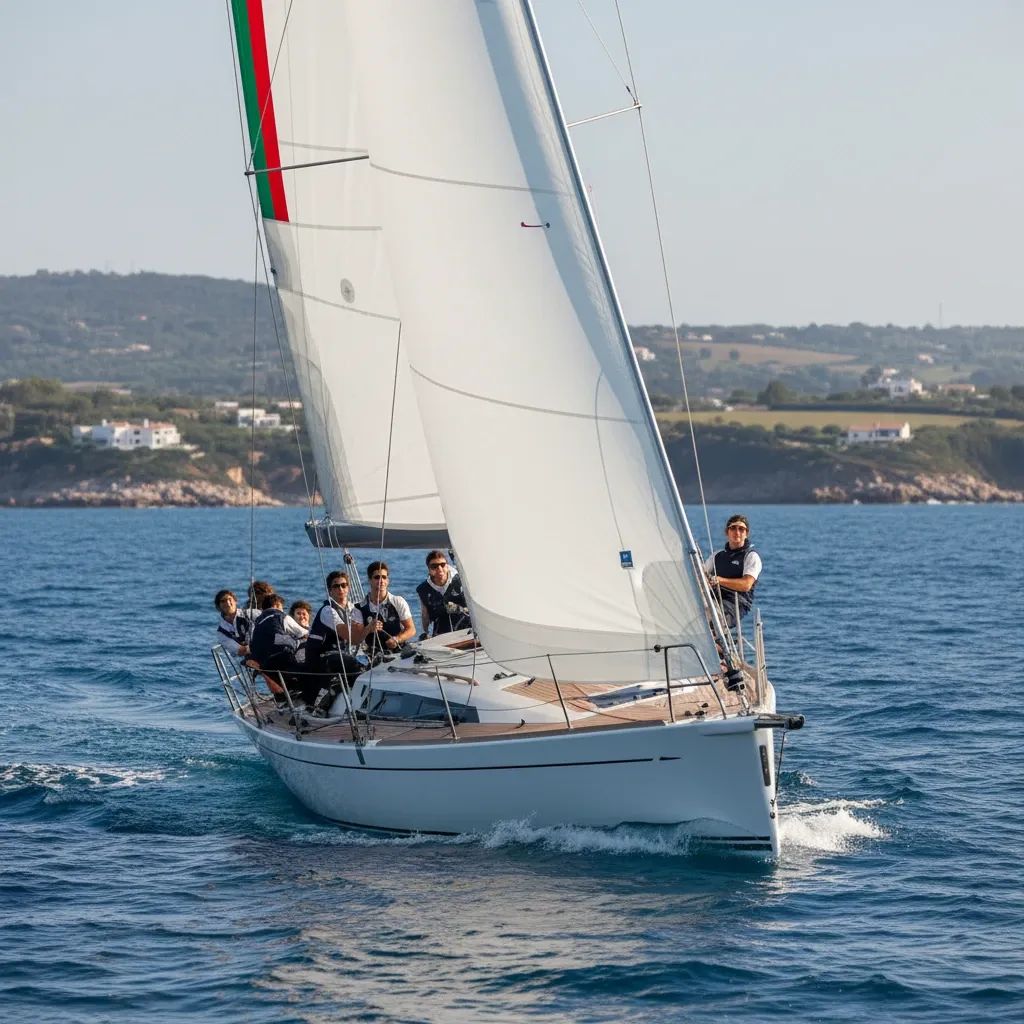
The 38th edition of the America's Cup will be the first time the historic sailing competition is held in Italian waters. Announced in May 2025, the event will see team bases located in Bagnoli, an industrial waterfront zone undergoing extensive environmental remediation, with races taking place between Castel dell'Ovo and Posillipo. Preliminary regattas are scheduled for Cagliari in May 2026, with the final Match beginning on July 10, 2027.
Bagnoli's Industrial Past Meets a Green Future
The Bagnoli-Coroglio site has been classified as a Site of National Interest (SIN)—a designation that subjects the area to mandatory government remediation oversight and triggers dedicated national funding due to heavy contamination from decades of steel production and industrial dumping. The area's transformation has been slow and politically fraught, but the America's Cup has functioned as a forcing mechanism. Naples Mayor Gaetano Manfredi, who also serves as the government's special commissioner for the cleanup, has his mandate extended through December 2026 to maintain continuity.
Key developments as of early 2026 include:
• Marine remediation: Instead of full excavation of the "colmata"—a massive landfill projecting into the sea—authorities have opted for capping, a containment technique that isolates pollutants without removing them. This decision followed environmental assessments that concluded total removal would cause greater harm. The sealed area will eventually become a public terrace.
• New infrastructure: Definitive plans for water, sewage, road, and telecommunications systems were approved in January 2025 following environmental impact reviews. A 120-hectare urban park is in the planning stage, with sections designated as natural, productive, and urban zones.
• Demolitions and site prep: The Morgan warehouses have been demolished, and plans are ready for tearing down the old central pier and the former Cementir plant. A centralized treatment facility is being built to handle soil decontamination using thermal desorption, soil washing, and bio-phytoremediation.
• Temporary structures: The hangar facilities and cranes required by the racing syndicates will be removed after the event, leaving upgraded public piers and improved coastal access as permanent assets for local residents.
Work on the colmata and marine installations is expected to conclude by summer 2026, with public-facing infrastructure ready by late spring 2027. The €180M Bagnoli remediation budget includes roughly €32M earmarked for sports and recreational facilities managed by Sport e Salute, echoing the model developed in Caivano.
Citizen watchdog groups have raised concerns about environmental shortcuts driven by the event's tight timeline. The association Aidacon announced legal action in defense of residents, citing fears of "dangerous environmental derogations"—modifications to standard environmental protection rules justified by the event's accelerated timeline. The specific derogations under dispute include expedited remediation schedules and alternative containment methods that deviate from full excavation protocols. City officials and the commissioner's office have countered by publishing monthly monitoring reports on water and sediment quality, all available online. Data released in February 2026 showed no exceedances of daily PM10 limits, according to official records. However, critics note that air quality monitoring alone does not address concerns about marine sediment contamination or the long-term integrity of the capping method. Residents should review the detailed monitoring data independently through the Commissioner's Office portal, as the dispute remains unresolved.
Caivano as a Blueprint for Social Change
The Centro Sportivo Pino Daniele in Caivano, named after the late Neapolitan singer-songwriter, stands as the most concrete example of what organizers hope to replicate around the America's Cup. Once the Delphinia sports complex, the site was abandoned in 2018 and became a symbol of neglect and lawlessness. In 2023, the Italian government launched "Illumina Caivano" (Illuminate Caivano), a €9.3M regeneration project managed by Sport e Salute and operated in partnership with the Fiamme Oro, the sports division of the national police.
The refurbished facility now covers 50,000 square meters and hosts 44 sports disciplines, including soccer, tennis, padel, bocce, skateboarding, swimming, athletics, and martial arts. Over 1,000 young people participate regularly in programs there, with staffing drawn from the local community. During construction, the project employed 400 local workers, and an additional 100 young people were involved in cultural initiatives tied to the center's reopening.
Antonio Angelino, mayor of Caivano, spoke at the conference about the fragility of the recovery. "We are on the path of rebirth, but this commitment must be renewed every day," he said. "A one-off measure is not enough. What is needed is dedication, commitment, and constancy—everything that the Fiamme Oro and the director of the Pino Daniele Center are putting in."
A separate initiative, "La bellezza necessaria" (The Necessary Beauty), funded by Fondazione con il Sud and implemented by the UISP Campania regional committee, has focused on the Parco Verde neighborhood in Caivano. That project converted degraded lots into multipurpose sports fields, introduced non-competitive sports programming, and included activities like plogging (jogging while picking up litter) and tree-climbing workshops. It serves 160 beneficiaries, mostly minors, and incorporates cricket and badminton to engage migrant communities.
Damiano Lembo, president of US ACLI, reflected on the Caivano model: "What we see here is a practical example of our work, because schools, families, and sport are engaged in a mission that goes beyond getting kids to do physical activity. We have a precise duty: to shape the country of the future according to the positive values that sport can pass on."
Employment and Infrastructure Projections
The Bagnoli remediation project and America's Cup infrastructure are expected to generate employment across construction, hospitality, event management, and ongoing facility operations, though specific job projections have not yet been published by organizers. The Caivano reference point provides some indication: during construction of the Pino Daniele Center, 400 local workers were employed, with an additional 100 young people engaged in cultural programs. However, Bagnoli's scale and timeline differ significantly from Caivano's €9.3M project, and definitive employment figures for the waterfront transformation remain unavailable. Residents evaluating the economic impact should monitor updates from the Municipality of Naples and the Commissioner's Office, which are expected to release more detailed workforce projections as planning finalizes.
Learning From Global Models, Applied Locally
The use of major sporting events as urban regeneration tools has produced mixed results internationally, offering both cautionary lessons and successful models. Barcelona's 1992 Olympics modernized infrastructure and reshaped the city's international image, while London 2012 triggered gentrification and displacement in East London—a cautionary tale that Italian organizers are aware of. The challenge in Naples will be ensuring that benefits of regeneration—cleaner coastlines, better transit, new jobs—reach existing residents rather than pricing them out or bypassing them entirely.
Naples officials have explicitly referenced the London case when discussing strategies to preserve neighborhood character and prevent displacement. Whether these protections prove adequate will depend on property market dynamics and housing policy decisions made over the next two years.
What This Means for Residents
For those living in Naples and surrounding areas, the America's Cup represents more than an elite sailing race. If executed as promised, the event will leave behind upgraded waterfront access in Bagnoli, including new public piers, promenades, and coastal parks; permanent sports facilities and green spaces in previously contaminated or underutilized zones; and community programming tied to schools and local associations, modeled on the Caivano experience.
Residents should monitor progress reports published by the Commissioner's Office for Bagnoli and the Municipality of Naples, which provide updates on environmental safety and construction timelines. The city has also launched a digital platform, "Rigenera Bagnoli Live," to facilitate public engagement and transparency.
For families in Caivano and similar neighborhoods, the integration with the America's Cup could mean expanded access to sports programming, infrastructure improvements (such as road upgrades on via Nuova Bagnoli and via Diocleziano), and heightened visibility that may attract further public and private investment.
The "Decreto Caivano-bis," a national initiative allocating €180M over three years (2025–2027), aims to replicate the Caivano template in other marginalized urban areas across Italy. The America's Cup is positioned as a flagship demonstration of this model, with implications that extend well beyond Campania.
Nepi concluded by framing the America's Cup as an opportunity to make "the world's oldest sporting competition an unforgettable event and a model to emulate, a driver of growth for Italy." Whether that vision materializes will depend on execution over the next 16 months—and on the degree to which institutions can sustain the "dedication, commitment, and constancy" that Caivano's mayor described as essential to lasting change.


