
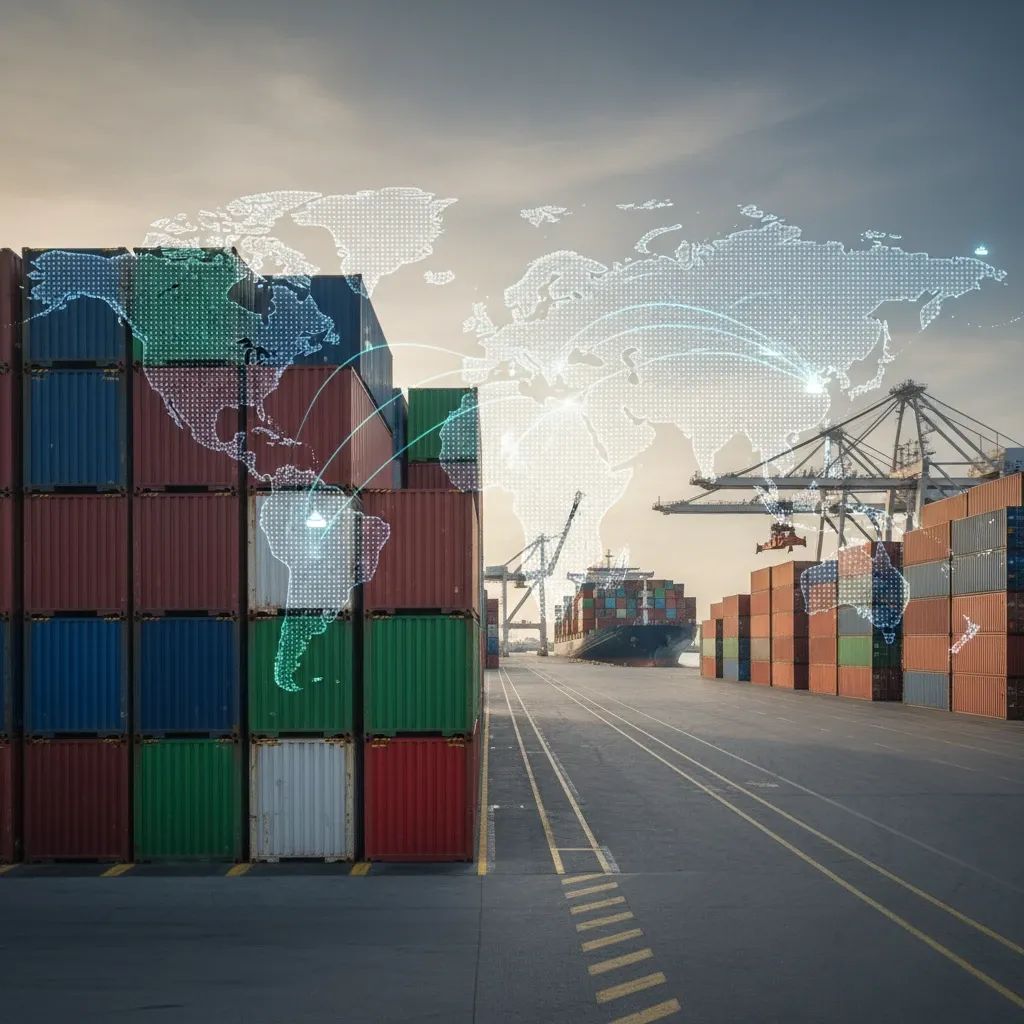
Italy's Confartigianato and the CGIA of Mestre have issued stark warnings: escalating military action between Israel-U.S. and Iran threatens to add nearly €10 billion in energy bills for Italian businesses in 2026 alone, while simultaneously jeopardizing €27.8 billion in manufactured exports to the Middle East. The dual shock—disrupted energy supply chains and evaporating sales markets—places Italian small and medium enterprises (SMEs) under a pincer of economic pressure at a moment when recovery remains fragile.
Why This Matters
• Energy cost surge: Italian firms face a combined €7.2 billion increase in electricity costs and €2.6 billion in gas bills (+13.5% over 2025), based on current spot prices.
• Export exposure: Over €27.8 billion worth of Italian manufactured goods sold annually to Middle Eastern markets is now vulnerable to trade disruption and demand collapse.
• Regional impact: Lombardy alone stands to absorb €2.3 billion in additional energy expenses, with Emilia-Romagna, Veneto, Piemonte, and Toscana also heavily affected.
• Import dependency: Italy relies on the Middle East for €15.9 billion in annual energy imports, particularly liquefied natural gas (LNG) from Qatar and crude from Iraq and Saudi Arabia.
Energy Price Spike: The Numbers Behind the Alarm
On February 27, just before the intensification of military operations, natural gas traded at €32 per megawatt-hour (MWh) on the Title Transfer Facility (TTF) benchmark, and electricity at €107.5/MWh. By March 4, those figures had rocketed to €55.2/MWh for gas and €165.7/MWh for electricity—a jump of over 70% for gas and 54% for power in less than a week. While prices have since eased slightly, the CGIA estimates that if the annual average settles at €50/MWh for gas and €150/MWh for electricity—well within current volatility—Italian companies will pay nearly €10 billion more in 2026 than they did in 2025.
The manufacturing heartland bears the brunt. Lombardy's industrial base—textiles, machinery, automotive—faces an additional €2.3 billion in energy costs. Emilia-Romagna follows with €1.2 billion, Veneto with €1.1 billion, Piemonte with €879 million, and Toscana with €670 million. These are regions where energy-intensive production dominates: ceramics, steel, plastics, food processing, and precision engineering.
What This Means for Italian Exporters
Beyond the immediate energy shock, Confartigianato flags a longer-term threat: the Middle East has emerged as a strategic outlet for Made in Italy goods, accounting for €27.8 billion in manufactured exports over the twelve months ending in late 2025—roughly 4.6% of Italy's total manufacturing exports. The conflict now puts that revenue stream at risk.
Machinery and mechanical equipment lead the exposure with €7 billion in annual sales (25% of Italy's Middle East exports), followed by jewelry, furniture, and eyewear (€3.2 billion combined, with jewelry alone at €1.8 billion), metals and metal products (€2.7 billion), transportation equipment (€2.6 billion), and fashion—textiles, apparel, leather goods (€2.4 billion).
Lombardy accounts for nearly one-third of Italy's industrial production destined for Middle Eastern markets, with €8.1 billion in exports. Toscana, Emilia-Romagna, Veneto, and Friuli-Venezia Giulia round out the top five regions. Jewelry clusters in Arezzo and Vicenza, textile hubs in Prato and Biella, machinery makers in Brescia and Bologna—all depend on stable demand from Gulf markets, particularly the United Arab Emirates, Saudi Arabia, Turkey, and Egypt.
Confartigianato warns that prolonged instability could simultaneously sever energy supply chains and close off sales channels, compounding uncertainty for SMEs and stalling investment plans that underpin Italy's post-pandemic recovery.
The Straits, the Supply Routes, and Strategic Vulnerability
Italy's energy dependency makes it acutely sensitive to Middle Eastern turmoil. The country imports approximately 73.5% of its energy needs—down slightly from 74.8% a year ago, but still well above the European average. While Italy has successfully diversified away from Russian gas following 2022, the Middle East remains a critical source.
Qatar supplies over 11% of Italy's natural gas imports, mostly as LNG. Although this represents less than 10% of total Italian LNG intake, any disruption to shipments transiting the Strait of Hormuz—through which over 25% of global oil and LNG trade passes—would immediately tighten global markets and drive prices higher. Italy also imports 12.2% of its crude oil from the Middle East, chiefly from Iraq (6.1%) and Saudi Arabia (5.8%).
The Italy Energy Surveillance Unit, established by the government to monitor real-time gas and electricity prices, is tracking the situation closely. National gas storage levels currently stand at 47-50%, providing a buffer, but Prime Minister Giorgia Meloni has signaled readiness to impose windfall taxes on energy companies if speculative price spikes persist, redirecting revenues to subsidize consumer and business bills.
Structural Shifts: Women-Led Firms Consolidate Amid Uncertainty
Against this backdrop of geopolitical risk, Unioncamere—Italy's national union of Chambers of Commerce—released data showing that women-led businesses in Italy declined by 0.3% in 2025 (roughly 4,000 fewer firms), bringing the total to 1.303 million registered at year-end. However, the report emphasizes a qualitative shift: smaller, self-employment-style firms are giving way to larger, more structured enterprises.
Businesses with 0-9 employees dropped by nearly 4,500, while those with 10-49 employees grew by 0.5% (+246 firms), those with 50-249 employees by 1.3% (+44), and those with over 250 employees by 3.8% (+13). Joint-stock companies led by women increased 2.6%, signaling greater access to capital and formalization.
Andrea Prete, president of Unioncamere, described the trend as positive: "Small, informal enterprises close to self-employment are being replaced by more articulated production realities capable of competing in the market. We have been registering this signal for some time."
Regionally, the picture varies. Valle d'Aosta saw the steepest decline (-3.8%), followed by Abruzzo (-1.6%), Calabria (-1.4%), Emilia-Romagna, and Molise (both -1.3%). By contrast, Trentino-Alto Adige recorded growth of 1.1%, followed by Sicilia (+0.7%) and Sardegna (+0.3%). At the provincial level, Sondrio led with +2.5%, while Crotone, Aosta, Rovigo, and Isernia posted declines exceeding 3%.
Women-led firms remain concentrated in personal care, social assistance, education, and training, where they represent 30-40% of all registered businesses. The consolidation trend suggests resilience, but also underscores the vulnerability of micro-enterprises—many of which lack the financial cushion to withstand energy shocks or export downturns.
Government and EU Countermeasures
The Italian Cabinet has deployed a multi-pronged strategy. The Energy Surveillance Unit monitors real-time pricing anomalies; the government has mandated that new buildings may no longer install gas boilers as of 2025; and financial support for renewable energy communities has been expanded, including a dedicated guarantee fund. Italy aims to maintain gas storage at elevated levels and has diversified suppliers, relying more on Algeria, Egypt, Azerbaijan, and U.S. LNG to offset historical dependence on Russia.
At the EU level, the REPowerEU plan—launched in 2022—has achieved an 18% reduction in gas consumption across the bloc in its first two years. The EU has signed agreements with Egypt, Israel, Azerbaijan, and Qatar, and boosted LNG imports from North America, Australia, and East Africa. Gas storage across the EU exceeded 95% at the start of the 2024-2025 winter, surpassing the 90% target by August 2024.
The European Commission is working on a comprehensive action plan expected to generate savings of up to €260 billion annually by 2040 through energy efficiency, infrastructure integration, and accelerated renewable deployment. However, the Commission acknowledges that a full blockage of the Strait of Hormuz—while not currently anticipated—would represent the most severe supply shock, with global knock-on effects that even diversified sourcing could not fully mitigate.
Impact on Residents and the Broader Economy
For Italian households and businesses, the confluence of higher energy costs and export uncertainty translates into three immediate pressures: higher production costs, inflation in consumer prices, and deferred investment. Companies in ceramics, steel, chemicals, textiles, and food processing—all energy-intensive—face margin compression. Transport and logistics costs rise, feeding through to retail prices and eroding purchasing power.
The Bank of Italy and European Central Bank are monitoring inflation closely. Should energy-driven price increases persist, monetary policy could tighten further, restricting credit access for SMEs already navigating uncertain demand.
On the export side, jewelry clusters in Arezzo, machinery makers in Brescia, and fashion houses in Firenze are reassessing sales pipelines and hedging strategies. Some are exploring alternative markets—India, Southeast Asia, Latin America—but pivoting takes time and capital.
The Italian government has indicated it will extend tax credits for energy-intensive industries if the crisis deepens, though fiscal space remains constrained. In parallel, business associations are urging accelerated permitting for solar, wind, and energy storage projects to reduce structural vulnerability.
Long-Term Trajectory: Diversification and Renewables
Italy's energy strategy hinges on a dual approach: short-term diversification of fossil fuel suppliers and long-term investment in renewable capacity. The government acknowledges that natural gas will remain central for decades, bridging the transition to green hydrogen and potential new nuclear technologies.
Yet the current crisis underscores the fragility of that bridge. As Confartigianato puts it: "The intensification of tensions in the area risks simultaneously hitting energy supply chains and Made in Italy sales markets, worsening uncertainty for businesses and putting pressure on economic recovery."
For Italian residents—whether consumers, workers in export-oriented sectors, or owners of small firms—the stakes are tangible. Energy bills, job security, and the resilience of local industrial ecosystems all hinge on how quickly geopolitical tensions ease and how effectively Italy can accelerate its energy independence. The window for structural adjustment is narrowing, and the cost of inaction is rising by the megawatt-hour.


