
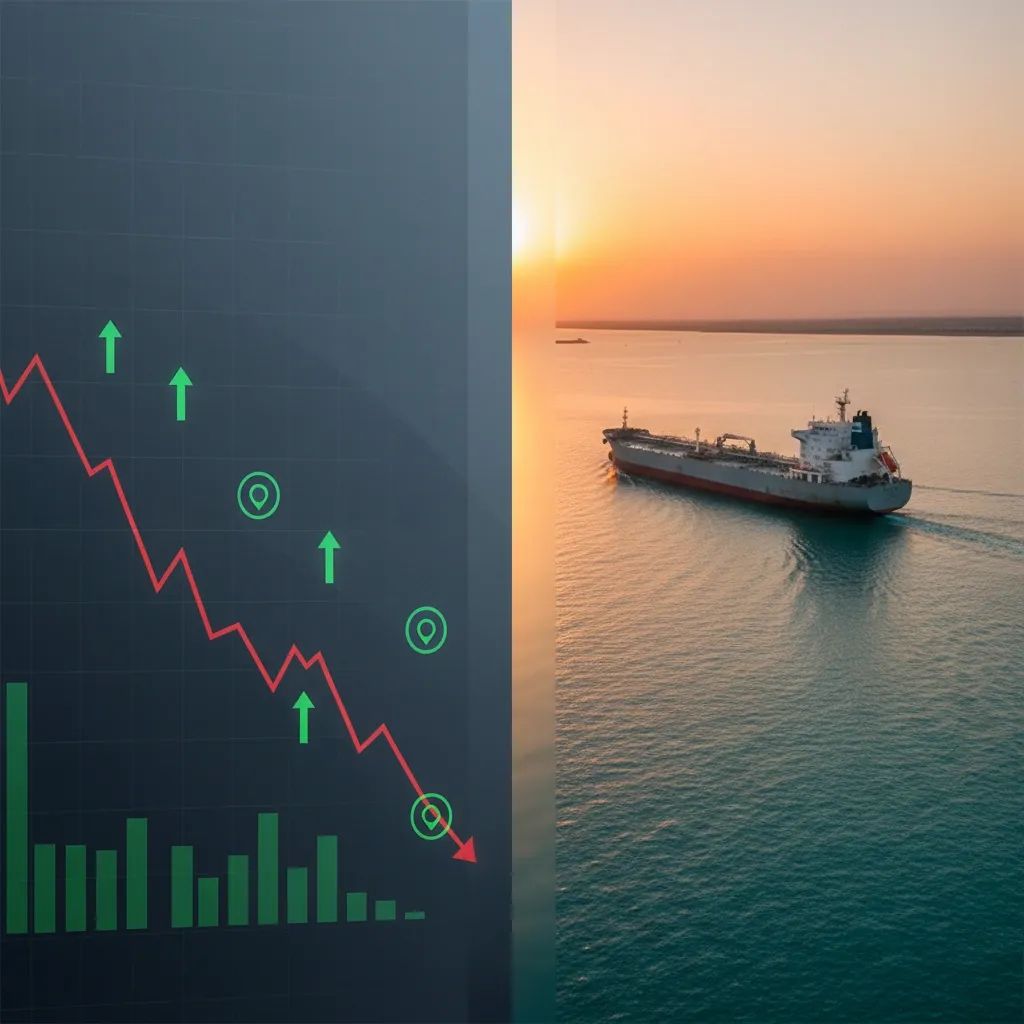
Italy's equity markets surged nearly 2% on Friday as diplomatic signals from Washington and Tehran sparked a global rally that sent oil prices tumbling and bond yields sharply lower across the eurozone. The Milan Stock Exchange (FTSE MIB) closed the trading session up 1.8%, riding a wave of optimism that swept through European bourses and carried into Wall Street's opening bell.
The advance reflects a broader repricing of geopolitical risk as investors anticipate a potential ceasefire agreement between the United States and Iran that could reopen the Strait of Hormuz, the critical maritime chokepoint through which roughly one-fifth of global oil supply flows.
Why This Matters
• Wholesale energy costs dropping: Brent crude fell more than 5% to $99.15 per barrel, with potential to lower fuel and heating expenses for Italian households and businesses in coming weeks.
• Bond yields retreating: Italy's 10-year BTP yield dropped 13 basis points to 3.82%, reducing borrowing costs for the government and signaling improved investor confidence.
• Currency shift: The euro weakened to $1.1578 per euro (or equivalently, the dollar strengthened to 0.8636 euros), which may benefit Italian exporters by making goods more competitive abroad.
European Markets Rally in Tandem
Milan and Madrid led the European advance, with Spain's IBEX 35 climbing 1.9% alongside Italy's strong performance. Frankfurt's DAX rose 1.75%, while Paris's CAC 40 added 1.55% and London's FTSE 100 gained 1.35%. The synchronized rally underscores how deeply European equity valuations had been depressed by uncertainty over Middle Eastern energy flows and the potential for broader regional conflict.
The mood remained stable through the European afternoon session, with no significant volatility even as U.S. indices opened higher.
Bond Markets Reflect Easing Risk Premium
Italian government bonds (BTPs) saw particularly strong demand, driving the yield on 10-year notes down 13 basis points in a single session. The move reflects both reduced geopolitical anxiety and growing confidence in Italy's fiscal trajectory. The spread between Italian BTPs and German Bunds—a closely watched gauge of Italy's sovereign risk premium—tightened to 87.4 basis points, near multi-month lows.
German 10-year Bund yields fell 7.8 basis points to 2.95%, while French OATs dropped 11.1 basis points to 3.64%. The uniform decline across eurozone debt markets suggests investors are rotating out of safe-haven positions and back into riskier assets, including equities and peripheral sovereign bonds.
For Italian taxpayers, lower yields translate directly into reduced interest expense on the national debt, which stood at approximately €2.8 trillion as of the latest Treasury data.
Oil and Gas Prices Plunge on Supply Optimism
Crude oil markets experienced the sharpest single-day decline in weeks. West Texas Intermediate (WTI) crude, the U.S. benchmark, fell 4.92% to $87.76 per barrel, while Brent crude, the international standard, dropped 5.11% to $99.15 per barrel. The retreat from recent highs reflects expectations that a resolution to the Strait of Hormuz standoff would restore normal shipping lanes and eliminate the war-risk premium that had inflated prices.
Natural gas futures also declined sharply, down 4.34% to €51.64 per megawatt-hour on European exchanges. The drop offers relief to Italian households and industrial users still sensitive to energy price swings following the volatility of the past two years. Italy remains heavily reliant on natural gas for electricity generation and heating, making price movements in this commodity particularly consequential for the domestic economy.
What This Means for Residents
Lower energy costs could begin filtering through to consumer bills within weeks if the diplomatic breakthrough holds. Italian energy suppliers typically adjust retail tariffs on a quarterly basis, meaning households could see reduced electricity and heating charges by early summer if wholesale prices remain subdued.
Export-oriented businesses, particularly in Italy's manufacturing heartland, stand to gain from the weaker euro, making Italian machinery, textiles, and food products more competitive in international markets.
Currency and Commodities Update
The euro weakened against the dollar, with the dollar trading at 0.8636 euros (or €1 = $1.1578) as risk appetite returned and investors moved capital back into equities. Against the British pound, the euro fell to 74.7 pence.
Gold, often a barometer of geopolitical anxiety, held steady at $4,558.48 per ounce, suggesting that while immediate crisis fears have eased, longer-term uncertainty remains embedded in market pricing.
Outlook and Uncertainties
While Friday's rally reflects genuine optimism, diplomatic agreements in the Middle East can be fragile. The Strait of Hormuz has been a flashpoint for decades, and any breakdown in negotiations could rapidly reverse recent gains. Italy's equity and bond markets remain exposed to external shocks, given the country's dependence on imported energy and its high public debt burden.
For now, the combination of lower wholesale energy costs, reduced borrowing expenses, and improving risk sentiment provides a favorable backdrop for Italian assets. If the U.S.-Iran dialogue produces a durable resolution, the current rally could extend further.


