
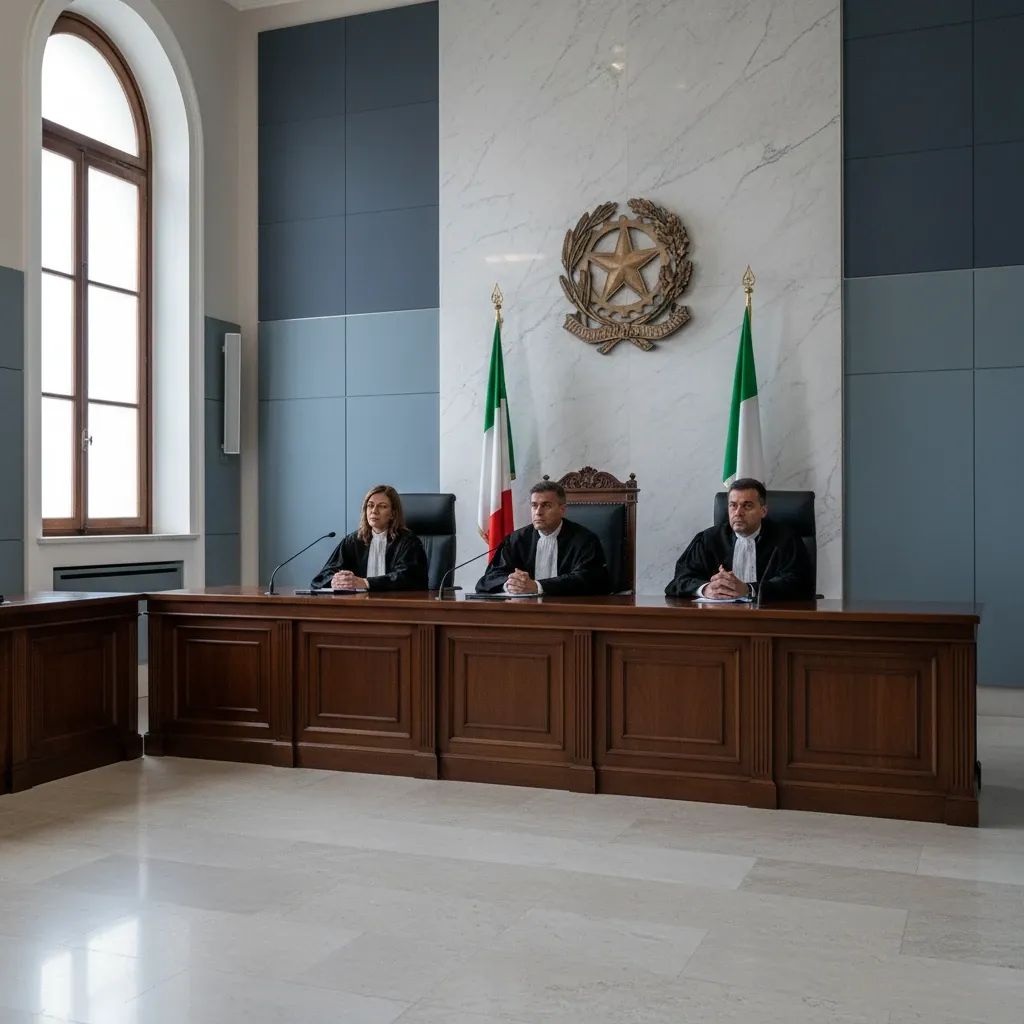
Italy's media regulator has ordered two national broadcasters to correct imbalances in their coverage of the upcoming justice reform referendum, as the campaign enters its final days before voters head to the polls on March 22-23, 2026. The intervention by the Communications Guarantee Authority (AGCOM) highlights mounting tensions over media fairness in a vote that could fundamentally reshape the Italian judiciary—and which recent polling suggests is now too close to call.
Why This Matters
• No quorum required: Unlike most Italian referendums, this constitutional vote needs only a simple majority of valid ballots to pass, making every vote count regardless of turnout.
• Broadcasting sanctions: Rete 4, part of the MFE-MediaForEurope group, and independent channel Nove must rebalance their coverage by March 20 or face fines up to €250,000.
• High-profile endorsement: Pier Silvio Berlusconi, CEO of MFE and son of the late media mogul, publicly announced he will vote "yes with absolute conviction," framing the reform as a matter of "civilization and modernity" rather than partisan politics.
• Last polls show razor-thin margin: Before the legally mandated electoral silence period, surveys indicated the "No" camp had edged ahead 53% to 47%, reversing an earlier lead for reform supporters.
What Voters Are Deciding
The Nordio Reform, named after Justice Minister Carlo Nordio, proposes four sweeping changes to Italy's constitutional architecture for the judiciary. First, it would permanently separate the career paths of prosecutors and judges, eliminating the current system that allows magistrates to switch roles during their careers. Second, it would split the Superior Council of the Magistracy (CSM) into two independent bodies—one governing judges, the other overseeing prosecutors. Third, it introduces a lottery-based selection system for some CSM members, intended to weaken the influence of internal factions. Finally, it establishes a new High Disciplinary Court of 15 members to handle misconduct cases against magistrates.
Proponents argue the reform will guarantee judicial impartiality by ensuring that judges who decide cases never previously served as prosecutors pursuing convictions. The government contends the current unified system creates cozy relationships between accusers and adjudicators, undermining defendants' rights to fair trials. Nordio has also claimed the changes will reduce the power of politicized factions within the judiciary, which he and Premier Giorgia Meloni say deliberately target center-right governments.
Critics counter that the separation is a solution in search of a problem. The National Association of Magistrates (ANM), Italy's judges' union, notes that role-switching was already rare in practice and insists the reform does nothing to address the country's notorious case backlogs and glacial trial pace. More ominously, opposition parties warn the changes could subordinate prosecutors to executive control, weakening the independence that has historically enabled investigations into political corruption and organized crime. The prospect of two separate councils and a government-influenced disciplinary body has raised alarms about concentrated power in Rome.
Media Watchdog Steps In
AGCOM's intervention followed formal complaints filed by "No" campaign committees over programming on Rete 4's flagship political talk show "Quarta Repubblica". The March 16 broadcast featured a 30-minute solo interview with Premier Meloni advocating for the reform, with no opposing voice for balance. The monitoring data from March 8-14 showed a systematic imbalance favoring the "Yes" position across multiple programs, prompting the regulator to issue a binding rebalancing order requiring corrective programming by the end of the campaign on March 20.
The order specifically instructs Rete 4 to "adequately balance the time attributed to the presence of the Prime Minister" across its schedule. The channel risks a maximum fine of €250,000 if it fails to comply. Separately, the independent broadcaster Nove received a similar order for underrepresenting the "No" position, while allegations against La7 were dismissed after review.
The controversy has particular resonance given the Berlusconi family's dual role as media owners and political actors. While Silvio Berlusconi dominated Italian politics and media for decades until his death in 2023, his children now control MFE-MediaForEurope, which operates Rete 4 and other major channels. Pier Silvio Berlusconi's public endorsement of the reform has intensified scrutiny of whether the group's news coverage reflects editorial independence or family political preference.
Berlusconi Heir Weighs In
Speaking to reporters at the MFE headquarters in Cologno Monzese, Pier Silvio Berlusconi emphasized his dual roles. "I speak as a publisher—we give voice to both sides—but I am also a citizen," he said, adding that he considers the vote "truly important because we're talking about a fundamental question for our country's future." He stressed that his support stems from "reasons of civilization and modernity" rather than political alignment, arguing that Italy must "keep pace with the times" to remain a "democratic, civil, and modern country."
Berlusconi lamented that the issue "has become a topic that seems political when it isn't and shouldn't be either right or left, but about modernity." His remarks came as AGCOM's monitoring revealed his own network had tilted coverage heavily toward the government's position, underscoring the tension between his corporate responsibilities and personal convictions.
Opposition Closes Campaign in Rome
Hours before key industry figures weighed in, the center-left coalition staged a closing rally in Rome's Piazza del Popolo, where leaders of the Democratic Party, Five Star Movement, and Green-Left Alliance shared a stage with trade union chiefs and civil society activists. A massive rainbow peace flag hung above the crowd as the opening notes of Vasco Rossi's protest anthem "C'è chi dice no" ("There Are Those Who Say No") echoed across the square.
Democratic Party secretary Elly Schlein warned that "every vote can make the difference" and urged Italians to "vote no to a reform that doesn't improve justice for citizens but weakens the independence of judges." She criticized the government for ignoring an implicit appeal from President Sergio Mattarella, who in February presided over an extraordinary plenary session of the CSM—a rare intervention—to call for lowered rhetoric and mutual respect between institutions during the campaign.
Schlein also condemned inflammatory language from government officials, citing a recent statement by a senior ministry aide who described the reform as removing a "firing squad" of hostile magistrates. "She hasn't apologized, she hasn't resigned, and she's still in her post," Schlein said.
Rome Mayor Roberto Gualtieri, flanked by other mayors in ceremonial sashes, declared that "we must defend with our nails and teeth the autonomy and independence of the judiciary from politics." He predicted that "many center-right voters" would break ranks to vote no.
Impact on Residents and Legal System
For anyone living in Italy, the outcome will have tangible long-term consequences. If the reform passes, the country's justice system will undergo its most significant structural change since the republican Constitution took effect in 1948. Prosecutors and judges will enter entirely separate professional tracks, fundamentally altering the culture and internal dynamics of a magistracy that has historically seen itself as a unified body.
In practical terms, defendants in criminal cases may experience different trial dynamics if judges have never served as prosecutors themselves—though whether this improves fairness or simply reshuffles procedural dynamics remains hotly debated. More immediately, the creation of dual councils and a new disciplinary court will require years of implementation, during which administrative uncertainty could slow an already overburdened system.
The broader political stakes are equally high. Italy has a long history of judicial investigations into corruption, mafia infiltration, and abuse of power, often targeting sitting officials. Critics of the reform fear that weakening prosecutorial independence could make future investigations more politically sensitive, potentially affecting accountability for white-collar crime, organized crime, and environmental violations that directly impact quality of life.
For expatriates and foreign investors, the vote signals how Italy balances checks on power in a system where coalition governments frequently clash with an independent judiciary. A "Yes" outcome would align Italy more closely with countries like France, where prosecutors fall under executive authority. A "No" result would preserve the post-war model of a self-governing magistracy insulated from political pressure.
What Happens Next
Polling stations open Sunday, March 22 at 7:00 and remain open until 23:00, then reopen Monday, March 23 at 7:00 and close at 15:00. Because this is a constitutional referendum without a quorum, the side with the most valid votes wins outright—a significant departure from the typical 50% turnout threshold required for abrogative referendums. Final polls before the blackout period showed the race tightening, with the "No" camp holding a narrow 6-point lead but turnout projections ranging from 42% to 55%, making the result genuinely unpredictable.
If approved, the reform will be promulgated within weeks and implementation will begin with parliamentary legislation defining the mechanics of the two new councils and the High Disciplinary Court. If rejected, the government has indicated it may pursue alternative legislative changes to the judiciary, though without constitutional amendments they would be more limited in scope.
Either way, the 2026 referendum has exposed deep fractures over judicial power in a country where magistrates have historically played an outsized role in policing the political class—and where politicians have long complained of being unfairly targeted. The vote on Sunday and Monday will determine which vision of justice prevails for the next generation.


