
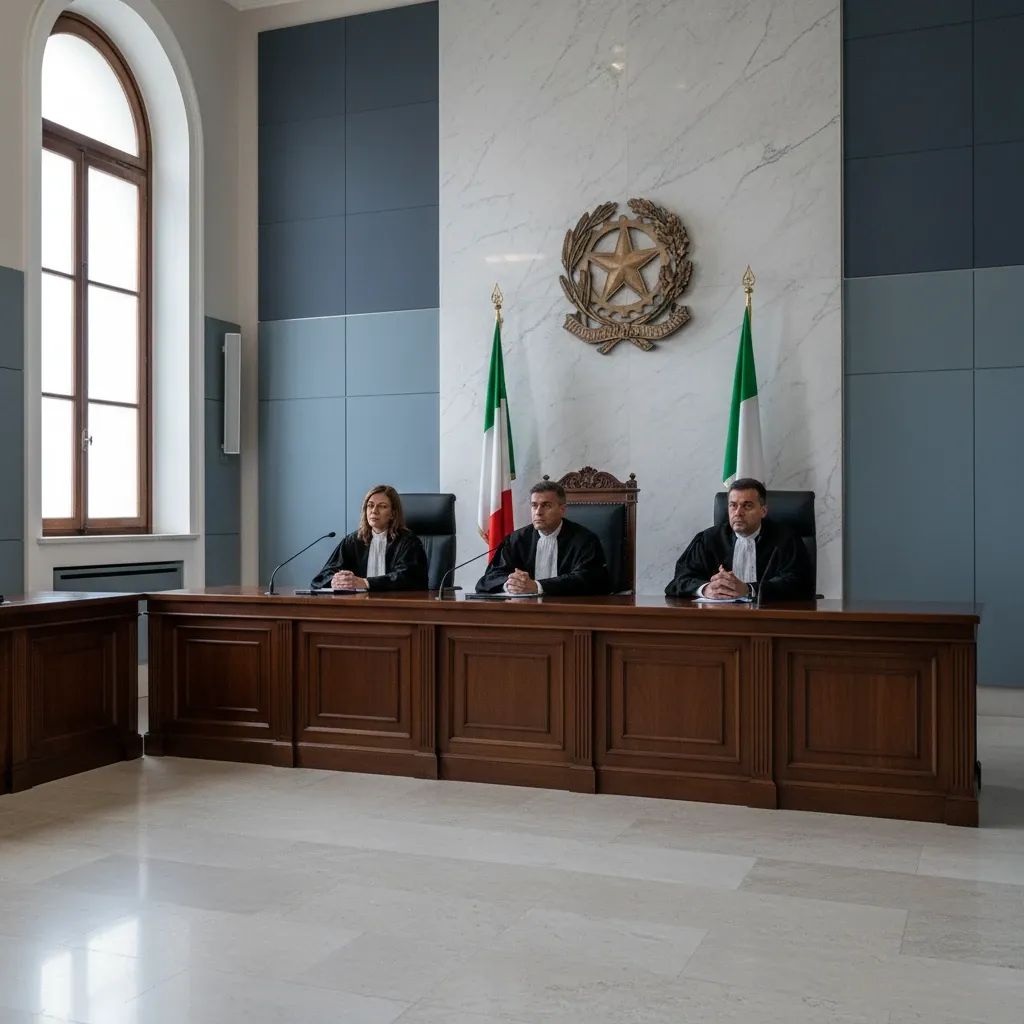
The Italy Ministry of Justice is backing a sweeping constitutional referendum on judicial reform that voters will decide this weekend, March 22–23, 2026, in a showdown that could redraw the country's balance of power between courts, prosecutors, and parliament. This is a confirmatory constitutional referendum, meaning it requires no minimum voter turnout—the outcome depends solely on which side receives more valid votes. The proposal has split legal scholars, politicians, and magistrates into bitter rival camps—those who see it as a long-overdue modernization and those who fear it will erode judicial independence.
Why This Matters
• Separate careers: Judges and prosecutors would be permanently divided into distinct professional tracks, with no transfers allowed between them.
• Dual governance bodies: Two new Superior Councils would replace the existing single body, one for judges and one for prosecutors.
• Lottery-based appointments: Members of both councils—magistrates and outside experts—would be chosen by drawing lots, not election, a move designed to break the grip of judicial factions.
• New disciplinary court: An independent High Court would take over disciplinary cases against magistrates, removing that function from the councils themselves.
What the Government Says
Carlo Nordio, Italy's Minister of Justice and architect of the reform, has framed the package as a matter of fairness and alignment with Western norms. Speaking on Sky TG24, Nordio said he expects turnout between 50% and 60%, a figure that would lend democratic legitimacy to the outcome. He argues that the existing system—in which judges and prosecutors belong to the same professional order and can switch roles—compromises the impartiality of trials. Under the current structure, a judge may have worked as a prosecutor in the recent past, or vice versa, creating an environment Nordio describes as insufficiently adversarial.
The minister has championed the drawing-of-lots mechanism as the key innovation. He believes it will sever the influence of internal "correnti"—ideological and professional factions that dominate judicial politics and determine career advancement through bloc voting. By substituting lottery for election, Nordio contends, the reform will depoliticize the councils and ensure that merit, not factional loyalty, governs appointments and promotions.
Nordio also highlights that several European democracies maintain strict separation between prosecutorial and judicial functions, and he views the referendum as bringing Italy into conformity with that standard. The reform, he insists, is not an attack on magistrates but a structural upgrade that will produce more guarantees for citizens facing trial.
What Critics Warn
Enrico Grosso, a professor of constitutional law at the University of Turin and honorary president of the "Giusto dire NO" campaign committee, has emerged as the most prominent opponent. Grosso argues that the reform does not address the genuine bottlenecks plaguing Italian justice—chronic case backlogs, understaffing, and procedural delays—and instead targets the internal organization of the magistracy in ways that could compromise its autonomy.
Central to his critique is the claim that separating careers will make prosecutors more susceptible to political conditioning. Because public prosecutors initiate criminal cases, including those against elected officials and public figures, Grosso warns that isolating them into a standalone body under its own council creates a structural opening for executive influence. He points out that the reform does not enhance prosecutors' independence from government; it merely reorganizes them into a separate track that, in his view, could become easier for the political majority to influence over time.
Grosso also contests the argument that the current system blurs the line between accuser and judge. He notes that Italian law already imposes strict functional separation—prosecutors do not adjudicate cases, and judges do not investigate or charge suspects. The ability to switch roles, he says, is heavily restricted in practice and serves as a safety valve for career mobility, not a threat to impartiality.
The lottery mechanism is another flashpoint. Critics, including Grosso, argue it violates European standards requiring that at least half the members of judicial councils be elected by their peers. The lottery, they say, strips magistrates of the right to choose representatives who reflect their professional concerns, replacing democratic accountability with randomness that may still favor entrenched power blocs but without transparency.
What This Means for Residents
For anyone living in Italy, the practical implications of the referendum extend beyond courtroom procedure into the broader architecture of the rule of law. If the "Yes" vote prevails, the country will see:
• Permanent career tracks: Law graduates entering the magistracy will choose at the outset whether to become judges or prosecutors, with no option to switch later.
• Two parallel governance structures: Judges and prosecutors will operate under separate councils, each with its own appointment process, disciplinary rules, and internal culture.
• Reduced influence of judicial factions: The lottery system aims to dilute the power of organized currents within the magistracy, though critics question whether randomness will truly achieve that goal.
• A new disciplinary body: The High Disciplinary Court will handle misconduct cases, theoretically insulating disciplinary decisions from the councils that manage promotions and assignments. However, opponents note that the reform excludes appeals to the Cassation Court, Italy's highest court of appeal, raising concerns about due process under Article 111 of the Constitution.
If the "No" vote wins, the status quo remains intact: a unified magistracy governed by a single Superior Council, with judges and prosecutors belonging to the same professional order and subject to the same rules.
The Broader Political Context
The referendum arrives at a moment when Italy's justice system faces mounting pressure to deliver faster verdicts and reduce the backlog of pending cases, which numbers in the millions. Yet the reform does not directly address those operational challenges. It does not hire more court staff, streamline procedure, or allocate additional resources. Instead, it reconfigures the governance of the magistracy itself, a move that reflects deeper ideological divisions about the role of judges and prosecutors in a democratic society.
The government's majority in parliament approved the constitutional law without significant opposition amendments, prompting critics to invoke the concept of "majoritarian democracy"—the risk that a ruling coalition, however transient, can reshape fundamental institutions to suit its preferences. Labor unions, including the CGIL, have officially endorsed the "No" campaign, framing the referendum as a defense of constitutional autonomy against political overreach.
Former magistrate Piercamillo Davigo, a prominent anti-corruption judge who served on Italy's Supreme Court, has added his voice to the opposition, calling the reform "contrary to the Council of the European Union" and arguing that career separation has already been achieved in practice through procedural changes enacted under the Cartabia law—a 2021-2022 procedural reform package named after former Justice Minister Marta Cartabia. Davigo disputes the notion that judges are biased toward prosecutors simply because they share professional origins, citing statistics showing that judges routinely issue verdicts at odds with prosecutorial requests.
What Happens Next
Polling stations open Saturday, March 22, and remain open through Sunday, March 23. Because this is a confirmatory constitutional referendum, the result depends solely on which side receives more valid votes—no minimum participation threshold applies. If turnout reaches the 50–60% range that Nordio anticipates, the winning side will claim a strong mandate. Lower turnout may temper that claim but will not affect the legal outcome.
The Italy Electoral Commission will announce preliminary results by Sunday evening, with final certification following within days. If the reform passes, implementing legislation will be required to establish the two new councils, define the lottery mechanism in detail, and create the High Disciplinary Court. That process could take several months, during which the existing Superior Council will continue to operate under current rules.
If the reform fails, political attention will likely shift to alternative proposals for accelerating trials and reducing case backlogs—issues that both sides agree are urgent but that this referendum does not directly address. The debate over judicial independence, prosecutorial autonomy, and the role of factional politics within the magistracy will continue, but the constitutional framework will remain unchanged.


