
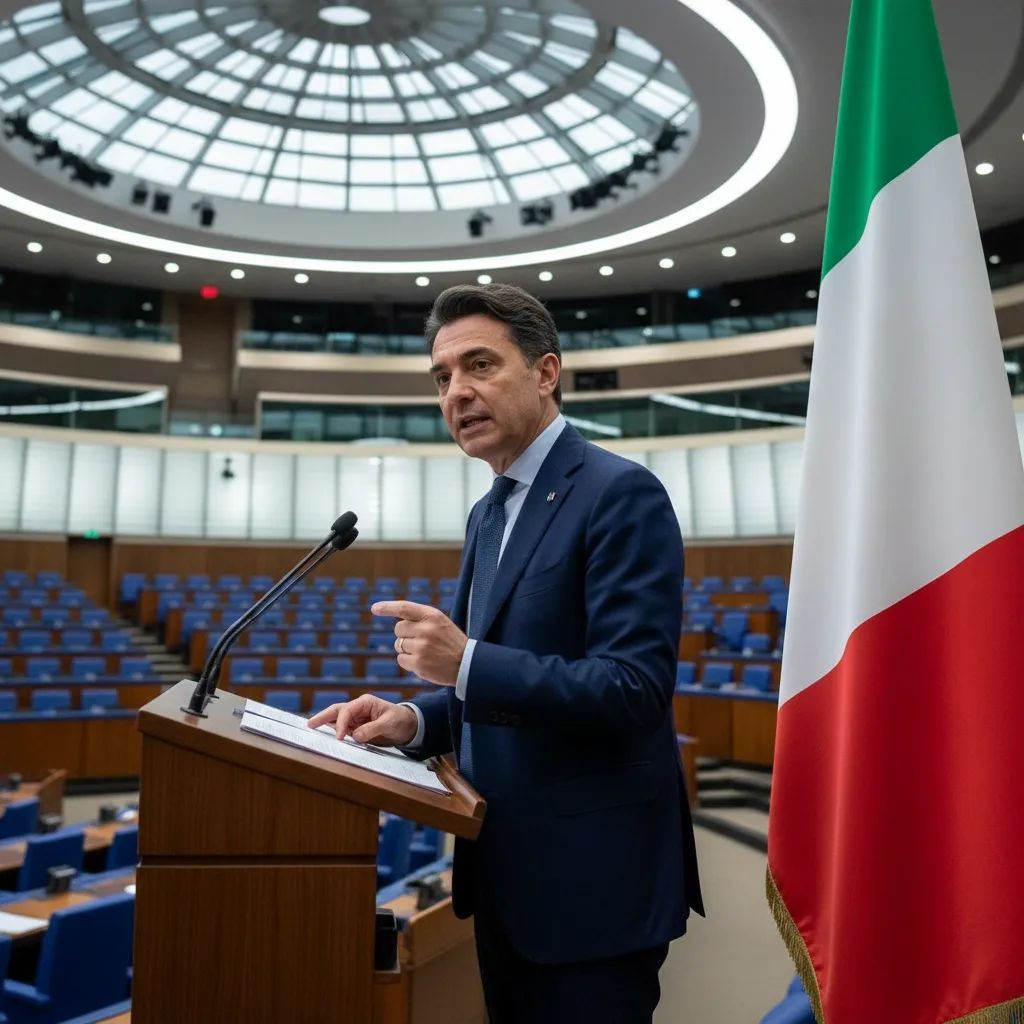
Italy's Prime Minister Giorgia Meloni recently invoked the memory of the late journalist Oriana Fallaci on what would have been her birthday in June 2025, positioning the controversial writer's legacy at the center of ongoing debates about Western identity, immigration, and cultural resilience. The tribute comes as Italy begins planning for the 20th anniversary of Fallaci's death in September 2026, with the Italy Ministry of Culture announcing exhibitions, debates, and public discussions about her divisive but influential body of work.
Why This Matters:
• Political symbolism: Right-wing leaders in Italy increasingly cite Fallaci's defense of Western values as a framework for current debates on immigration and national identity.
• Cultural divide: The commemoration exposes deep ideological rifts, with critics viewing Fallaci's post-9/11 writings as inflammatory, while supporters see prophetic warnings.
• Policy implications: The revival of Fallaci's ideas feeds into ongoing legislative discussions about integration, citizenship, and religious freedom in Italy.
The Political Resurrection of a Contested Voice
Meloni's recent tribute emphasized unity, fidelity to Western principles, and democratic resilience as core themes threading through Fallaci's journalism. In a statement posted on social media, the Italian leader framed the current era as one "marked by wars, instability, and profound transformations," arguing that the West must remain united and true to its founding values of liberty, human dignity, and the rule of law.
This messaging aligns with Meloni's broader political project: anchoring Italy's identity within a civilizational narrative that positions liberal democracy as both inheritance and obligation. The Prime Minister described the West not merely as a geographic space or security alliance but as "a civilization built over centuries around freedom."
Matteo Salvini, leader of the Italy League party, echoed these sentiments, quoting Fallaci's more provocative passages: "What sense does it make to respect those who do not respect us? What sense does it make to defend their culture when they despise ours?" His framing of Fallaci as "free, courageous, countercurrent" underscores how her rhetoric is being redeployed within contemporary immigration debates.
Who Was Oriana Fallaci—And Why Does She Still Matter?
Fallaci, who died in Florence on September 15, 2006, was one of Italy's most celebrated and controversial journalists. A teenage partisan during World War II's Italian Resistance, she forged a career built on confrontational interviews with global leaders—from Ayatollah Khomeini to Henry Kissinger. Her early work championed anti-fascist struggle and political dissent, themes explored in works such as A Man, which addressed political resistance during Greece's military dictatorship.
But it was her trilogy published after September 11, 2001—The Rage and the Pride, The Force of Reason, and The Pride and the Arrogance—that cemented her polarizing legacy. In those texts, Fallaci articulated what she saw as an existential threat to Europe: demographic shifts driven by Muslim immigration, which she described as a form of "colonization." She warned of "Eurabia", a term signaling her belief that Europe was surrendering its identity through political cowardice and cultural capitulation.
Her defenders view these writings as prescient alarms about religious extremism and integration failures. Her critics accuse her of Islamophobia, xenophobia, and dangerously broad generalizations that conflated peaceful Muslim communities with radical ideologies.
What This Means for Residents
For people living in Italy today, the resurgence of Fallaci's rhetoric is not merely historical nostalgia—it reflects and shapes current policymaking on immigration, citizenship, and cultural integration. The Meloni government, elected in 2022 on a platform emphasizing national sovereignty and cultural preservation, has implemented stricter immigration controls, revised asylum procedures, and emphasized assimilation over multiculturalism.
Fallaci's framing offers ideological cover for these policies. When government officials invoke her name, they tap into a narrative that casts restrictive immigration measures not as xenophobia but as defense of liberty, women's rights, and secularism—values Fallaci championed as fragile and under siege.
This also affects public discourse. Local controversies over naming streets or public spaces after Fallaci illustrate the ongoing cultural fracture between those who see her as a guardian of Western values and those who view her as a divisive figure whose work fueled intolerance. Left-leaning parties and civil society groups have consistently opposed such commemorations, arguing they legitimize exclusionary rhetoric.
The Ministry's Commemoration Strategy
Undersecretary for Culture Lucia Borgonzoni announced that the 2026 commemorations will feature a major exhibition drawing from the Oriana Fallaci Fund in Florence, which houses her archives, personal correspondence, photographs, and manuscripts. The digitization project underway at the Fund aims to make her work accessible to researchers and the public, offering insight into her journalistic methods and uncompromising style.
Borgonzoni described remembering Fallaci as "a duty," praising her ability to "transform journalism into literature and personal testimony into collective memory." This official recognition signals that Italy's current government views Fallaci's legacy as a resource for contemporary political education, particularly around themes of freedom of speech and ideological conviction.
Yet the commemoration is not without friction. Critics argue that elevating Fallaci's post-9/11 polemics risks normalizing generalizations about Muslim communities and undermining efforts toward social cohesion in increasingly diverse Italian cities. Civil liberties advocates warn that the appropriation of her rhetoric by political leaders can embolden exclusionary attitudes and complicate integration efforts.
The Broader European Context
Fallaci's ideas resonate beyond Italy's borders, influencing right-wing movements across Europe grappling with immigration, national identity, and the perceived erosion of liberal values by both Islamist extremism and progressive multiculturalism. Her concept of "Eurabia" has been adopted by populist politicians from France to the Netherlands, where debates over secularism, religious symbols, and demographic change mirror those Fallaci articulated two decades ago.
This transnational appeal reflects a broader ideological struggle within Europe: how to reconcile secular liberal democracy with cultural pluralism, and where to draw the line between integration and assimilation. Fallaci's writings, stripped of nuance but rich in emotional force, offer a ready-made lexicon for those who favor restrictive approaches.
For expats and foreign residents in Italy, understanding this debate is essential. Immigration policy, labor market access, citizenship pathways, and even day-to-day social dynamics are influenced by these underlying ideological currents. The planned 2026 commemorations and the current political rhetoric shaping them are not abstract cultural events—they signal the government's alignment with a particular vision of Italian and European identity.
The Moral Limits of Political Discourse
Meloni's tribute to Fallaci coincided with her condemnation of what she called "ignoble and inhumane comments" directed at Family Minister Eugenia Roccella, who was reportedly targeted with personal attacks during a family crisis. Meloni described the incident as crossing a line from political disagreement into "moral misery," blaming a "poisoned climate" cultivated by political adversaries.
This dual messaging—honoring Fallaci's confrontational style while decrying attacks on her own allies—illustrates a tension in contemporary Italian politics. Fallaci's work thrived on provocation and absolute judgments. Yet Meloni's call for civility suggests limits to acceptable discourse, at least when directed at government figures.
The juxtaposition raises questions about consistency and power dynamics: Is sharp, uncompromising rhetoric a virtue when applied to cultural outsiders but an outrage when aimed at political insiders? This paradox shapes the ongoing struggle over what kind of speech is defended as brave truth-telling versus condemned as dangerous incitement.
A Legacy Still Under Construction
Two decades after her death, Oriana Fallaci remains a contested symbol. She cannot be reduced to a single label: her biography includes anti-fascist resistance, feminist themes, sharp critiques of authoritarian regimes, and ultimately, a hardened stance against Islam that defined her final years. Italy's political right selectively amplifies the latter, while critics emphasize the risks of generalizing her fears into policy.
The 2026 commemorations will likely intensify this debate, offering both scholarly reassessment and political appropriation. For residents navigating Italy's evolving social landscape, Fallaci's ghost is more than literary history—it's a lens through which power and identity are being negotiated in real time.


