
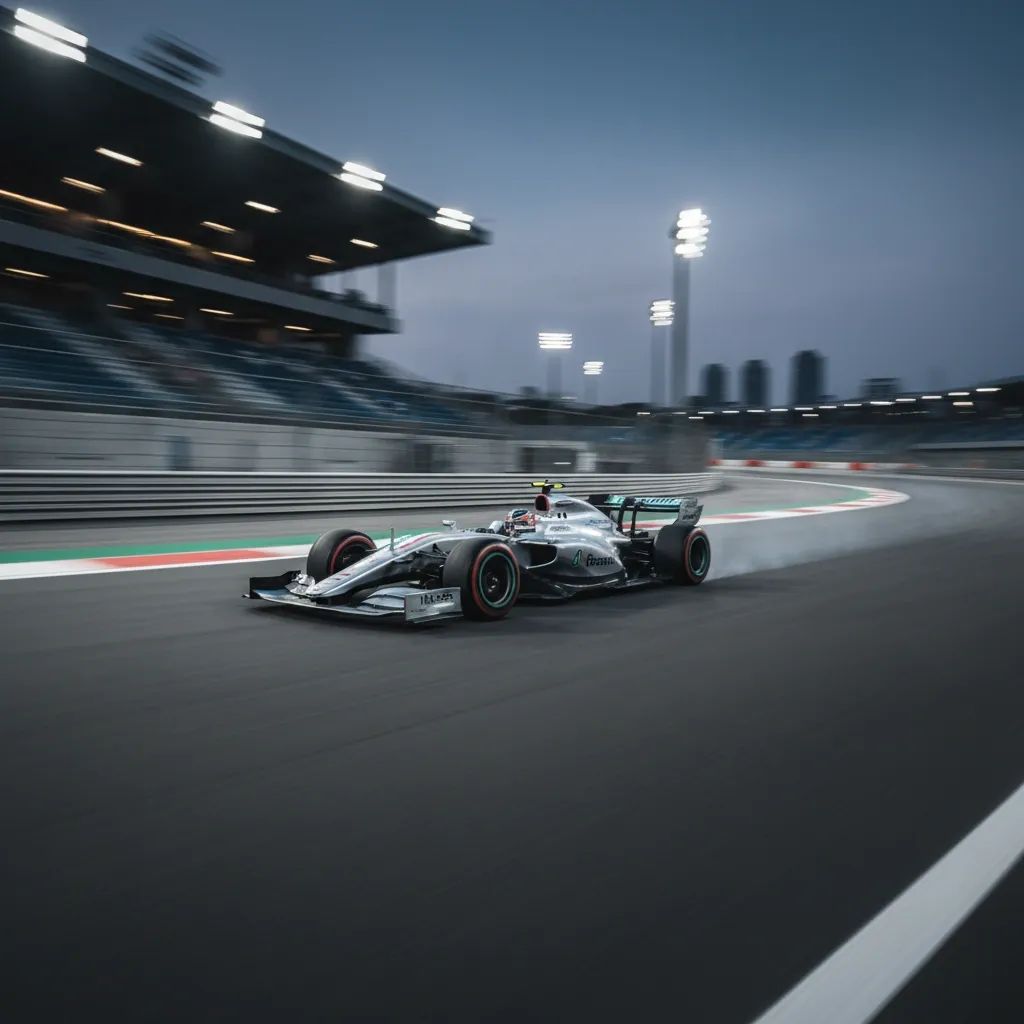
The Twenty-Year Wait Ends in Shanghai
The Italy motor-racing establishment has exhaled. For two decades—a span long enough to raise a generation without witnessing their national colors ascend Formula 1's podium summit—Italian motorsport inhabited a peculiar limbo between past glory and uncertain future. That drought crystallized into memory on a humid Sunday in Shanghai when a 19-year-old driver in Mercedes silver completed the race faster than everyone else, restoring what felt less like a victory and more like historical restoration. Andrea Kimi Antonelli arrived at the Chinese Grand Prix as a bright prospect; he left as the thread connecting modern Italy to an era when the nation's drivers shaped the sport's narrative.
Why This Matters
• Two decades of absence reversed: Italy's F1 victory drought ended nearly 20 years after Giancarlo Fisichella's Malaysia triumph in March 2006—the same year Antonelli was born.
• Youth record shattered: Antonelli's pole position made him Formula 1's youngest-ever qualifier, and his race victory ranks him second-youngest Grand Prix winner in sport history, behind only Max Verstappen's 2016 breakthrough.
• Mercedes delivers dominance: A one-two finish in China with George Russell second demonstrates the German manufacturer's competitive strength, fueling expectations of championship contention through the season.
• Cross-sport recognition: Jannik Sinner's dedication of his Indian Wells tennis title to Antonelli days earlier crystallized a moment when Italy's emerging talent across disciplines suddenly converges on global visibility.
The Racing Victory: Shanghai's Historic Achievement
Antonelli's breakthrough at the Chinese Grand Prix represented a masterclass in composed driving across race distance. The Mercedes package proved sufficiently competitive to overcome the circuit's demanding technical profile. Antonelli's qualifying performance—which established him as Formula 1's youngest pole-sitter—set the foundation for a controlled race execution that never wavered despite the pressures surrounding such a historic moment for Italian motorsport.
The race unfolded with Antonelli maintaining command throughout, managing tire strategy and competitive threats with the composure typically requiring years to develop. George Russell executed a strong supporting role, securing second place and delivering the one-two finish that underscored Mercedes' competitive positioning heading forward into the season.
Antonelli's victory didn't emerge from fortune or single moments of brilliance. It accumulated across weekend execution—qualifying perfection, race discipline, and the technical precision that separates emerging talent from fully realized drivers. For observers tracking his progression since entering Formula 1 in March 2025, the Shanghai victory validated early promise while establishing new expectations for consistency.
Bologna Homecoming: From Victory to Narrative
Monday morning materialized gray at Bologna's Marconi Airport. When Antonelli descended aircraft stairs, Italian media, family, and logistics personnel converged to witness what had begun as sporting achievement transform into cultural moment.
The young driver carried the weight of accumulated attention without visible fracture. "I'm truly happy to have brought the tricolore back to the podium's highest step," he told assembled journalists, his phrasing carrying the diplomatic polish of someone processing extraordinary emotional residue. "This is a starting point. I hope to continue this way. We're on the right track, but it won't be easy."
Then came the reveal that humanized the moment: "The first thing I'll do is eat tagliatelle." Not sponsorship mentions. Not tactical analysis. Pasta. The specificity—that particular Bologna staple—transformed the story from motorsport column into something more intimate: a teenager returning home, electrified, and hungering for the tastes that mark belonging.
Antonelli also addressed recognition from Jannik Sinner, Italy's world-ranked tennis player, who had publicly dedicated his Indian Wells championship to the racing driver days prior. "I was surprised by his dedication. It was very kind. I thanked him personally," Antonelli explained. The intersection carried unspoken significance: two Italian athletes, both executing at global elite levels, both collapsing distance between Italy and wherever excellence is measured. For residents and diaspora communities, the narrative transcended motorsport minutiae; it affirmed something durable—that Italy's capacity to produce excellence in high-pressure domains remained operational.
The Trajectory That Preceded Shanghai
Antonelli's path into Formula 1 reflects accelerated driver development through established motorsport pathways. Recruited into Mercedes' junior program in 2019 at age 12, he proceeded through karting hierarchies and junior formulae. Italian F4 and ADAC F4 championships in 2022 established credentials. Formula Regional titles in 2023 signaled he'd exhausted that category's competitive ceiling. By 2024, competing in Formula 2 for PREMA Racing, he accumulated race victories, positioning himself among the series' emerging elite prospects.
F1 debut arrived in March 2025 at Melbourne. His early season performances demonstrated compatibility with elite machinery, suggesting he possessed the fundamental attributes required for sustained Formula 1 competition. When 2025 concluded, Antonelli had accumulated meaningful points—the highest rookie tally under current systems—establishing himself as a driver to monitor through the evolving 2026 season.
Yet accelerated pathways breed unique pressures. Toto Wolff, Mercedes team principal, has publicly acknowledged the "immense psychological burden" surrounding Antonelli. The Shanghai victory provides foundation, but seasons remain unpredictable, and historical pattern suggests competitive balance continuously reasserts itself as campaigns progress.
Youngest Winners and Historical Context
Max Verstappen's maiden F1 victory in Spain 2016, when the Dutch driver was 18 years and 228 days old, established the youngest-winner benchmark. Antonelli's Shanghai triumph, achieved at 19 years and 75 days, ranks second on that historical ledger.
The comparison between the two drivers is inevitable yet instructionally incomplete. Both demonstrated exceptional composure in junior competition. Both arrived in F1 with accelerated developmental pathways. The question isn't whether Antonelli will match Verstappen's accumulated records—speculation premature by years—but whether he can leverage this victory foundation to construct consistency across a demanding season.
Reverberations for Italian Residents and Diaspora
For Italy's expatriate communities, the implications operate meaningfully. In an era where Italy's sporting narrative has fragmented—football's competitive struggles, volleyball's excellence competing for attention, tennis suddenly anchored by Sinner—a returning Formula 1 victor refocuses international perception. Italy's capacity to execute at elite global levels, in domains demanding precision and composure, requires periodic reinforcement. Antonelli provides it.
Domestically, Antonelli's achievement carries emotional resonance extending beyond motorsport measurement. The tricolore ascending again, familiar yet long-absent, reminds audiences that Italy's motorsport tradition—dormant but never defunct—remains woven into Formula 1's structural fabric.
Immediate Horizon
Antonelli's focus now orients toward sustaining the momentum established in Shanghai. As the 2026 season continues, Mercedes will attempt to build championship momentum while other teams calibrate competitive responses. For Italian motorsport enthusiasts, the possibility now exists that Antonelli could achieve what no Italian driver has accomplished in decades—championship-level consistency at Formula 1's elite level.
For now, the visual suffices: the tricolore ascending once more, a symbol that Italy's presence in motor racing remains vital and capable of producing moments of genuine historical significance.


