
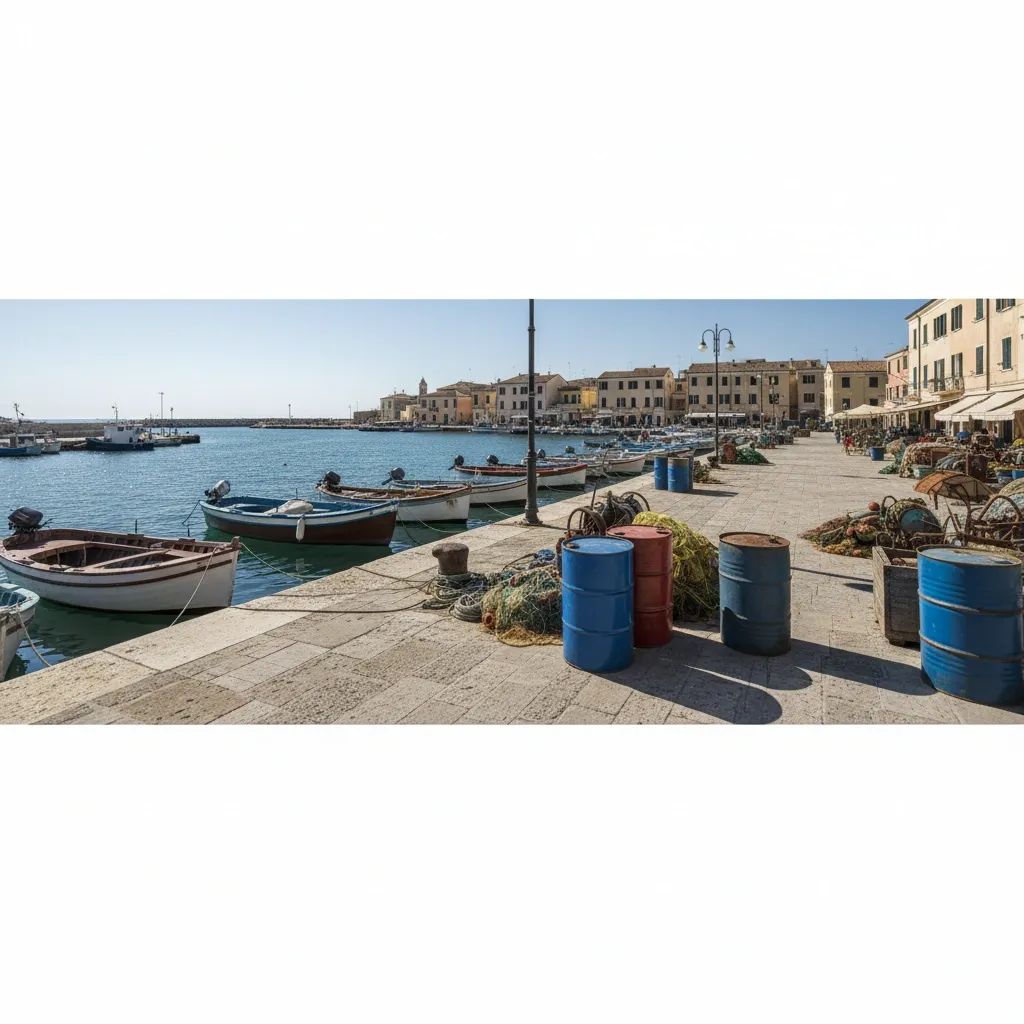
The Italian fishing sector is confronting an existential threat as diesel prices at commercial ports surge by an average of 33% in just 48 hours, with some harbors recording increases approaching 42%, a development that threatens to paralyze the nation's fishing fleet and disrupt the entire maritime supply chain.
Why This Matters
• Fishing operations at risk: Diesel now accounts for 40–60% of operational costs, making most voyages economically unviable.
• Ports hit hardest: Caorle (+41.9%), Livorno (+37.5%), and Lampedusa (€1.33/liter) lead the spike.
• Speculation suspected: Industry groups and consumer advocates warn that rapid price hikes may not reflect actual supply costs.
• Broader impact: Highway diesel crosses €2/liter threshold, signaling nationwide fuel crisis.
Port-by-Port Breakdown: Where Costs Are Crushing Operations
The diesel surge is not uniform across Italy's maritime network. Northern Adriatic and Tuscan ports are bearing the brunt, according to Confcooperative Fedagripesca analysis shared with national media.
Caorle, a fishing hub in the Veneto region, tops the list at €1.05/liter, representing a 41.9% jump from baseline prices of €0.72 recorded weeks earlier. Livorno follows closely at €1.10/liter (+37.5%), while Anzio in Lazio registers €0.95 (+28.4%). In Friuli Venezia Giulia, Marano Lagunare hovers near €1.00, and across the Emilia-Romagna coastline, prices range between €0.78 and €0.82—still well above sustainable thresholds for small-scale operations.
Sicily faces particularly acute strain. Porticello reaches €1.10, while Lampedusa, Italy's southernmost fishing outpost, records the nation's highest diesel price at €1.33/liter. Other Sicilian ports—Trapani, Milazzo, and Mazara del Vallo—fluctuate between €0.82 and €0.93. In Sardinia, Calasetta reports €1.15, and Liguria's Santa Margherita Ligure sits at €0.92. Molise's Termoli port registers €0.80.
The geographic spread underscores a nationwide fuel crisis rather than localized supply disruptions, amplifying concerns that speculative forces are at play.
What This Means for Italy's Fishing Industry
For Italy's 12,000 fishing enterprises and their 28,000 workers, the diesel spike represents more than an operational headache—it's a question of survival. Diesel costs typically consume 40% of a fishing vessel's operating budget, but in cases of older or less efficient boats, that figure can exceed 60%, and under current conditions, approach 70% of total revenue.
Confcooperative Fedagripesca and Coldiretti Pesca warn that many boats will remain docked rather than operate at a loss. When a single voyage's fuel bill surpasses the market value of the catch, the arithmetic is simple: staying in port becomes the rational choice. This creates a cascading effect—fewer boats at sea mean reduced fish landings, tighter supply chains, higher consumer prices, and increased reliance on imported seafood.
The sector was already fragile before this shock. European Union regulations mandate extended closure periods stretching until late November, limiting operational windows. Climate change is altering Mediterranean fish stocks through tropicalization, making traditional fishing grounds less productive. Add to this rising labor costs, aging fleets, and the lack of accurate scientific data on fish populations, and the current fuel crisis becomes the proverbial final straw.
Suspicions of Speculation and Calls for Government Action
Consumer advocacy groups and fishing associations alike are raising red flags about the speed and scale of price increases. Massimiliano Dona, president of the Unione Nazionale Consumatori (UNC), points out that diesel sold at pumps today was purchased by distributors before the recent geopolitical spike in crude oil prices, suggesting that current retail prices don't reflect actual acquisition costs.
Federconsumatori calculates that, based on Brent crude benchmarks and the euro-dollar exchange rate, diesel should cost nearly €0.10/liter less than current market prices. The Italy Ministry of Business and Made in Italy has convened the Rapid Alert Commission to investigate potential price manipulation, and preliminary findings have been forwarded to the Guardia di Finanza for further scrutiny. Major oil companies have been summoned for clarifications.
The geopolitical backdrop is undeniable. Escalating conflict in the Middle East, particularly around the Strait of Hormuz—a chokepoint for approximately 20% of global crude oil shipments—has driven Brent crude above $90/barrel as of March 6, a 27% increase since late February. The West Texas Intermediate (WTI) benchmark crossed $89/barrel, its highest level since August 2022. However, the rapidity with which retail prices have adjusted, combined with the historical lag when crude prices fall, fuels suspicion of opportunistic pricing.
Highway Diesel Breaks €2 Barrier
The fishing sector is not isolated in its struggle. On Italy's highway network, self-service diesel surpassed €2/liter for the first time this year, climbing from €1.98 to €2.01 in a single day, according to Ministry of Business data. A 50-liter fill-up now costs drivers an additional €1.30 compared to the previous day.
Gasoline prices, while still lower than diesel, are approaching €1.80/liter in regions including Calabria, Basilicata, Sicily, Trento, Valle d'Aosta, and Bolzano—the latter consistently ranking as the nation's most expensive fuel market. The regional disparity is stark: Bolzano leads for both diesel and gasoline, followed by Trento and Sicily for diesel, and Calabria and Basilicata for gasoline.
The UNC is demanding an immediate 10-cent reduction in fuel excise taxes, calling the measure "reasonable and easily financeable" and arguing it would restore prices to levels seen 12 months ago. "Given the speed at which fuel prices are adjusting to ongoing speculation, action must be taken this week, before these increases trigger a chain reaction on inflation," Dona stated.
Structural Headwinds: Tax Reform and Long-Term Pressures
Compounding the geopolitical shock is a structural tax shift implemented January 1, 2026. The Italy Cabinet's Budget Law raised diesel excise duties by 4.05 cents/liter (4.94 cents including VAT) while reducing gasoline taxes by the same amount, narrowing the historical price gap between the two fuels. The measure aimed to eliminate what policymakers termed an "environmentally harmful subsidy," but it has left diesel users—particularly commercial operators—more exposed to market volatility.
The fishing industry benefits from reduced excise rates on "agricultural diesel," a category that historically includes fuel for commercial fishing vessels. However, bureaucratic delays in municipalities issuing these permits have left some operators unable to access discounted fuel, forcing them to pay retail rates. Even with subsidies, the current price environment renders many voyages unprofitable.
The 2026 Budget Law also includes a 40% tax credit for fishing enterprises investing in Industry 4.0 technologies—digital tools, automation, and modern equipment—up to a maximum investment of €1M between January 1, 2026, and September 28, 2028. While this incentive aims to modernize the fleet and improve efficiency, it offers little immediate relief to operators facing daily cash flow crises.
What Happens Next: Industry Appeals and Government Response
Fishing associations, including AIC Pesca, Federpesca, Unci AgroAlimentare, and the Associazione Nazionale Città del Mare, have issued joint appeals for urgent intervention. Their demands include:
• Enhanced tax credit mechanisms to offset fuel costs.
• Real-time monitoring of fuel pricing to detect and deter speculation.
• Emergency financial support for enterprises facing insolvency.
• Investigation and prosecution of distributors engaging in price manipulation.
Past government responses have included temporary relief measures. In 2023, Italy approved a €2B state aid framework (SA.110474) for energy-intensive sectors, including fishing and aquaculture, with a cap of €335,000 per enterprise. However, that program concluded in June 2024, and no successor mechanism has been activated.
The Rapid Alert Commission's ongoing investigation, coupled with enforcement action by the Guardia di Finanza, may yield results in the coming weeks. Yet for many fishing families, the window for intervention is closing rapidly. Each day of inactivity translates to lost income, spoiled equipment, and an eroding competitive position against imported seafood.
Impact on Residents and Consumers
For Italy's residents, the fishing crisis is not an abstract concern. Reduced domestic fish landings will tighten supply, driving up prices at markets and restaurants. Increased reliance on imports undermines food sovereignty and quality standards, as foreign catches may not meet the same environmental or traceability requirements as Italian-sourced fish.
The broader fuel crisis also affects transportation and logistics. Diesel represents 25–35% of operating costs for Italy's trucking sector, and sustained high prices will inevitably filter into the cost of groceries, construction materials, and consumer goods. The highway diesel breach of the €2 threshold serves as a bellwether for inflation risks across the economy.
For expatriates and foreign residents, understanding this crisis is essential to navigating daily life in Italy. Fuel-dependent industries—fishing, agriculture, transport—form the backbone of regional economies, particularly in coastal and rural areas. Disruptions here ripple outward, affecting employment, local commerce, and the availability of affordable, locally produced food.
The coming weeks will test whether Italy's government can balance fiscal discipline with the need for emergency intervention. The fishing sector, already battered by regulatory pressures and climate shifts, is running out of time.


