
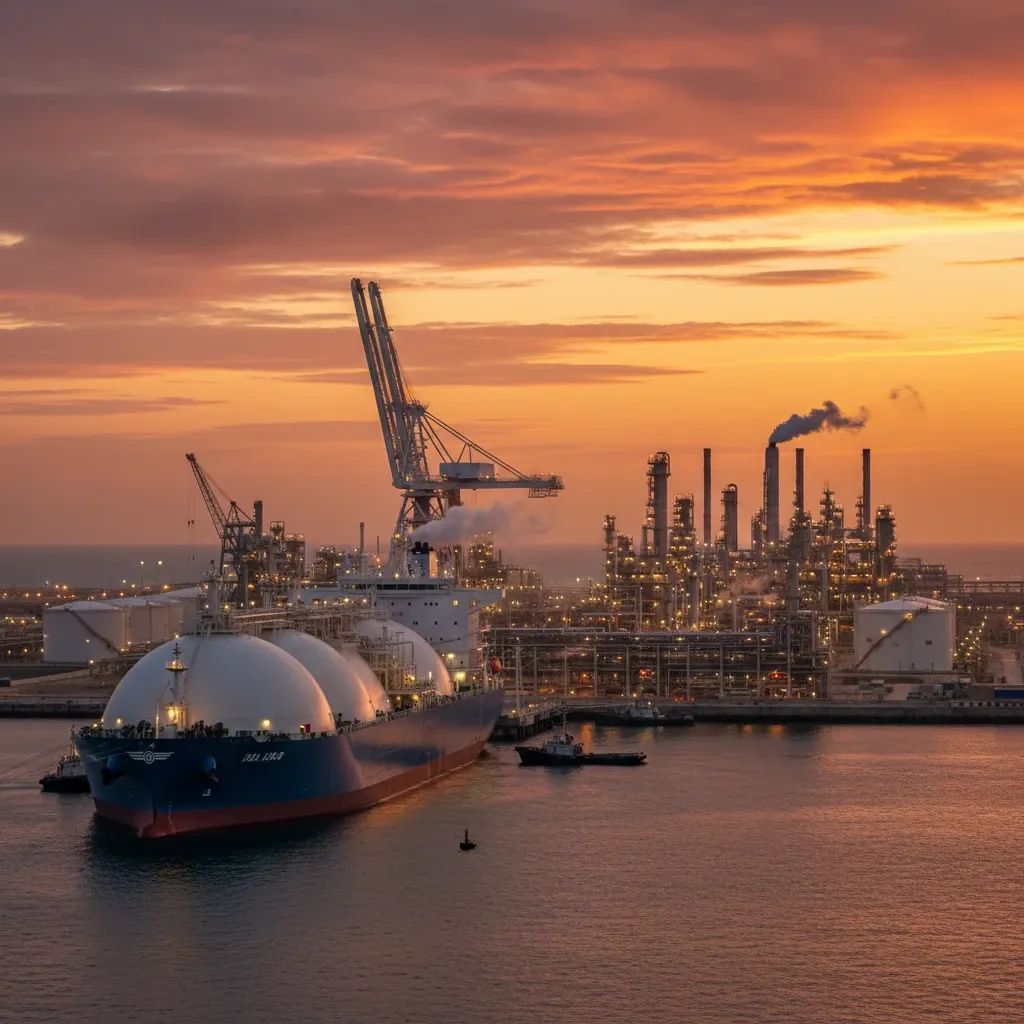
The Italy energy sector faces significant vulnerability to a potential Strait of Hormuz closure, with international credit rating firm Moody's warning that prolonged disruption could drive European natural gas prices above €100 per megawatt-hour—a threshold that would inflict severe economic pain on Italian households and industry alike.
Italy's Concentrated Supply Risk
Among major European economies, Italy emerges as particularly vulnerable to disruptions in Qatari energy flows, according to the Moody's assessment released today. While the European Union imported approximately 10 billion cubic meters of LNG from Qatar in 2025—representing roughly 2% of total gas imports and 3% of EU gas demand—the exposure is far from evenly distributed across member states.
Italy's 4% dependency on Qatari LNG translates to substantial absolute volumes in a market where alternative suppliers cannot instantaneously compensate for lost shipments. The rating agency identifies Italy alongside Belgium as the two nations facing the "most concentrated exposure to supply shortages" should Qatari exports through Hormuz cease flowing.
Belgium's situation proves even more acute, with 16% of its total LNG imports originating from Qatar in 2024. This disparity underscores how energy security vulnerabilities vary across member states rather than spreading uniformly across the continent.
The Hormuz Chokepoint Explained
The Strait of Hormuz—a narrow passage between the Persian Gulf and the Gulf of Oman—serves as the world's most critical oil and gas transit route. Approximately one-third of all seaborne-traded petroleum passes through this 33-kilometer-wide channel, including massive volumes of Qatari LNG destined for European terminals.
Any extended closure would immediately sever Qatar's export capacity to Europe. Unlike pipeline gas, which can sometimes be rerouted, LNG tankers have no alternative maritime path from the Gulf region to Mediterranean and Atlantic ports.
Storage Deficits Compound the Threat
Moody's emphasizes that current gas storage levels fall below historical averages, creating a precarious foundation heading into the critical summer injection season. European utilities and grid operators typically spend April through October refilling underground storage facilities to ensure adequate supply cushions for the following winter's heating demand.
Should a Hormuz closure materialize during these months, the "primary risk centers on slowed storage injections", leaving reserves dangerously depleted as autumn approaches. Italy, which depends on gas for both electricity generation and residential heating, would face constrained supply during critical winter months.
The €100 per MWh threshold cited by Moody's represents a dramatic escalation from current forward curve pricing. For context, benchmark European gas futures have traded in a range of €30-50 per MWh during much of the past year, meaning a Hormuz-driven spike would effectively triple or quadruple costs.
How Other European Nations Compare
The exposure to energy dependence becomes evident when examining Moody's country-by-country breakdown. Spain, despite its extensive LNG import infrastructure, sources only 2% of its liquefied gas from Qatar, making it relatively insulated from Persian Gulf disruptions. The Iberian nation benefits from diversified supply routes including North African pipelines and Atlantic basin LNG from the United States and West Africa.
Germany and France, Europe's largest economies, maintain zero direct LNG imports from Qatar, according to the rating agency's data. Both nations rely more heavily on pipeline infrastructure from Norway and North Africa.
The United Kingdom occupies a middle position, importing 6% of its LNG from Qatar, which translates to approximately 2% of total British gas imports when pipeline volumes are included. British energy security benefits from domestic North Sea production and Norwegian pipeline connections.


