
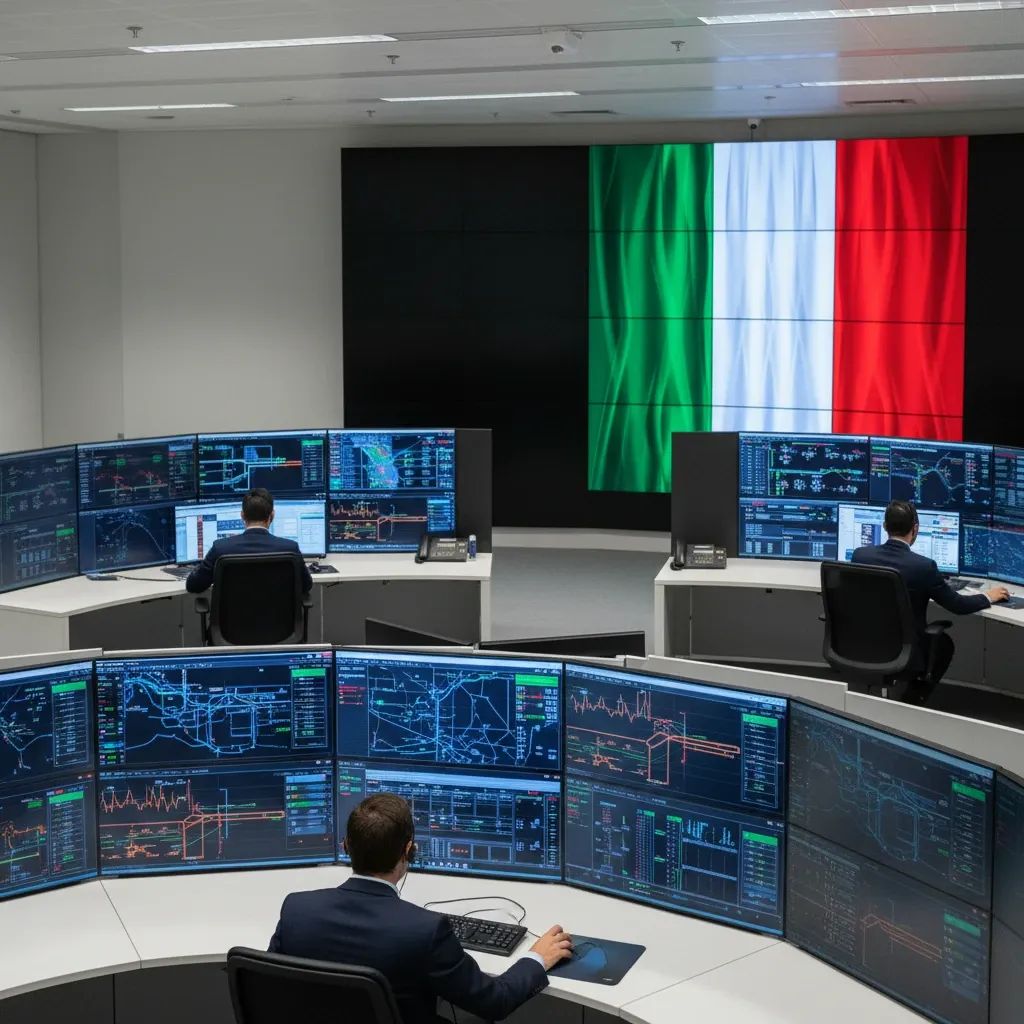
Italy's state-controlled energy network operator Terna has finalized the departure of its CEO Giuseppina Di Foggia, who has renounced a €7.19 million severance package to clear the path for her appointment as chair of Eni, the country's oil and gas giant. The move ends a week of political pressure from Prime Minister Giorgia Meloni and underscores the strict rules governing executive transfers within Italy's sprawling state-owned enterprise ecosystem.
Why This Matters
• Corporate governance precedent: The case sets a benchmark for how state-controlled companies in Italy handle executive exits and potential conflicts of interest within the same ownership group.
• Political accountability: The government's direct intervention demonstrates heightened scrutiny over compensation packages at public-backed firms, especially during a period of energy cost concerns.
• Leadership transition: Terna, which manages Italy's high-voltage electricity grid, will operate under interim management until its May 12 shareholder meeting, where new leadership is expected to be confirmed.
The Final Deal
Di Foggia signed the agreement today, bringing her tenure at Terna to an official close effective May 5, 2026. Under the terms, she will receive only €108,750 as a standard end-of-term payment for her role as CEO, plus accrued short- and long-term incentive bonuses. The much larger sum—originally earmarked as her severance for the director general position—has been formally waived, contingent on her official appointment to Eni's board presidency.
The decision was ratified by Terna's board on April 24, with input from the Remuneration and Nominations Committee and the Related Parties Committee. Di Foggia, elected to the role on May 9, 2023, as part of a slate backed by CDP Reti (the state-controlled investor arm), was not included on any candidate list for the upcoming board renewal.
Why the Severance Became Impossible
The crux of the controversy lies in Italian corporate law and internal group rules for state-backed enterprises. Both Terna and Eni fall under the umbrella of Cassa Depositi e Prestiti (CDP), Italy's state investment vehicle, which holds majority stakes in both companies. Under this structure, transfers between entities within the same group cannot be accompanied by severance payments—a safeguard designed to prevent executives from collecting multiple exit packages while simply moving seats.
CDP, along with its subsidiaries, is governed by strict ethical codes and conflict-of-interest provisions rooted in Articles 2497 et seq. of the Italian Civil Code, which regulate "direction and coordination" within corporate groups. These rules ensure that decisions benefit individual companies and the group as a whole, without creating improper financial incentives or resource diversions. The Ministry of Economy and Finance (MEF) also issued directives in 2023 aimed at capping or eliminating exit compensation at state-owned firms, particularly in light of public sensitivity around energy costs and fiscal discipline.
In 2005, Italy's Antitrust Authority had already raised red flags about CDP's overlapping stakes in energy infrastructure, questioning the compatibility of holding shares in both Enel and Terna. That precedent has continued to shape how executive movements within the state-controlled energy sector are managed.
Political Pressure and Public Backlash
The agreement did not materialize in a vacuum. On April 22, during a visit to the Salone del Mobile furniture fair, Prime Minister Meloni delivered a blunt message: "I think Di Foggia should choose between the presidency of Eni and the severance from Terna. The issue seems quite straightforward." Within hours, Terna announced that Di Foggia had signaled her willingness to forgo the payment.
The controversy created discomfort for the Meloni government, which has been working to demonstrate fiscal restraint and support for households and businesses grappling with elevated energy prices. The optics of a €7 million payout to an executive moving between state-controlled firms proved politically untenable.
Opposition parties seized on the episode. Giuseppe Conte, leader of the Five Star Movement (M5S), quipped that Meloni "can't even get what she wants from her closest allies. It's a matter of political weakness." The remark underscored broader criticisms that the government's approach to managing state-owned enterprises has been reactive rather than strategic.
What This Means for Residents
For people living in Italy, the Di Foggia case is more than executive drama—it's a test of how the state manages its energy infrastructure at a time when reliability and cost are front-page issues. Terna operates the country's high-voltage transmission network, a critical piece of infrastructure for everything from industrial production to household electricity. Leadership continuity and clarity matter, especially as Italy accelerates investments in renewable energy integration and grid modernization.
The interim management period between May 5 and May 12 will see Igor De Biasio, the current chairman, assume CEO powers with the same authority and limits previously held by Di Foggia. De Biasio, who has been Terna's president since May 2023, will receive no additional compensation for this transitional role. On May 12, shareholders are expected to approve a new leadership slate that includes Pasqualino Monti as the incoming CEO and Stefano Cuzzilla as the new chairman.
Meanwhile, Eni's shareholder meeting is scheduled for May 6, where Di Foggia's nomination as chair—alongside the reappointment of Claudio Descalzi as CEO—will be formalized. The MEF filed its candidate list on April 9, signaling the government's intention to move forward with this leadership configuration.
Broader Implications for Corporate Governance
The episode highlights the friction inherent in Italy's model of state capitalism, where CDP acts as both investor and de facto coordinator for a sprawling portfolio of strategic companies. Balancing the autonomy of individual firms with the interests of the group—and the political priorities of the moment—is a delicate exercise. The Di Foggia case suggests that the government is willing to intervene directly when executive compensation or perceived conflicts of interest threaten public confidence or budgetary discipline.
For executives within Italy's state-controlled sector, the message is clear: mobility within the group comes with stricter scrutiny and fewer financial cushions than in the private sector. Ethical codes, regulatory frameworks, and political oversight now converge to limit the kind of exit packages that were once routine in corporate Italy.
Looking Ahead
Terna's transition is part of a broader reshuffling of leadership across Italy's energy sector, driven by expiring terms, strategic shifts, and the government's push to align management with its industrial and climate policy goals. The company remains central to Italy's National Recovery and Resilience Plan (PNRR), with billions earmarked for grid upgrades, interconnections with neighboring countries, and the integration of offshore wind and solar capacity.
For residents and businesses, the hope is that leadership changes—however politically charged—will not delay critical infrastructure projects or compromise the reliability of electricity supply. Terna's operational track record has been solid, and the incoming team will inherit a company that is financially healthy and strategically important. The real test will be whether the new leadership can navigate the political pressures that have become an inescapable feature of Italy's state-controlled corporate landscape.
Di Foggia's formal exit on May 5 marks the end of a brief but turbulent chapter. Her renunciation of the severance, while politically expedient, sets a precedent that will shape executive negotiations for years to come. And as she prepares to take the helm at Eni, the energy giant that has long been a symbol of Italian industrial ambition, all eyes will be on how she manages the transition—and whether the government's intervention proves to be a one-time correction or a new normal.


