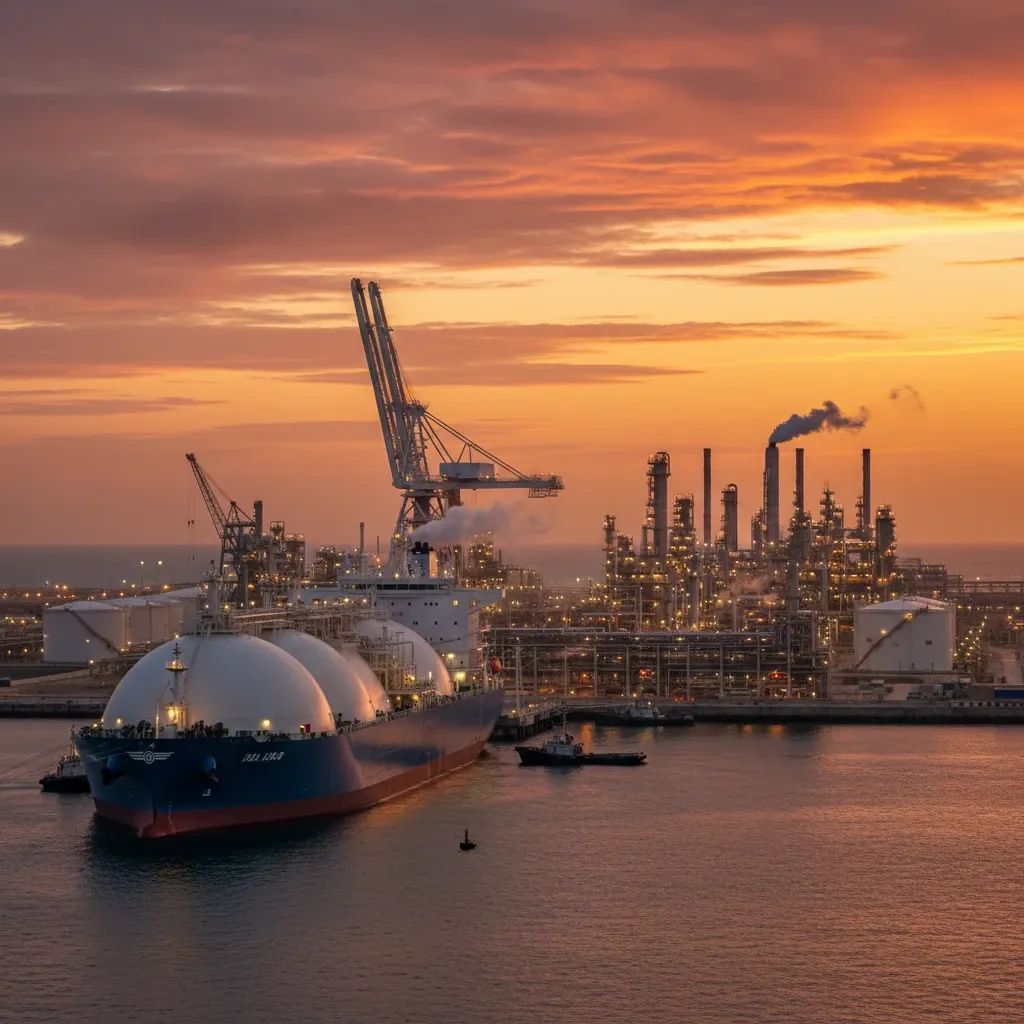
The Italy natural gas market is bracing for sustained price pressure as the benchmark TTF contract in Amsterdam surged to 54.81 €/MWh, climbing within striking distance of the 55 € threshold last breached in late March. The acceleration stems from Iran's announced closure of the Strait of Hormuz, a critical maritime chokepoint responsible for roughly 20% of global liquefied natural gas (LNG) shipments and a quarter of seaborne oil traffic.
Why This Matters
• Household Energy Bills: Higher TTF benchmark prices translate directly to increased electricity and heating costs for Italian consumers in the coming months.
• Storage Vulnerability: Europe faces the risk of entering winter 2024–2025 with gas reserves at roughly 76% capacity, the lowest in 15 years, which may compound seasonal price spikes.
• Geopolitical Leverage: Qatar supplies a significant share of Europe's LNG imports; any sustained disruption at the Ras Laffan export terminal could trigger bidding wars with Asian buyers.
• Inflation Ripple: Historical models suggest oil above $100/barrel generates approximately 2% global inflation, with cascading effects on transport fuel, logistics, and industrial input costs across Italy.
The Strait of Hormuz Factor
The Iranian Revolutionary Guard Corps issued warnings that effectively halted tanker traffic through the narrow waterway connecting the Persian Gulf to the Gulf of Oman. Approximately 20–25% of the world's maritime oil trade and a fifth of global LNG volumes pass through this strait, making it one of the most strategically sensitive energy corridors on the planet.
For Italy and the broader European Union, the direct exposure is more nuanced than absolute dependency. Roughly 12–14% of the EU's total LNG imports and about 12% of crude oil supplies originate from Gulf exporters reliant on Hormuz transit. Yet the real vulnerability lies in global price contagion: when Asian buyers compete more aggressively for non-Hormuz cargoes, European importers face higher costs and tighter availability, even for gas arriving from the United States, Algeria, or Azerbaijan.
Current futures contracts on the Amsterdam Title Transfer Facility (TTF), the continent's pricing benchmark, opened with a 2.15% gain before accelerating another 3.49% later in the session. The climb mirrors levels last seen on March 26 and March 30, when earlier flare-ups in the region briefly pushed contracts above 50 €/MWh.
What This Means for Italian Residents
Italian households and businesses should anticipate a tightening energy landscape over the next six months. Natural gas underpins a significant portion of Italy's electricity generation, and retail tariffs often adjust quarterly based on wholesale benchmark movements. The €54.81/MWh TTF price recorded today represents a substantial premium over the mid-40s range observed in early July, when seasonal storage campaigns were proceeding smoothly.
Italy enters this turbulence from a position of relative strength compared to some EU peers. The country's underground storage facilities currently rank among the best-stocked in Europe, a deliberate policy response to the 2022–2023 energy shock. However, analysts warn that if geopolitical tensions persist or escalate, Italy's buffer may be tested by a brutal winter demand scenario combined with subdued inflows of LNG.
Another layer of complexity: while the Italian government and the European Commission have committed to phasing out Russian pipeline gas by the end of 2025 and accelerating LNG contract diversification, practical realities continue to shape Europe's energy mix. Recent data show European energy security efforts focusing on alternative supply channels, a strategic pivot driven by Middle Eastern disruptions and supply constraints.
Storage and Winter Outlook
Europe's aggregate gas inventories are projected to reach approximately 76% capacity by the close of the October injection season, hovering near 15-year lows. Italy's storage operators have performed better than the continental average, but the collective shortfall creates upward pressure on spot markets as utilities scramble to lock in volumes ahead of colder weather.
Historically, reserve levels below 80% heading into November correlate with heightened volatility and price spikes during demand surges in January and February. The Italian Ministry of Environment and Energy Security has flagged the upcoming winter months as a period requiring close monitoring, urging industrial consumers to maintain flexible fuel-switching capabilities where feasible.
Should the Hormuz crisis prove transitory and Qatari LNG exports resume at full capacity within weeks, the TTF could retreat toward the 45–48 €/MWh band. Conversely, prolonged disruption—or additional supply shocks from other geographies—risks pushing benchmarks into uncharted territory above 60 €/MWh.
Broader Market Dynamics
Beyond the immediate geopolitical trigger, European gas fundamentals reflect a market still digesting profound structural shifts. Demand across the EU has contracted significantly since August 2022, driven by aggressive conservation measures, industrial curtailments, and accelerating deployment of renewable electricity capacity. The International Energy Agency (IEA) continues to forecast further demand moderation, largely attributable to wind and solar displacing gas-fired generation.
On the supply side, new LNG liquefaction capacity in the United States, Canada, and Australia continues to add incremental volumes to global spot markets. North American exporters have emerged as a dominant source of replacement molecules for Italy and its neighbors, a trend underscored by long-term offtake agreements signed since the Ukraine conflict began.
Yet the expansion of non-Middle Eastern capacity cannot fully insulate Europe from Hormuz-related shocks. LNG is a globally traded commodity; when Asian utilities bid aggressively for cargoes amid supply anxiety, even U.S. Gulf Coast exporters may prioritize eastern markets, leaving European buyers to absorb higher landed costs and longer delivery lead times.
Insurance and freight expenses compound the challenge. War-risk premiums for tankers transiting conflict zones have climbed sharply, adding several dollars per million British thermal units to the delivered cost of cargoes that do reach European regasification terminals. Italian importers, particularly those relying on floating storage and regasification units in the Adriatic, face these surcharges directly.
Policy and Mitigation Pathways
The European Union's REPowerEU plan mandates binding targets to reduce dependency on Russian energy and accelerate alternative supply sources. The blueprint also prioritizes renewable energy deployment, with revised Renewable Energy Directives setting ambitious targets for 2030 and beyond.
Italy has committed substantial fiscal resources to this transition. Recent support schemes aim to add significant capacity in solar, onshore wind, hydroelectric, and industrial waste-gas generation. In recent months, renewables have accounted for substantial shares of EU electricity output, with wind, hydro, and solar collectively dominating generation mixes.
Nuclear energy is experiencing renewed European interest. The Italian government has joined discussions regarding next-generation reactor technologies suited to the national grid, reflecting a broader policy reassessment of energy security strategies. Several member states are revisiting energy portfolios to ensure long-term stability and climate objectives.
Hydrogen development, particularly green hydrogen produced via renewable-powered electrolysis, represents a medium-term hedge. The EU has allocated significant resources to hydrogen infrastructure, with Italy positioning itself as a potential Mediterranean hub for production and transit. Major projects across the continent are advancing, though questions persist about cost-competitiveness and scalability relative to direct electrification pathways.
Investment and Economic Implications
For Italy-based investors and businesses, the current gas volatility underscores the enduring relevance of energy-sector exposure. Utilities with diversified fuel portfolios, renewable generation assets, or long-term fixed-price LNG contracts stand to weather the volatility better than pure-play gas marketers reliant on spot indexation.
Industrial consumers—especially in chemicals, ceramics, glass, and metals—remain acutely sensitive to TTF fluctuations. Many have already implemented fuel-switching protocols or adjusted production strategies during previous price spikes. The Italian Ministry of Economic Development continues to evaluate support measures for energy-intensive sectors, though fiscal constraints limit the scope for blanket subsidies.
Retail electricity tariffs in Italy typically adjust on a quarterly or semi-annual basis, meaning the full impact of current gas movements may appear on household bills in the coming months. The Italian Regulatory Authority for Energy, Networks and Environment (ARERA) closely monitors wholesale trends and maintains authority to address extreme volatility through regulated tariff mechanisms, though sustained elevated prices inevitably filter through to end users.
Real estate and construction sectors also feel secondary effects. Higher energy costs influence heating and cooling budgets for residential and commercial properties, potentially affecting demand for energy-inefficient buildings and accelerating retrofitting activity. The Italian Superbonus incentive scheme continues to subsidize energy-efficiency upgrades that reduce natural gas dependency.
Looking Ahead
Market participants are now focused on three variables: the duration of the Hormuz disruption, the pace of European storage refill in the coming weeks, and the trajectory of Asian LNG demand as temperatures decline. Any one of these factors shifting unfavorably could propel TTF above 60 €/MWh; conversely, a diplomatic breakthrough or mild early-autumn weather might ease the pressure.
The Italian government has emphasized coordination with EU partners to maximize collective bargaining power in global LNG markets, an approach that yielded some success during the 2022 scramble for alternative supplies. Joint procurement mechanisms and solidarity agreements remain on the table should the crisis deepen.
For now, the message to Italian households and enterprises is clear: energy price volatility is the new normal, diversification and efficiency investments pay tangible dividends, and geopolitical risk in distant waters translates rapidly into domestic cost-of-living pressures. The €55 threshold on the Amsterdam exchange is more than a technical milestone—it is a reminder that Italy's energy security remains tethered to global chokepoints and the strategic calculus of distant actors.