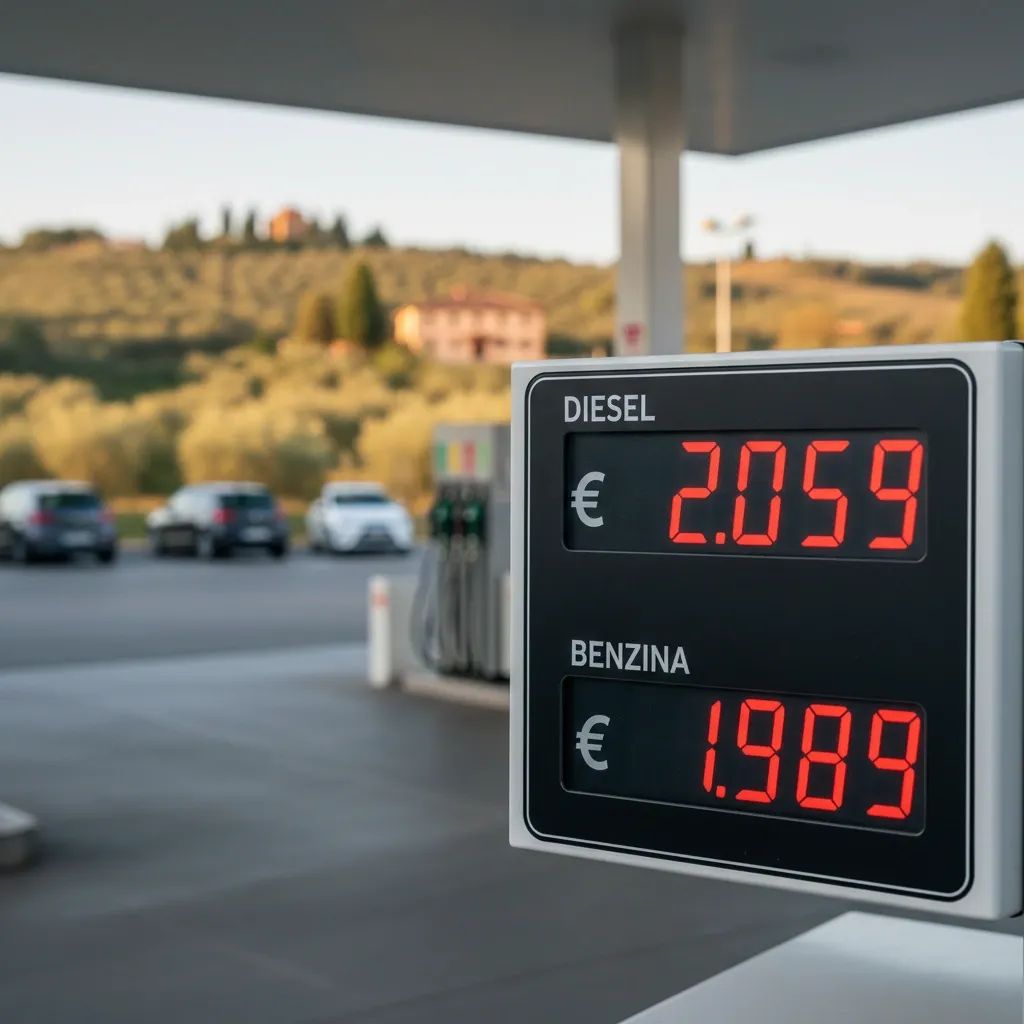
The Italy Ministry of Enterprises and Made in Italy has confirmed fresh fuel price increases, with diesel now breaching the €2 per liter threshold at self-service pumps across much of the national road network. This spike reflects escalating international oil market tensions and recent shifts in government tax relief policy.
Why This Matters
• Diesel reaches €2.017/liter on national roads, up from €1.996 the previous day; highway diesel climbs to €2.086/liter
• Petrol reaches €1.897/liter nationally (self-service), with motorway stations charging €1.986/liter
• Geopolitical tensions in the Middle East are contributing to international crude oil price pressures
The ministry's fuel price observatory tracks daily price movements across Italy's distribution network. The upward trend has accelerated following the government's recent policy decision to allow temporary excise tax relief measures to expire, immediately adding weight to pump prices already under pressure from geopolitical shocks and international market dynamics.
How We Got Here: Tax Policy and International Markets
Italy's current fuel crisis reflects two converging pressures. First, the Italian government recently allowed temporary excise tax relief to expire, which had previously provided relief on fuel prices. This policy shift has contributed to the recent increases seen at the pump.
Second, international crude markets have reacted to renewed Middle East tensions, with energy analysts noting that the Strait of Hormuz—through which a significant share of global oil transits—remains a focal point for market concerns. Any hint of disruption in these regions tends to influence refinery input costs.
The combined effect has been significant for Italian motorists and businesses. Price tracking data indicates fuel costs have risen notably over recent days and weeks.
What This Means for Residents
For households and businesses in Italy, higher fuel prices create direct and indirect costs. Commercial operators dependent on diesel—including logistics, haulage, and transport sectors—face margin pressures during periods of elevated fuel costs. Similarly, farmers and rural residents who rely on diesel for machinery and transport operations are experiencing cost impacts.
The government has implemented various targeted support measures for affected sectors throughout the year, though specific program details and eligibility criteria are subject to change and should be verified with relevant authorities.
Regional Variations in Fuel Pricing
Fuel pricing in Italy naturally varies by geography due to differences in logistics, distribution infrastructure, and regional market conditions. Islands and mountainous provinces typically face structurally higher costs, and these regional premiums can widen during periods of volatility. Motorway pricing is consistently elevated compared to self-service stations on conventional roads.
Italy's Fuel Tax Position
Italy maintains relatively high fuel taxation compared to many other European nations. The fiscal component—excise duty plus VAT—contributes significantly to pump prices. Italy's tax burden on fuel has historically positioned it among the higher-taxed markets in Europe for road fuel, a factor that consistently influences comparative pump prices across borders.
Government Response and Market Monitoring
Rome's approach has focused on transparency and targeted monitoring measures. The Ministry of Enterprises and Made in Italy operates a price surveillance unit dedicated to tracking fuel costs across the distribution network and identifying potential market anomalies or speculative practices.
Consumer groups have engaged with the government regarding fuel policy options, with various proposals discussed for supporting households and businesses affected by price volatility. The government has indicated consideration of targeted assistance programs, though decisions on scope and timing remain subject to broader fiscal policy considerations.
Outlook: Market Dynamics and Uncertainty
The near-term trajectory for Italian fuel prices remains uncertain and will be influenced by international crude oil market developments, geopolitical circumstances, and government policy decisions. Energy market analysts track various scenarios and forecasts, though predicting oil prices with confidence remains challenging.
For Italian households and businesses, the practical reality is that fuel price volatility is likely to persist. Market conditions and government policy decisions will continue to shape pricing at Italian pumps. Consumer awareness of available fuel price information and monitoring of government announcements regarding potential policy measures remains prudent.
The ministry's observatory continues to track daily price movements, providing residents and businesses with current market information to inform decisions regarding fuel purchases and budgeting.